An Introduction to Biopsychology: How Biology Shapes Behaviour and Mind
This work has been verified by our teacher: 15.01.2026 at 18:41
Homework type: Analysis
Added: 15.01.2026 at 18:10
Summary:
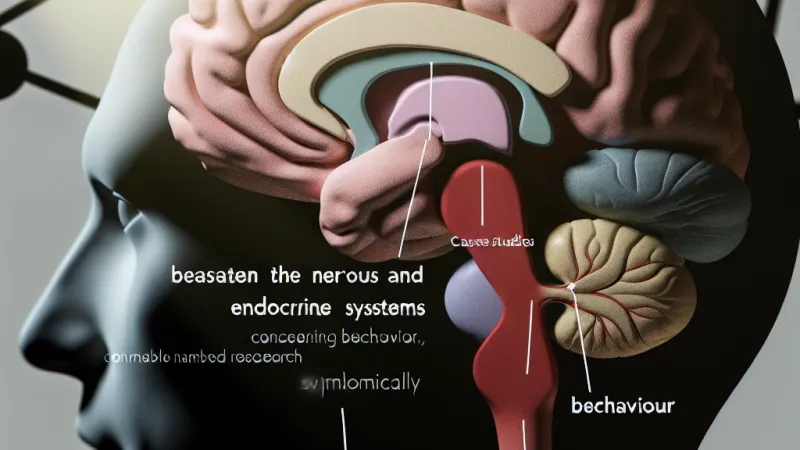
The essay explains how the nervous and endocrine systems interact to control behaviour, stress, and brain functions, highlighting key research and case studies.
Introduction
Biopsychology, also known as biological psychology or psychobiology, is the branch of psychology concerned with how our biology—particularly our nervous and endocrine systems—influences behaviour, thoughts, and emotions. Rather than regarding the mind and body as separate entities, biopsychology recognises that our experiences, memories, and actions all have a firm grounding in our physical self. It concerns itself with the minute workings of the brain, the electrical signals travelling down our nerves, and the chemical messengers passing between cells.Central to biopsychology is the study of the nervous and endocrine systems, two complex yet complementary networks that enable us to sense, interpret, and respond to our environment. Both systems play crucial roles in basic survival as well as in everyday cognition, learning, and emotion. The exploration of how they interact—in moments of stress, for instance, during the well-known ‘fight or flight’ response—provides a biological explanation for phenomena psychologists have observed for centuries. Additionally, the investigation of how specific areas of the brain control distinct functions (such as speech, memory, or emotion) has both historical and practical relevance, as illustrated by notable case studies in British neuroscience and psychology.
This essay will firstly examine the structure and function of the nervous system, then discuss the endocrine system and the role of hormones in behaviour. Next, the essay will analyse the ‘fight or flight’ response as a classical example of the nervous and endocrine systems working together, followed by an exploration of localisation of brain functions, referencing seminal British and European research cases. Finally, the hemispheric structure of the brain and the implications of lateralisation for cognition and health will be discussed.
1. The Nervous System
The nervous system is a specialised network of billions of neurones, designed for the internal communication and coordination of the body’s functions. It operates as an advanced ‘wiring network’, allowing an individual to collect information from the environment, process and interpret that information, and generate appropriate responses. For instance, if one touches a hot kettle, the sensation of heat triggers a rapid withdrawal—an instinctive action that highlights the speed and sophistication of this system.Central Nervous System (CNS)
The CNS comprises the brain and spinal cord. The brain itself is the primary seat of conscious awareness. Of particular note in humans is the cerebral cortex, the outer layer of the brain, which is highly folded and extensively developed compared to other animals. This evolutionarily advanced cortex is responsible for higher-order functions such as reasoning, problem-solving, and language—skills that are hallmarks of human experience. Literary references, such as in Aldous Huxley’s *Brave New World*, often allude to the power of the human mind and our capacity for reflection—capacities made possible by the cortex.The spinal cord, meanwhile, serves as a direct extension of the brain. It is responsible for conveying messages between the brain and the rest of the body, as well as for controlling reflex actions. Reflex arcs, like the classic knee-jerk or the rapid withdrawal from a sharp object, involve sensory inputs that can be processed at the spinal level, enabling swift reactions without waiting for conscious processing in the brain. Such reflexes have practical implications, for example, in first aid or sports science, both important within UK education and healthcare.
Peripheral Nervous System (PNS)
The PNS serves as the vast communication network connecting the CNS to the limbs and organs, transmitting signals via millions of neurones. It is subdivided into two main parts: the autonomic nervous system (ANS) and the somatic nervous system.Autonomic Nervous System (ANS)
The ANS governs vital involuntary activities such as heart rate, respiration, and digestion. It acts largely below conscious awareness, adapting bodily responses to changing circumstances—whether during revision-induced stress or whilst relaxing with friends. The ANS itself consists of two branches: the sympathetic nervous system, which mobilises the body for action (‘fight or flight’), and the parasympathetic nervous system, which calms things down, returning the body to baseline.Somatic Nervous System
In contrast, the somatic nervous system is concerned with voluntary movements. It relays information from sensory receptors (touch, pain, temperature) to the CNS, and then carries motor commands back to the muscles. A practical example from the classroom is the way we consciously write with a pen or participate in a game of rounders during PE.Both the CNS and PNS are indispensable. While the CNS handles decision-making and higher-order thought, the PNS translates these decisions into action in the physical world.
2. The Endocrine System
Working hand-in-hand with the nervous system, the endocrine system orchestrates long-term bodily processes by means of hormones—chemical messengers secreted into the bloodstream and carried to distant organs. Unlike the near-instantaneous signals of the nervous system, hormonal communication tends to be slower but more sustained, triggering changes that can affect the entire body.Hormones act only on target cells equipped with specific receptors, ensuring precision despite their widespread circulation. The specificity is comparable to sending a letter to a designated address rather than addressing everyone in town, which is vital for processes such as growth, metabolism, and reproduction.
The main glands of the endocrine system include the pituitary (often called the “master gland”), the thyroid, the hypothalamus, parathyroids, adrenals, pancreas, ovaries, and testes. The pituitary gland earns its distinguished title by regulating most other glands via hormone release—for example, it produces adrenocorticotropic hormone (ACTH), which prompts the adrenal glands to release adrenaline in times of stress.
The adrenal glands themselves, situated atop the kidneys, release adrenaline and noradrenaline, hormones crucial for energy mobilisation during threat. The pancreas, meanwhile, plays a vital role in blood sugar regulation by secreting insulin—important for students learning about homeostasis in biology classrooms across the UK. Hormones also act via feedback loops: if, for instance, blood sugar drops too low, corrective hormones are released to restore balance—an example of a negative feedback mechanism.
The interplay between hormones and nervous impulses ensures that the body responds efficiently to both immediate and longer-term challenges. For example, during puberty (memorable to all who have endured Year 7 PSHE!), surges in oestrogen and testosterone drive massive physical and emotional changes.
3. Fight or Flight Response
‘Fight or flight’ is a term that encapsulates the body’s primal survival response to threat. While the phrase itself may evoke images of ancient human ancestors fleeing predators, modern research (including that undertaken at UK institutions such as King’s College London) has revealed its continued relevance in contemporary stress, such as exams or job interviews.The response is triggered when the hypothalamus detects a threat and activates the sympathetic branch of the ANS. Almost instantaneously, signals travel down sympathetic nerves to the adrenal medulla, which floods the bloodstream with adrenaline. This ‘adrenaline rush’ causes major physiological changes: heart rate skyrockets, air passages dilate for deeper breathing, digestive activity slows, and energy reserves are mobilised.
A common example from everyday life might be the jolt felt when a car suddenly swerves in front of a cyclist on a British road. Pupils dilate to take in more light, enabling better visual acuity, and the liver releases glucose for instant energy bursts. All these changes are geared towards maximising the body’s resources for immediate action—whether fighting off or escaping danger.
Once the threat has passed, the parasympathetic nervous system takes the reins. Its calming effect restores normal heart rate, digestion, and respiration. In evolutionary terms, this coupling of arousal and calming has huge adaptive value: it prepares organisms to survive short-term danger and later conserve energy. However, with the complexities of twenty-first-century life in the UK, this system can become maladaptive—chronic stress over exams or finances can lead to health problems such as hypertension or anxiety disorders, topics currently under scrutiny in national mental health campaigns.
4. Localisation of Function in the Brain
The debate over how functions are distributed within the brain has shaped both British and European neuroscience for more than a century. Localisation theory posits that particular areas of the brain have specific roles; for instance, that there are regions solely responsible for language production or for understanding speech. This stands in contrast to the holistic view, which argues the brain works as a whole in most processes.Broca, Wernicke, and the Origins of Localisation
Paul Broca, a French physician, was the first to link injury to a region of the left frontal lobe (now known as Broca’s area) with loss of speech production—patients could understand language but struggled to speak. Soon after, Karl Wernicke, a German neurologist, identified a region in the left temporal lobe crucial for language comprehension, leading to what is now known as Wernicke’s area.These discoveries were transformative: they provided the first neuroanatomical proof that specific cognitive abilities were physically localised in the brain, something that figures such as Charles Darwin or Francis Crick (co-discoverer of the structure of DNA) would later build on in theories of evolution and information processing.
The Case of Phineas Gage
The case of Phineas Gage is a staple of British A-level Psychology textbooks and university syllabuses. In 1848, Gage, a railway worker, survived an explosion that drove a tamping iron through his left cheek and out through the frontal bone of his skull. Remarkably, Gage survived, but his calm, responsible personality underwent a radical transformation—he became impatient and socially inappropriate.Gage’s case strongly suggested that the frontal lobes are involved in emotion regulation and decision-making. As the famous neurologist John Harlow wrote, Gage was “no longer Gage”, illustrating the profound impact that physical brain changes could have on personality and behaviour. Such cases provide invaluable windows into the living brain, supporting localisation theory and guiding modern neurosurgical practice, as seen in UK hospitals.
5. Hemispheres of the Brain
The human brain is divided into two symmetrical hemispheres, left and right. While their structure is nearly identical, each hemisphere is specialised for certain functions—a phenomenon known as lateralisation.Lateralisation of Function
For most people, the left hemisphere is the chief site for language processing, logic, and analytical tasks. This is evidenced by the fact that damage to the left hemisphere, even in right-handed people, often results in aphasia (an inability to produce or understand language). By contrast, the right hemisphere excels in spatial tasks, facial recognition, and processing music and visual imagery. One can see this division in how some children more easily grasp mathematics (often left hemisphere) while others excel in creative arts (often right hemisphere).Movements on the left side of the body are controlled by the right hemisphere, and vice versa. The study of ‘split brain’ patients (notably in British research led by Gazzaniga and colleagues, though more prominent in US cases), in which the corpus callosum connecting the hemispheres is severed, shows that each hemisphere can operate independently, leading to situations where a patient’s right hand may perform tasks the left hand knows nothing about.
However, it is important not to oversimplify: most tasks require cooperation between hemispheres, and the brain’s so-called plasticity means that, after injury, functions can often be ‘re-mapped’ to unaffected areas.
Conclusion
In summary, the nervous system and endocrine system work in tandem to facilitate both rapid and long-lasting responses to the world around us. The CNS and PNS ensure that our bodies can gather information, think, decide, and act, whether we are revising for GCSE exams or scoring a goal at Wembley. The endocrine system complements this by orchestrating slower, hormone-driven changes such as puberty and stress responses.The ‘fight or flight’ response vividly illustrates the interaction between these systems: when danger looms, both electrical impulses and hormones mobilise us for action, while the parasympathetic system ensures restoration of calm. Historical and contemporary research, including the work of Broca, Wernicke, and case studies like Phineas Gage, establish the significance of localised brain function, while the division between brain hemispheres highlights the subtlety and complexity of our nervous system.
Biopsychology is of growing importance as it shapes our understanding of disorders, informs medical and psychological interventions, and helps devise strategies for recovery following brain injury. Contemporary advances in neuroimaging and genetics—championed at great British institutions such as University College London and Oxford—promise to further deepen our insight into the relationship between brain, body, and behaviour.
As we continue to unlock these mysteries, biopsychology will remain at the forefront of efforts to understand not only how we think and feel, but ultimately, what it means to be human.
Rate:
Log in to rate the work.
Log in