Detailed Analysis of Transcription and Translation in A2 Biology
This work has been verified by our teacher: 8.03.2026 at 9:44
Homework type: Analysis
Added: 7.03.2026 at 6:23
Summary:
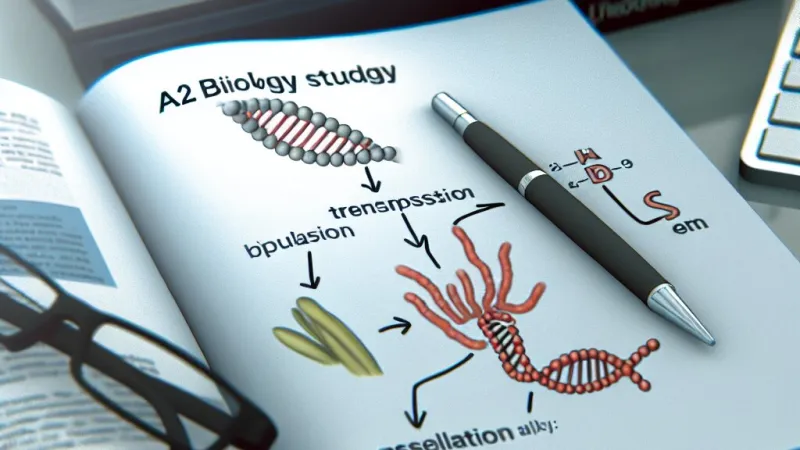
Explore transcription and translation in A2 Biology to master gene expression processes, regulation, and key concepts essential for your UK secondary studies.
Transcription and Translation in A2 Biology: A Comprehensive Exploration of Gene Expression and Its Regulation
The concept of gene expression stands at the heart of molecular biology, underpinning the processes by which genetic information inscribed in DNA is ultimately translated into the proteins that govern cellular structure and function. Far from being a mechanical relay, gene expression is a finely tuned and dynamic system, ensuring that the vast archive of the genome is accessed precisely, appropriately, and economically. In the context of the A2 Biology curriculum, understanding the stepwise mechanisms of transcription and translation is not simply an academic exercise; it is foundational knowledge that informs the rapidly advancing fields of biotechnology, medicine, and genetics. By grasping these cellular events, students equip themselves to appreciate inherited disorders, to contemplate genetic therapies, and to probe the ethical boundaries of genetic modification, all of which possess real-world impact in the United Kingdom and beyond.
Fundamentals of Transcription
At its core, transcription is the biochemical process through which an RNA copy is made from a DNA template. In eukaryotic organisms, such as humans and many model organisms studied in British schools (the common fruit fly Drosophila melanogaster, for instance), transcription occurs within the nucleus – the safeguarded chamber containing the cell’s genetic blueprint. Crucially, RNA, unlike DNA, is capable of leaving the nucleus through nuclear pores, ferrying the genetic code to the cytoplasm for the next stage of expression.Stages of Transcription
Transcription unfurls in three principal stages: initiation, elongation, and termination. Initiation commences when the enzyme RNA polymerase recognises and binds to a promoter sequence – a region upstream of the target gene acting as a flag for the commencement of transcription. This binding prompts the unwinding of the double-stranded DNA cut open by the breaking of hydrogen bonds between base pairs, exposing a template strand. Literary parallels might be drawn with the unrolling of an ancient scroll – only the required segment is revealed, the remainder carefully protected for future readings.Once engaged, RNA polymerase orchestrates elongation by advancing along the template strand. Here, the polymerase threads together ribonucleotides using complementary base pairing: cytosine pairs with guanine as in DNA, while adenine pairs with uracil (U) in RNA, replacing thymine. This not only ensures accuracy but also preserves the integrity of the genome, as the original DNA strands reassociate and reform their stable double helix once the enzyme has advanced. The emerging transcript, called pre-mRNA, is a faithful (albeit temporary) reflection of the corresponding gene.
Termination occurs when the polymerase encounters a specific DNA sequence signalling the transcript’s end. At this point, the freshly synthesised pre-mRNA molecule is released and undergoes several critical modifications before becoming functionally mature.
Post-Transcriptional Modifications
Eukaryotic pre-mRNA is beset with non-coding regions called introns, interspersed between the coding exons. Through RNA splicing, a multi-protein complex known as the spliceosome snips out the introns and stitches together the exons, yielding a continuous coding sequence. This alternative may sometimes result in different variants of a protein, contributing to biological diversity.Further modifications include the attachment of a 5’ cap (a modified guanine nucleotide) and a poly-A tail (a string of adenine nucleotides added to the 3’ end). These additions, while easily overlooked, are vital: they protect mRNA from degradation and assist its export through nuclear pores to the cytoplasm. Here, British exam boards typically expect students to master the precise terminology: double helix, promoter, RNA polymerase, pre-mRNA, intron, exon, splicing, mature mRNA. Understanding these terms forms the backbone of discussions and analytical tasks in both exams and practical assessments.
Translation: From mRNA to Protein Synthesis
Having journeyed from DNA within the nucleus, the mature mRNA enters the cytoplasm – the bustling stage upon which the next act, translation, unfolds. Ribosomes, complex molecular machines assembled from rRNA and proteins, facilitate this process. British biology texts often stress their dual role: they provide a physical framework for translation and catalyse the peptide bond formation linking amino acids.Key Players in Translation
Translation involves a precise choreography of three main molecules: the mRNA transcript itself (carrying the codon sequence), transfer RNA (tRNA, adaptor molecules each ferrying a specific amino acid and possessing a complementary anticodon), and the ribosome. The United Kingdom’s notable geneticist, Frederick Sanger, built his Nobel-winning career partly on elucidating such polypeptide sequences, underscoring the country’s tradition in biochemical research.Stages of Translation
Like transcription, translation proceeds via initiation, elongation, and termination. Initiation begins as the ribosomal small subunit attaches to the mRNA near the start codon (AUG), which codes for methionine. The initiator tRNA, bearing the methionine amino acid, pairs anticodon with codon, and the large ribosomal subunit subsequently joins, completing the functional ribosome.During elongation, tRNA molecules sequentially deliver amino acids, decoding consecutive codons and adding their cargo to the growing polypeptide. Peptide bonds form, catalysed by the ribosome’s peptidyl transferase activity, sometimes likened to a master craftsman weaving a tapestry from coloured threads – each amino acid a thread directed by the genetic instructions on the mRNA.
Termination occurs once a stop codon (UAA, UAG, or UGA) reaches the ribosomal active site, for which no tRNA exists. Release factors prompt the release of the completed polypeptide, which then folds, often spontaneously, sometimes aided by chaperone proteins, into a three-dimensional structure essential for its biological function.
The Genetic Code
The genetic code itself is a language built from triplet codons, each specifying one of the twenty amino acids. Notably, the code is degenerate (some amino acids are encoded by more than one codon) but nearly universal across all living organisms, a testament to life’s shared evolutionary origins. The role of the tRNA’s anticodon is crucial for accuracy, ensuring translation’s fidelity – a principle often revisited in A-level biology questions.Regulation of Gene Expression
The marvel of gene expression does not lie merely in its execution, but in its regulation. Cells must deftly switch genes on or off as required, adapting to developmental signals, environmental changes, and internal homeostasis. This is achieved through a combination of mechanisms.Transcription Factors and Regulation
Transcription factors are proteins that bind to specific DNA sequences near target genes and influence RNA polymerase’s engagement. Activators boost transcription rates, akin to ushers shepherding the polymerase into position, while repressors act as molecular sentinels, blocking access. In human physiology, hormones such as oestrogen function as transcription factors. When oestrogen binds its receptor, the complex migrates into the nucleus where it can modulate gene activity. This mechanism is central to sexual development and is implicated in diseases such as breast cancer, an example highly relevant to medical research in the UK, especially given the National Health Service’s focus on cancer genomics.Small Interfering RNA and Post-Transcriptional Control
A more recent and exciting avenue of regulation involves small interfering RNA (siRNA). These short, double-stranded RNA molecules identify and bind complementary mRNA molecules in the cytoplasm, recruiting proteins that cleave and destroy the target mRNA, thereby preventing translation. This process, known as RNA interference (RNAi), represents a form of ‘gene silencing’. UK researchers have explored therapeutic uses of RNAi, for instance, in knocking down mutant genes causative in inherited conditions like Huntington’s disease.Mutations and Their Impact
Despite the cell’s fidelity, mutations – changes in the DNA sequence – can and do arise. Substitutions replace one base with another, deletions excise bases, and insertions add new bases. These can be silent (having no effect), missense (causing a single amino acid change), nonsense (introducing a premature stop codon), or frameshift (shifting the reading frame, often with catastrophic results for protein function).The implications reach beyond the biochemistry. Inherited diseases such as cystic fibrosis (caused by a deletion mutation in the CFTR gene) and sickle cell anaemia (a single base substitution) are staple case studies in UK biology courses. Mutations can lead not only to loss of function but sometimes to new, deleterious or advantageous properties, driving evolution or disease – cancer being a particularly prominent example within the National Curriculum and public health discourse.
Conclusion
The intricate dance of transcription and translation, entailing numerous layered modifications and regulatory checks, exemplifies the sophistication of cellular life. This is not a simple linear progression but a network of processes, overseen by regulatory proteins and RNA molecules, all functioning with remarkable precision. Advances in molecular technology, from genome editing via CRISPR (pioneered in part by research groups at institutions such as University College London) to synthetic biology initiatives, are predicated on a nuanced understanding of these processes. A full appreciation of transcription and translation not only demystifies the language of the genome, but also opens the door to future medical advances, tailor-made therapies, and the continued unraveling of life’s most profound secrets.As students, a solid grasp of these molecular phenomena empowers us to critically engage with new biotechnological possibilities and their implication for society, an imperative in this age of rapid scientific change and bioethical debate.
Rate:
Log in to rate the work.
Log in