Detailed Analysis of Bandura, Ross and Ross’s Social Learning Study in Psychology
This work has been verified by our teacher: 18.04.2026 at 12:33
Homework type: Analysis
Added: 15.04.2026 at 13:06
Summary:
Explore a detailed analysis of Bandura, Ross and Ross’s social learning study to understand observational learning, aggression, and key psychology concepts.
OCR AS Psychology: In-Depth Analysis of Bandura, Ross and Ross’s Core Study on Aggression and Social Learning
Albert Bandura’s collaborative work with Dorothea and Sheila Ross in 1961 stands as one of the most influential early investigations into how children acquire and replicate behaviours through observation. Frequently referred to as the “Bobo Doll Experiment”, their research played a pivotal role in the evolution of social learning theory and our understanding of childhood aggression. The world of British psychology, both within academia and practical settings—whether in classrooms or clinical environments—still feels the ripples of this study.
This essay aims to dissect Bandura, Ross and Ross’s core investigation by examining its innovative methodology, main findings, theoretical significance, and eventual application in real-life contexts such as British educational practice and safeguarding. Key terms to clarify from the outset include ‘observational learning’—the acquisition of behaviours simply by watching others; ‘modelling’—the demonstration of specific behaviours by an individual serving as an example; and varying forms of ‘aggression’, namely physical, verbal, and imitative. Additionally, a discussion of ‘ecological validity’—the degree to which research findings represent real-world behaviour—will feature prominently. Ultimately, this analysis will assess the strengths and limitations of the Bobo Doll study, spotlighting gender influences, the authenticity of laboratory findings, and directions for future research and practical application.
---
1. Overview of the Bandura, Ross and Ross Study
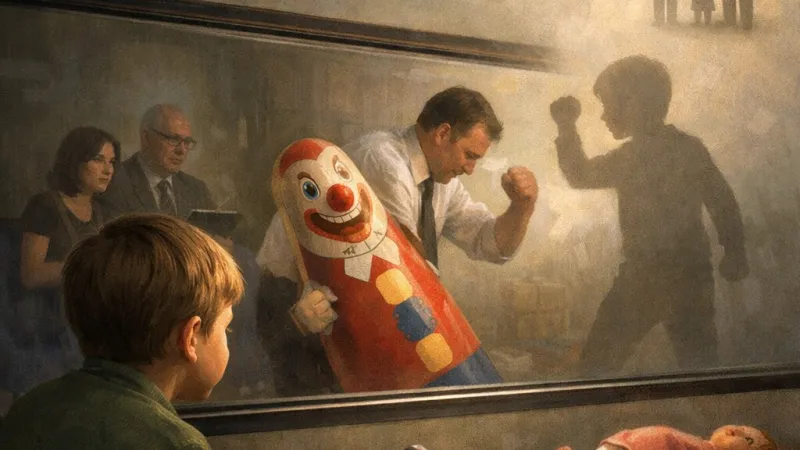
To appreciate the magnitude of this study, one must first consider its intricate experimental design. Bandura and his colleagues devised a controlled laboratory experiment in which children aged between three and six were separately exposed to adult models displaying either aggressive or non-aggressive conduct towards a distinctive inflatable toy—the Bobo doll. The independent variables manipulated by the researchers were the behaviour modelled (aggressive or passive), the gender of the model, and the gender of each child participant. The dependent measure was the frequency and nature of imitated aggressive behaviours displayed by the children when subsequently allowed to interact with the same doll.Participants were all recruited from Stanford University’s nursery school, reflecting the predominantly white, middle-class backgrounds typical of much psychological research from this era. Forty-eight boys and forty-eight girls took part, carefully assigned to experimental conditions to ensure balanced representation.
The procedure, innovative in its time, unfolded in several distinct phases. Initially, children entered a playroom where they observed an adult either physically and verbally attacking the Bobo doll—hitting, punching, and using phrases like “sock him in the nose”—or instead simply playing quietly without aggression. After this, the children were subjected to a deliberate episode designed to provoke brief frustration: they were taken to a room full of attractive toys and subsequently informed these toys had to be reserved for other children. This frustration stage was crucial, intended to amplify the likelihood of any aggressive tendencies being expressed.
Following this, each child entered a room with the Bobo doll and a series of toys, including both aggressive implements (like a mallet and dart gun) and more neutral items (such as tea sets). The researchers, hidden behind mirrored glass, carefully observed and scored the children's behaviour according to predefined criteria: imitative physical aggression, imitative verbal aggression, and novel aggressive acts.
One of the key methodological strengths was the use of multiple observers, allowing the researchers to cross-check records and thus increase inter-rater reliability. The categorisation of aggressive acts was systematically operationalised, enhancing the study’s internal reliability.
---
2. Key Findings and Their Interpretation
Perhaps the most striking result from the Bobo Doll study was the clear demonstration that children can and do imitate aggressive behaviour simply by observing it. Those children who had seen the adult model behaving aggressively towards the Bobo doll were considerably more likely to replicate both the specific actions (such as striking or kicking the doll) and remarks than those children who had observed the non-aggressive or no-model condition.Beyond this headline, however, the study revealed several nuances. Gender differences emerged distinctively: boys were observed to imitate more physical aggression (hitting, kicking), while girls were marginally more inclined to imitate verbal aggression. Another nuanced discovery was that children were more likely to imitate models of their own gender—for instance, boys imitated male models’ physical aggression with the greatest frequency. This mirrors wider British cultural observations, where gender norms often play out subtly in children’s play, as documented in fictional works such as Enid Blyton’s “Famous Five” series or in the nostalgic depictions of school life by Richmal Crompton.
Not all behaviours were strictly imitative. Many children demonstrated novel acts of aggression not modelled by the adults, suggesting that observing aggression does not just elicit copying, but can also foster creative extensions of aggressive behaviour. Additionally, the gender of the model influenced outcomes: male models generally elicited more aggression than female models, aligning with traditional images of masculinity and violence present in mid-20th-century British society.
The implications for social learning theory are considerable. Bandura argued that learning is not limited to direct reinforcement (as Behaviourist theorists like Skinner had believed), but can occur vicariously—by observing others being rewarded or punished for their actions. For example, a child watching a peer being praised for a skill in a school playground may be more likely to attempt that skill themselves. The Bobo Doll experiment supported these principles, laying the groundwork for modern explorations of vicarious reinforcement and motivational factors governing learning through observation.
---
3. Methodological Considerations and Critique
While the Bobo Doll study boasts methodological rigour in many respects, it is not without its criticisms. The tight experimental control—use of laboratory setting, standardized procedures, and systematic behaviour scoring—strengthens its reliability and enables causal conclusions. The operational definitions of aggression and the employment of observer checks are other notable merits.Nevertheless, the study’s very artificiality calls into question its wider applicability. Watching an adult pummel an inflatable doll in a sparse, unfamiliar room is far removed from the natural everyday experiences of a British child. Would similar patterns emerge in the lively chaos of a school playground, or amidst the gentle supervision of a family living room in suburban Sheffield or Cardiff?
Ethical concerns are not insignificant. The children were exposed to aggressive behaviour that, at the time, would rarely have been legislated against, but in modern settings would raise questions of informed consent, lasting harm, and safeguarding. Contemporary British guidelines for research with minors, such as those outlined by the British Psychological Society (BPS), demand far more stringent protection for young participants.
There is also the perennial problem of demand characteristics—children may have guessed the purpose of the study and responded accordingly to please the adult observers. Cultural homogeneity among participants restricts the generalisability of findings: one cannot confidently extrapolate the results to children from less privileged backgrounds, or those brought up in different cultural climates.
Reliability, nonetheless, was strengthened by high inter-rater agreement, but ecological validity remains a concern. For future improvements, researchers might adopt more longitudinal, real-world approaches, observing children in unstructured play or at home, as is often attempted in British early years research today.
---
4. Ecological Validity and Real-World Applications
A significant criticism often levelled at the Bobo Doll study is its lack of ecological validity. Observing children in the constructed environment of a laboratory cannot capture the full richness of social interaction or the myriad influences present in their day-to-day lives. Contemporary research in British primary schools, for instance, shows that aggression is typically embedded within complex webs of peer relationships and adult influence—nowhere near as linear as the original Bobo Doll paradigm.Naturalistic observation, such as watching how children interact during unsupervised playground time or recording their play at home, can yield a more genuine picture of how aggression is modelled and learned. In practice, employing independent raters or teachers to record instances of observed aggression after exposure to certain types of role models, as employed in anti-bullying interventions like the UK’s “KiVa” school programme, helps improve reliability and authenticity.
The gendered findings of Bandura’s study are especially relevant when considering the British education system’s focus on diversity and inclusion. Teachers are better equipped today to recognise subtle gender norms and challenge stereotypes, making use of class assemblies, circle time or PSHE lessons to discuss positive and negative role-modelling.
Wider practical implications for educational and clinical settings are substantial. Insights from social learning theory underpin anti-bullying schemes, aggression management programmes, and behaviour contracts in British schools. Furthermore, child psychologists and child and adolescent mental health services (CAMHS) employ modelling (including pro-social models) as part of cognitive-behavioural interventions for children displaying excessive aggression.
Extending these findings beyond the classroom, Bandura’s conclusions have sparked discussions about media violence and its impact in Britain. Debates around violent children’s television (such as concerns once voiced over “Grange Hill” or video games like “Grand Theft Auto”) rest upon the principle that children exposed to aggressive models are more likely to internalise and reproduce such behaviours, provided they identify with the model.
---
5. Extension and Future Research Directions
Moving beyond the original parameters of Bandura’s study, modern research priorities include longitudinal tracking of aggression—investigating whether children who imitate aggression in controlled settings are in fact more likely to display aggressive behaviour over months or years, especially as they transition through primary and secondary education.Cross-cultural comparisons can further illuminate the universality (or specificity) of Bandura’s findings. For example, British children’s responses might differ from those of children raised in collectivist societies, or in regions with contrasting views about the acceptability of aggression.
With media’s evolution, the study of modelling has expanded to include animated and digital avatars. British children spend increasing amounts of time engaging with YouTube influencers, online games, and virtual worlds; thus, current research might compare the impact of witnessing aggression by a cartoon character versus a real-life role model.
Recent advances in neuroscience are also opening new avenues, marrying social learning theory with an understanding of mirror neurons, empathy, and emotional regulation—areas now at the frontier of developmental research.
Perhaps most importantly, the focus is shifting to interventions: designing, implementing, and evaluating pro-social modelling programmes—which use prominent figures, whether teachers or celebrities, to encourage kindness, resilience, and emotional intelligence among peers. The effectiveness of such interventions can now be measured with innovative technology, such as wearable activity trackers and discreet video analysis, producing rich, naturalistic data.
---
Conclusion
Bandura, Ross and Ross’s Bobo Doll study remains a cornerstone of developmental psychology, highlighting the power of observational learning in driving aggressive behaviour in children. Its careful experimental design and systematic measurement of imitation provided lasting theoretical insights, laying the foundation for social learning theory’s integration within British psychology and education. The study’s findings have informed not only psychological theory but also policy and practice in schools, parenting, and safeguarding.Yet, its limitations—including questions around ecological validity, participant diversity, and ethical standards—necessitate caution in over-extrapolating its findings. Subsequent research, particularly in British settings, has sought to reconcile the artificiality of laboratory experimentation with the complexity of real-world socialisation.
In sum, the Bobo Doll experiment endures as a powerful reminder that children do, indeed, learn from the models they see around them—be they parents, teachers, celebrities, or characters on television. As British society continues to grapple with issues of child development, behaviour, and media influence, critical engagement with Bandura’s legacy remains not just prudent, but essential. Only through the continued application and critique of social learning theory can future generations of psychologists and educators ensure children are exposed, above all, to the very best examples.
Rate:
Log in to rate the work.
Log in