Understanding Pyrosequencing: Techniques and Genetic Applications Explained
This work has been verified by our teacher: 29.04.2026 at 14:13
Homework type: Analysis
Added: 28.04.2026 at 13:16
Summary:
Explore pyrosequencing techniques and genetic applications to understand DNA sequencing principles, methods, and their role in modern genetics research.
Pyrosequencing: Principles, Methodology, and Applications in Modern Genetics
Over the last few decades, DNA sequencing technology has evolved at an extraordinary pace, transforming the landscape of biological research and clinical diagnostics. Among the many methods developed, pyrosequencing stands out as an innovative technique that hinges on the detection of pyrophosphate release during DNA synthesis. This method, notable for its real-time monitoring and sensitivity, occupies a unique position between traditional chain-termination sequencing—most famously the Sanger method—and the high-throughput approaches characteristic of next-generation sequencing platforms such as those produced by Illumina or Oxford Nanopore.
Pyrosequencing has proven invaluable for applications where speed, precision, and the ability to rapidly interrogate short DNA stretches are paramount. Its real-time, light-based detection system circumvents the labour-intensive electrophoresis steps that limit older sequencing methods. This essay aims to present a thorough examination of the biochemical underpinnings, procedural flow, technical subtleties, and varied uses of pyrosequencing, highlighting its impact on both the scientific community and wider society.
---
Fundamental Principles of Pyrosequencing
Basic Molecular Biology Concepts
To appreciate pyrosequencing’s operation, a brief detour into DNA’s architecture is necessary. DNA is composed of four nucleotides—adenine (A), cytosine (C), guanine (G), and thymine (T)—each paired with their complement: A with T, and C with G. During replication or sequencing, the order of these nucleotides must be accurately determined to decode an organism’s genetic instructions. Understanding genetic information at this fundamental level underpins not only basic research but also enables medical interventions and forensic analyses.Chemical Basis of Pyrosequencing
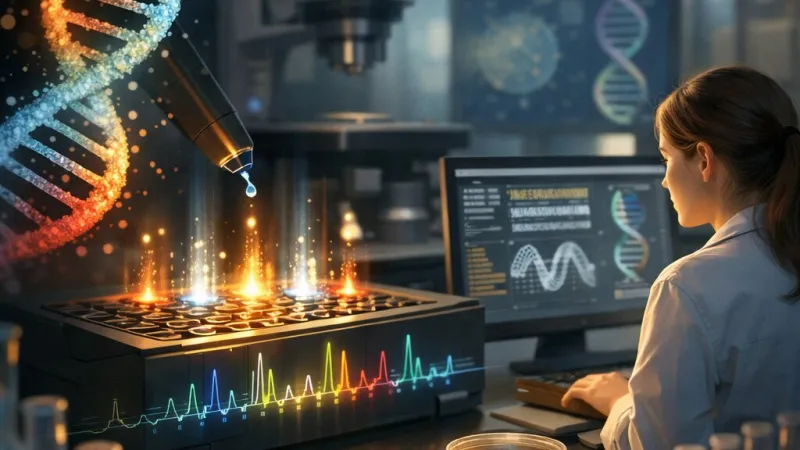
The primary innovation of pyrosequencing lies in its capacity to translate the biochemical events of DNA synthesis into detectable light. As DNA polymerase incorporates a new nucleotide during strand extension, a molecule of pyrophosphate (PPi) is released. In pyrosequencing, ATP sulfurylase converts this pyrophosphate into adenosine triphosphate (ATP). This, in turn, serves as fuel for luciferase—an enzyme familiar to many from the natural luminescence of fireflies—generating a flash of light. The magnitude of this light directly reflects the number of nucleotides incorporated at each stage.Completing the cycle, apyrase is employed to degrade any unused nucleotides and ATP, “resetting” the system for the addition of the next candidate nucleotide. By judiciously sequencing the addition of A, T, C, and G, each base’s inclusion (or exclusion) is relayed as a distinct pattern of light pulses.
Detection Technique
Pyrosequencing’s reliance on light detection enables real-time tracking of DNA synthesis. The intensity of each light pulse corresponds to the quantity of nucleotides added. For example, a run of three adenines in succession yields a threefold stronger signal than a single adenine, but not all such stretches are straightforward to interpret—an issue discussed later. Output data is plotted as a pyrogram, where peaks represent the occurrence and length of each base addition cycle, allowing sequencing results to be immediately evaluated as the procedure progresses.---
Detailed Step-by-Step Pyrosequencing Procedure
Sample Preparation
Pyrosequencing begins with the isolation of high-quality DNA from the organism or sample in question. Contaminants must be minimised, as impure templates may hamper downstream reactions. DNA fragments suitable for pyrosequencing typically range between 300 and 800 base pairs—short enough for efficient processing without sacrificing too much contextual genetic information. Fragmentation may be achieved through mechanical means, such as sonication, or by exploiting restriction enzymes. Subsequently, the DNA molecules are denatured, resulting in single-stranded DNA (ssDNA), which provides an accessible template for primer annealing.Primer Design and Hybridisation
A short stretch of DNA known as a primer—usually about ten nucleotides in length—is engineered to match the start of the target sequence. In the context of A-level or undergraduate laboratory courses, the importance of carefully calculating the primer’s melting temperature and specificity is often stressed, as improper design risks hybridisation to off-target sites, compromising sequencing results. The primer is annealed to the ssDNA template under controlled temperature conditions, ensuring it binds only to the intended region.Enzymatic Cascade Setup
The core of the pyrosequencing reaction is an orchestrated cocktail of enzymes: DNA polymerase to catalyse chain extension, ATP sulfurylase to generate ATP, luciferase for light emission, and apyrase for substrate clean-up. The sequencing reaction proceeds through the stepwise addition of individual nucleotides (dATP, dTTP, dCTP, and dGTP), allowing only one type into the reaction mixture at a time. If the nucleotide is complementary to the next base in the template, DNA polymerase incorporates it, setting off the cascade of light production.Sequencing Reaction and Detection
After every nucleotide addition, the system monitors for light emission. If a nucleotide is incorporated multiple times in succession—such as a homopolymeric sequence like “AAAA”—the light intensity is proportionally increased. The resultant pyrogram’s peaks are interpreted by specialist software that reconstructs the DNA sequence. Modern laboratory set-ups often automate this data collection, although manual inspection of pyrograms is invaluable for troubleshooting anomalous patterns.---
Technical Considerations and Optimisation Strategies
Quality Control and Error Mitigation
Accurate sequencing relies on scrupulously prepared reagents and precise pipetting—skills emphasised by practical examiners across the GCSE and A-level science syllabuses. One principal challenge in pyrosequencing is distinguishing between genuine homopolymer stretches and artefactual signals, as increasing homopolymer length can exaggerate peak size non-linearly. System calibration using standard controls, and careful validation of enzyme efficiency, are essential to maintain reliability. Furthermore, designing primers with high specificity minimises the risk of sequencing irrelevant or contaminant DNA.Limitations of Pyrosequencing
Pyrosequencing is, by design, a short-read method, typically capped at around 100-150 bases per read before enzymatic by-products accumulate and reduce accuracy. Compared to more expansive whole-genome sequencing strategies, this restricts its use to targeted sequencing of select regions, hampering its utility for de novo genome assembly. Another drawback lies in its handling of long homopolymer runs—since light emission does not scale perfectly with the number of identical nucleotides, precise counting above a certain threshold becomes unreliable. Additionally, substandard DNA purity, a not uncommon issue in field studies or forensic work, can adversely affect outcomes.Enhancements and Modifications
To offset some of these constraints, pyrosequencing can be combined with polymerase chain reaction (PCR) amplification, thereby increasing the input DNA quantity and specificity, which is particularly useful when starting material is scarce, as in ancient DNA studies or single-cell analyses. Multiplexing—parallel sequencing of several regions or samples—has been introduced to improve laboratory throughput, supported by advances in robotics and microfluidics. Ongoing improvements in digital imaging and software algorithms are further augmenting the method’s sensitivity and capacity for error correction.---
Applications of Pyrosequencing in Research and Medicine
Genetic Variation Detection
The speed and accuracy of pyrosequencing make it particularly suitable for detecting single nucleotide polymorphisms (SNPs), the most common form of genetic variation within human or plant populations. Large-scale population genetics studies, such as those underpinning the UK’s Biobank initiative, have benefitted from such technology, allowing researchers to rapidly genotype thousands of individuals for specific markers linked to traits or diseases.Microbial and Cancer Genomics
Pyrosequencing also plays a significant role in profiling microbial communities—an application with increasing attention due to the NHS’s growing use of precision medicine. Sequencing marker genes such as 16S rRNA in bacteria has expedited pathogen identification in clinical microbiology labs, improving infection control and outbreak management. Similarly, in oncology, pyrosequencing can pinpoint somatic mutations or assess methylation status, providing clinicians with actionable insight into cancer diagnosis and treatment planning.Pharmaceutical and Forensic Uses
In the pharmaceutical realm, detecting mutations associated with antibiotic resistance—such as those in the tuberculosis bacterium—enables tailored therapies, reducing the risk of ineffective treatment. Forensic laboratories have embraced pyrosequencing for DNA typing at crime scenes: its speed and minimal hands-on time permit the rapid identification of suspects or victims, which has featured in numerous high-profile British legal cases.Limitations in Clinical Translation
Despite these strengths, the adoption of pyrosequencing in routine NHS workflows can be hindered by the cost of specialist equipment and the need for trained personnel. For more extensive genomic profiling, pyrosequencing is often supplemented by broader sequencing technologies, underlining the importance of integrating various methods for a comprehensive diagnostic platform.---
Future Perspectives and Emerging Trends
Looking ahead, the principles established by pyrosequencing are influencing a new generation of miniaturised, portable sequencers—devices that bring genomics out of the laboratory and into the field, for example tracking infectious disease outbreaks or monitoring environmental biodiversity directly at the site of interest. Current research seeks ways to merge the best aspects of light-based detection with the vast throughput of next-generation methods, potentially enabling faster and more accessible clinical testing.With the rising prominence of personalised medicine—offering therapies shaped by an individual’s genetic profile—fast, reliable, and cost-effective sequencing is becoming ever more vital. However, these advances also raise important ethical considerations, from data privacy to the implications of incidental findings, calling for careful engagement with both regulators and the public.
---
Rate:
Log in to rate the work.
Log in