Exploring Disease and the Body’s Immune Defences: From Microbes to Vaccination
This work has been verified by our teacher: 17.04.2026 at 15:52
Homework type: Essay
Added: 14.04.2026 at 14:13
Summary:
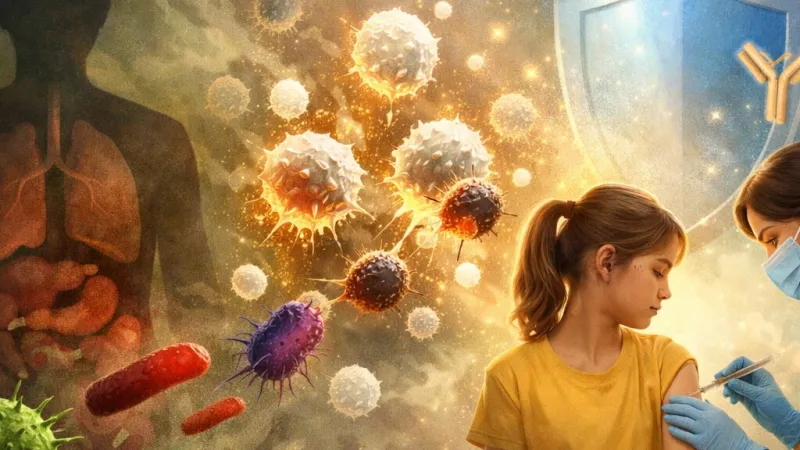
Discover how disease-causing microbes affect the body and learn how the immune system and vaccination protect health in this detailed secondary school essay.
Understanding Disease and the Human Body’s Defence Mechanisms: From Micro-organisms to Immunity
Throughout history, the understanding of diseases and their causes has been a cornerstone of progress in medical science. From the pestilences of medieval Britain to modern epidemics, the constant battle between humans and disease-causing micro-organisms has shaped society and driven innovation in healthcare. In today’s world, deepening our knowledge of how diseases operate and how our bodies defend against them is essential—not only for personal well-being but also for the collective health of communities across the United Kingdom and beyond.
Disease, at its core, refers to any condition which impairs normal functioning of the body, often triggered by the invasion and multiplication of harmful micro-organisms called pathogens. This essay explores the nature of these unseen adversaries, the sophisticated defence systems our bodies have evolved, the significance of vaccination and antimicrobials, and the pivotal link between infection and the heart’s role within the delicate network of the circulatory system. Together, these themes demonstrate why responsible practices and scientific advancement remain crucial in the ongoing fight against illness.
---
I. Micro-organisms and the Causes of Disease
A. Definition and Types of Pathogens
Pathogens are micro-organisms that have the capability to cause disease when they invade the human body. There are several kinds of pathogens, including bacteria, viruses, fungi, and protozoa. Each type behaves differently, exploiting unique strategies to infect hosts and disseminate. Of particular note are bacteria and viruses, which are most commonly associated with everyday ailments.Bacteria are single-celled organisms. Most are harmless or even beneficial — for example, those living in our gut — but some have evolved mechanisms to breach our defences and trigger disease. Viruses, on the other hand, are much smaller and technically not alive outside of a host cell. They are essentially packets of genetic material, and can only reproduce by commandeering the cells they infect.
B. Mechanisms of Pathogen Infection and Reproduction
Bacteria reproduce primarily through binary fission, a process where a single bacterium divides into two identical cells. Under favourable conditions, like warmth and plentiful nutrients, such as those found inside the body, bacteria can multiply astonishingly quickly—sometimes doubling every twenty minutes. This rapid growth explains the sudden onset and escalation of symptoms in bacterial infections like strep throat.Viruses operate differently. They lack the cellular “machinery” needed to make copies of themselves, so they infiltrate human cells. Once inside, they take control, directing the cell to manufacture new virus particles. Eventually, the overrun cell bursts, releasing the viruses to infect neighbouring cells. The symptoms we experience, such as a sore throat from cold viruses or fever with influenza, result both from the direct damage caused by this cycle and our body’s efforts to counter the invaders.
C. Examples of Diseases Caused by Different Pathogens
Typical examples of bacterial diseases include tuberculosis (TB), caused by Mycobacterium tuberculosis, which even today remains a significant public health concern, and tonsillitis originating from Streptococcus bacteria. Viral diseases are no less prevalent; the seasonal flu, provoked by the influenza virus, and the ever-present common cold (usually rhinovirus), demonstrate the ubiquity and impact these micro-organisms have on our lives.---
II. The Human Body’s Defence Systems Against Disease
A. External Defences
Our first line of defence against pathogenic invasion involves external barriers. The skin serves as a nearly impenetrable shield, but this defence is only effective provided it remains unbroken. Open wounds and breaks allow microorganisms entry. Other external barricades include chemical agents like lysozymes—enzymes in saliva and tears that can destroy bacteria by breaking their cell walls. Mucus in our noses and respiratory tracts traps dust and pathogens, while the stomach’s strong acid neutralises many harmful invaders before they can take root.B. The Immune System: The Body’s Internal Defence
Should pathogens breach these front-line defences, the immune system is mobilised. This intricate network consists mainly of white blood cells (leucocytes), which have various specialised forms and originate in the bone marrow. Each type of white blood cell has distinct roles in seeking out and neutralising threats.C. Specific Immune Responses
Some white blood cells perform phagocytosis: they patrol the bloodstream, detect foreign bodies, and envelop or "eat" them before breaking them down with digestive enzymes. Others are involved in the production of antibodies—proteins tailored to identify and bind to antigens. Antigens are unique molecular markers found on the surface of all cells and pathogens; when recognised as foreign, they set off an immune response. The "lock and key" analogy is often used here: an antibody’s shape perfectly complements its corresponding antigen, ensuring specificity and effectiveness.D. The Process of Immune Activation
When a pathogen is detected, the corresponding antibody-producing white blood cell begins clonal selection and expansion—dividing rapidly to churn out thousands of identical antibodies. These antibodies attach to pathogens, neutralising them directly or flagging them for phagocytes to dismantle. This marking is called opsonisation and enhances the speed and efficiency of destruction, as pathogens clump together into antibody-pathogen complexes, making them easier targets.E. Immunological Memory and Long-term Protection
Crucially, the immune system has memory. After an infection is overcome, specialised memory cells persist for years or even a lifetime. Should the same pathogen return, these memory cells initiate a rapid and robust response, often destroying the invader before symptoms appear. This phenomenon underpins the concept of immunity and explains why people rarely catch diseases like measles more than once.---
III. Vaccination and Its Role in Disease Prevention
A. What is Vaccination?
Vaccination is one of the great triumphs of British public health. A vaccine typically contains a harmless, inactivated, or weakened form of a pathogen, or just its antigens. When administered, vaccines stimulate the immune system to develop relevant antibodies and memory cells, but without causing the disease itself.B. The Importance of Vaccination Programmes
Routine immunisation has dramatically reduced the incidence of once-common diseases. For instance, the introduction of the MMR (Measles, Mumps, Rubella) vaccine on the NHS led to a huge decline in these illnesses, protecting children and indirectly those who cannot be vaccinated for health reasons. The recent roll-out of COVID-19 vaccines also highlighted how vaccination can shield vulnerable members of society and help curb epidemics when widely adopted.C. Challenges in Vaccination
However, new problems continue to emerge. Some pathogens, like the flu virus, mutate frequently—altering their antigens so previous immunity is less effective. Hence, flu vaccines are updated annually to match circulating strains as closely as possible. Herd immunity is another key concept; when enough people are vaccinated, disease transmission is diminished, safeguarding those who are unvaccinated or immunocompromised.D. Risks Versus Benefits of Vaccination
While minor side effects (like sore arms or mild fever) can occur, and rare allergic reactions are possible, the overwhelming evidence supports the safety of vaccines. The benefits—drastic reductions in morbidity and mortality—far outweigh the small risks.---
IV. Antimicrobials and Resistance: The Ongoing Battle
A. Types of Antimicrobials
Antimicrobials are substances that kill or inhibit the growth of micro-organisms. Antibiotics, such as penicillin discovered by Alexander Fleming in 1928 at St Mary’s Hospital, London, are only effective against bacteria. Antivirals and antifungals, respectively, target viruses and fungi, employing different mechanisms.B. Development of Antimicrobial Resistance
Unfortunately, the success of antibiotics is being undermined by resistance. When individuals fail to complete prescribed courses, or when antibiotics are overused for viral infections (where they have no effect), bacteria with natural resistance survive and multiply. Over time, this leads to the emergence of "superbugs" like MRSA (Methicillin-resistant Staphylococcus aureus), which are very difficult to treat.C. Consequences of Resistance
The rise of resistance threatens to render common infections untreatable, reversing decades of medical progress. Hospitals in the UK now have dedicated teams responsible for antimicrobial stewardship, urging doctors and patients alike to use these medicines judiciously.---
V. Drug Development and Clinical Trials
A. Stages of Drug Development
Creating new drugs is a painstaking and highly regulated process. Initial tests might take place on computer models (in silico) or with cells in a dish (in vitro), establishing basic safety and effectiveness. Promising treatments may then proceed to animal studies, but only under strict ethical guidelines.B. Clinical Trials in Humans
Drugs that pass these hurdles advance to clinical trials involving human volunteers. Early phase trials assess safety, often starting with healthy candidates. Later phases determine how effective the drug is at treating affected patients.C. Types of Clinical Trial Designs
Trials may use different designs to ensure reliability. Placebo-controlled trials compare the new treatment to an inactive substitute; 'blind' trials mean participants do not know which treatment they receive, minimising bias. 'Double-blind' trials, where neither doctors nor patients are aware of group assignments, provide the most reliable data.D. Ethical considerations and importance of rigorous testing
Ethics are paramount: only after thorough evaluation for safety and benefit are new drugs approved for public use. This careful process protects individuals and upholds public trust in the health system.---
VI. Connection to the Heart and Circulatory System as a Framework
A. Overview of the Circulatory System
The circulatory system is the highway network of the body. It comprises the heart, blood vessels (arteries, veins, capillaries), and blood itself. Through this network, oxygen, nutrients, hormones, and immune cells reach every tissue, while waste products are ushered away for disposal.B. The Heart as a Dual Pump
The heart itself acts as a dual pump, with one side circulating deoxygenated blood to the lungs for oxygenation, and the other supplying oxygen-rich blood throughout the body. If the heart or vessels are compromised—be it by infection or chronic disease—the entire defence network falters.C. How Disease and Infections Can Affect the Circulatory System
Infections can directly impact the circulatory system. Blood-borne pathogens may trigger septic shock, a life-threatening drop in blood pressure, or cause infections of the heart’s inner lining (endocarditis). Effective circulation is also essential for immune cells and antimicrobials to reach infection sites; thus, any compromise can worsen recovery.---
Rate:
Log in to rate the work.
Log in