Exploring Cell Organelles: Functions and Diversity in Eukaryotic Cells
This work has been verified by our teacher: 16.04.2026 at 11:52
Homework type: Essay
Added: 15.04.2026 at 11:44
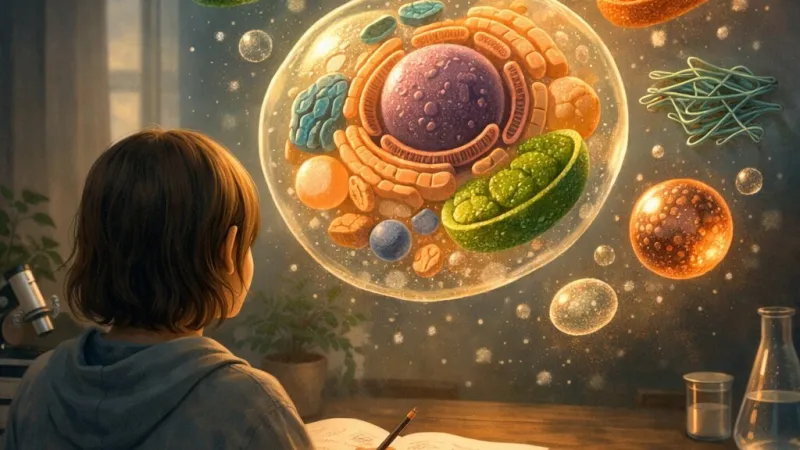
Summary:
Discover the functions and diversity of cell organelles in eukaryotic cells to enhance your understanding of cell biology and improve your homework skills.
Cell Organelles: Structure, Function and Diversity Across Eukaryotic Cells
Cells form the foundation of all living things, constituting the smallest unit capable of life. Amongst the diverse array of cells, eukaryotic cells, distinguished by their membrane-bound organelles and defined nucleus, stand out for their complexity and compartmentalisation. Unlike prokaryotes, such as bacteria, which are structurally simpler and lack an internal organisation, eukaryotic cells—from the root hair of an oak, to the neurons in the human brain—contain a collection of highly specialised organelles. These organelles not only support the cell’s individual survival but also allow multicellular organisms to achieve an astonishing diversity of forms and functions. The study of organelles, then, goes beyond the realm of cell biology, influencing biotechnology, agriculture, and medicine in the United Kingdom and beyond. This essay seeks to provide a detailed exploration of the major cell organelles, examining how their unique structures support particular functions, and considering how plant, animal, algal, and fungal cells tailor their organelles to suit their ways of life.
---
I. The Concept of Organelles in Eukaryotic Cells
An organelle, by definition, is a distinct, often membrane-bound structure within a cell, dedicated to a particular process. Whilst some, like the nucleus or mitochondria, are encased in membranes, others, such as ribosomes, are not. This division of labour allows eukaryotic cells to perform various functions simultaneously and efficiently. It is this internal compartmentalisation that enables a cell to separate incompatible processes and increase productivity. For example, the lysosome’s acidic interior would be destructive if not carefully segregated from the rest of the cytoplasm.Almost all eukaryotic cells share a standard ‘toolkit’ of essential organelles—for example, the nucleus, endoplasmic reticulum, mitochondria, Golgi apparatus, lysosomes, cytoskeleton, and ribosomes. Each of these performs a role without which life as we know it would be impossible, their cooperation as vital as the instruments in an orchestra.
---
II. The Nucleus: Control Centre of the Cell
Central to the eukaryotic cell is the nucleus, enveloped by a double membrane punctuated with nuclear pores, which serve as carefully monitored gateways regulating the passage of molecules such as RNA and proteins into and out of this compartment. The nuclear envelope is contiguous with the rough endoplasmic reticulum, enhancing efficient molecular traffic.Inside, the genetic material is organised as chromatin—DNA wound around histone proteins. Chromatin itself can exist in different densities: euchromatin, less condensed and actively transcribed, and heterochromatin, which is more tightly packed and typically less active. This chromatin organisation adds a further layer of regulation to gene expression. During cell division, these threads condense to form visible chromosomes, faithfully distributing genetic information—a process starkly illustrated during mitosis and meiosis observed under the microscope in many British school lab lessons.
The nucleus also houses the nucleolus, a dense body where ribosomal RNA is synthesised and assembled with proteins to begin the creation of ribosome subunits. These are then transported through nuclear pores into the cytoplasm, continuing their maturation and eventual deployment throughout the cell. Ultimately, the nucleus acts as the ‘brain’ of the cell, orchestrating gene expression and coordinating cell growth, division, and responses to the cell’s environment.
---
III. Energy Generation: Mitochondria
Mitochondria, often dubbed the ‘power stations’ of the cell, are essential for life’s energy demands. Their double membrane structure is key: the smooth outer membrane encloses the organelle, while the inner membrane is dramatically folded into cristae, creating a large surface area for the electron transport chain machinery vital for aerobic respiration.Within the mitochondrial matrix, numerous enzymes facilitate the Krebs cycle—a cascade of reactions releasing energy from nutrients. Mitochondria also possess their own DNA and ribosomes, a vestige of their evolutionary origins as independent bacteria—a concept first proposed by Lynn Margulis and now a fixture of modern biology syllabi. This partial autonomy means mitochondria can replicate and synthesise some of their own proteins, yet they remain integrated into the cell’s workings.
The number and shape of mitochondria relate directly to the cell's energy demands. Muscle cells, for example, are packed with mitochondria to support contraction, while less active cells, such as some epidermal cells, require fewer. This adaptability underscores their central importance to eukaryotic life.
---
IV. Endoplasmic Reticulum: Protein and Lipid Synthesis Hub
The endoplasmic reticulum (ER) weaves an extensive network within the cytoplasm and connects directly with the nuclear envelope. It manifests in two forms: rough (RER) and smooth (SER). The RER, called so because of ribosomes attached to its surface, is home to the synthesis and folding of proteins destined for secretion or membrane incorporation. Here, polypeptides are glycosylated, folded, and readied for transport.The SER, lacking ribosomes, is mainly involved in the synthesis of lipids and steroids, processes particularly evident in cells specialising in hormone production or detoxification, such as liver hepatocytes. It also participates in carbohydrate metabolism and stores calcium ions, vital for processes like muscle contraction.
This continuous system of membranes maximises the internal surface area available for synthesis and modification, reflecting a structural adaptation for efficiency. The seamless connectivity between ER and nuclear envelope ensures swift molecular trafficking and communication, supporting the cell’s responsiveness.
---
V. Golgi Apparatus: Processing and Packaging Centre
First identified in the early twentieth century by the Italian scientist Camillo Golgi—his work later verified and contemporised throughout European academia—the Golgi apparatus comprises a series of flattened membrane sacs known as cisternae. Proteins and lipids arriving from the ER undergo further modification here, such as the addition or removal of sugar groups and phosphate moieties.Beyond processing, the Golgi directs traffic: packages are sorted into vesicles destined either for secretion through the cell membrane, integration into lysosomes, or delivery to various intracellular locations. This highly organised sorting is akin to a bustling postal sorting office, ensuring that molecules reach their correct destinations.
The Golgi apparatus is also critical in the formation of lysosomes, embodying the cell’s proactive internal logistics and defence mechanisms. In highly secretory cells—such as those in the mammalian pancreas, producing digestive enzymes—an abundant, well-developed Golgi is always observed.
---
VI. Lysosomes and Ribosomes: Digestion and Protein Synthesis Units
Lysosomes are membrane-enclosed sacs filled with hydrolytic enzymes, isolated from the cytoplasm to safely degrade unwanted macromolecules, cell debris, and foreign pathogens. In animal cells, their role extends to cellular defence and recycling, an essential aspect of autophagy for maintaining homeostasis. If a lysosome membrane breaks, the cell risks autodigestion—a phenomenon linked to certain pathologies.Ribosomes, in contrast, are non-membrane-bound organelles found free in the cytoplasm or attached to the RER. Composed of ribosomal RNA and proteins, they exist as two distinct subunits, 40S and 60S in eukaryotes, which combine during translation. Ribosomes are the molecular machines translating mRNA blueprints into functional polypeptides—a process fundamental to all life. Their universal presence, from the growing tips of a daffodil to the neurons of a bird, is a testament to the centrality of protein synthesis.
---
VII. Unique Organelles and Features in Plant, Algal, and Fungal Cells
Plant cells are distinguished by several unique features. Their rigid cell walls, made mostly of cellulose, confer structural integrity, while the large central vacuole maintains turgor pressure, supports cell expansion, and stores a range of chemicals. Chloroplasts, the defining organelles of plant cells, have an internal stack of thylakoids (grana) embedded with chlorophyll pigments to harness light for photosynthesis—a concept at the core of ecological cycles and agricultural productivity in the UK.Algal cells, ranging from unicellular (such as Chlorella, the focus of classic British pond studies) to giant multicellular seaweeds, show remarkable diversity in their chloroplast structure and pigments, reflecting their adaptation to various aquatic habitats. Some possess other specialised features, such as pyrenoids for carbon fixation.
By contrast, fungi—spanning microscopic yeasts to the macroscopic forms admired in forest walks across Britain—possess cell walls made of chitin and lack chloroplasts, as they do not photosynthesise. Their organelles have adapted to saprophytic lifestyles, aiding in the decomposition of organic matter and nutrient cycling in woodland soils.
These adaptations highlight the remarkable versatility of eukaryotic cells, with organelles modified to suit particular ecological niches and survival strategies.
---
VIII. The Role of the Vacuole and Cell Wall in Plant Cells
The plant vacuole, bounded by a specialised membrane known as the tonoplast, acts as a storage hub for ions, metabolites, and potentially toxic substances. It is essential for regulating osmotic balance, and by maintaining turgor pressure, the vacuole ensures the plant’s leaves and stems remain upright. When a plant wilts, it is often a sign that vacuole pressure has diminished.The cell wall, constructed of cellulose microfibrils, gives tensile strength and protection. Some plant cells develop secondary wall layers reinforced with lignin, especially in woody species native to the UK, providing additional rigidity and resistance to decay. The harmonious interplay between the vacuole and cell wall is crucial, not only for physical support but also for isolating harmful compounds from the rest of the cell.
---
IX. Cytoplasm and Cytoskeleton: The Cellular Matrix and Framework
Surrounding and permeating all the organelles is the cytoplasm: an aqueous medium conducive to countless metabolic reactions. Cytosol fills the gaps between organelles and serves as the site of metabolic pathways such as glycolysis.Embedded within the cytoplasm is the cytoskeleton, composed of microfilaments (actin), intermediate filaments, and microtubules. These structures maintain cell shape, facilitate the movement of organelles and vesicles (exemplified by the cyclosis observed in plant cells under school microscopes), and play pivotal roles during cell division in forming the mitotic spindle. The cytoskeleton’s adaptability allows, for instance, white blood cells to change shape as they pursue pathogens, underpinning immune responses.
---
Conclusion
The eukaryotic cell is an exquisite example of biological complexity, harmonising scores of specialised organelles. Each organelle, from the DNA vault of the nucleus to the powerhouse of the mitochondrion, or the skeletal scaffold of the cytoskeleton, is uniquely structured to fulfil its function. Across the kingdoms, from the flowering hedgerows of England to the fungi carpeting Scottish woodlands, organelles have been perfected and repurposed for specific ecological triumphs. Understanding these structures not only illuminates the basics of life but also drives advances in biotechnology, disease treatment, and sustainable agriculture of significance to Britain and the wider world. Organelles, in their ingenious diversity, continue to inspire awe and investigation—a testament to the evolutionary success of eukaryotic life.---
[Diagrams and further reading, such as textbook chapters from Mary Jones’ “Cambridge International AS and A Level Biology”, are recommended for deeper comprehension.]
Rate:
Log in to rate the work.
Log in