Potsdam 1945: How the Conference Shaped Post-war Europe and the Cold War
This work has been verified by our teacher: 16.01.2026 at 18:57
Homework type: History essay
Added: 16.01.2026 at 18:41
Summary:
Potsdam 1945 set Germany's occupation, borders, reparations, and trials, revealing Allied rifts and laying groundwork for the Cold War.
Potsdam, 1945: Crucible of Postwar Europe and Prelude to Division
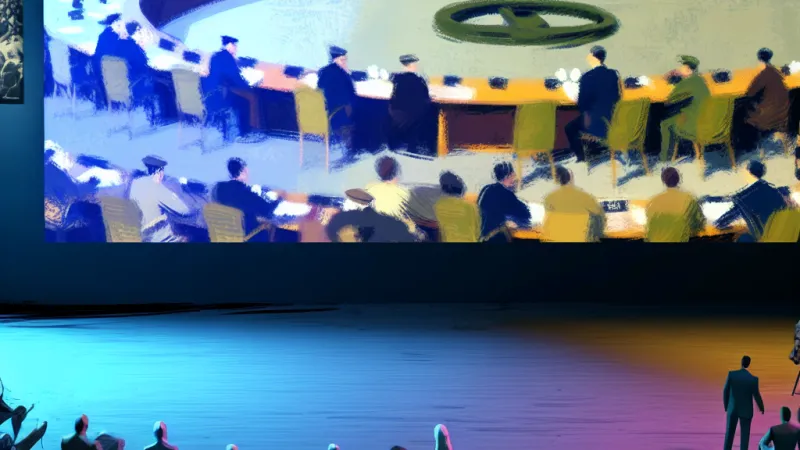
The Potsdam Conference, convened from 17 July to 2 August 1945 at Cecilienhof in the Berlin suburb of Potsdam, represented a critical juncture in the shaping of postwar Europe. With Nazi Germany defeated yet the peace still fragile, the Allied leaders met not only to deliberate on immediate arrangements for Germany but also—knowingly or not—to sketch lines that would harden into the contours of the Cold War. While Potsdam yielded pragmatic resolutions, these were entangled with tensions and ambiguities that both reflected and deepened the Allies’ divergent aims. This essay will explore the context and outcomes of Potsdam, assessing the conference’s role as both a practical settlement and an accelerant of postwar rivalry. In doing so, it will examine agreements on Germany and the wider European order, the contentious Polish and reparations questions, the shadow of the atomic bomb, and the conference’s enduring historiographical debates.Context: The Road from Yalta to Potsdam
To grasp Potsdam’s significance, it is essential to situate it within the wider landscape of 1945. Earlier that year, the celebrated Allies—Britain, the United States, and the Soviet Union—had met in Yalta (Crimea) to outline a vision for post-Nazi Europe. Yet by the time they assembled at Potsdam, the world had changed. Germany had surrendered in May, its territory carved into occupied zones governed day by day by Allied command. Crucially, both the American and British delegations arrived under new stewardship: President Harry Truman, less experienced and more suspicious of the Soviets than Roosevelt, and Prime Minister Clement Attlee, installed mid-conference after Labour’s landslide victory over Churchill, each altered the tone and substance of British and American negotiating positions.On the military map, the Soviet Union enjoyed overwhelming leverage, its armies arrayed across eastern Germany and much of central and eastern Europe. Britain and America administered their own zones in the west. This asymmetry in power on the ground lent the Soviets notable advantage in pressing their postwar agenda, while both Western leaders were faced with domestic imperatives: economic reconstruction, demobilisation, and public expectations for peace. Potsdam, then, was held amid a backdrop not of Allied triumphalism but of urgency, scarcity, and mutual uncertainty.
The Leaders, Setting, and Stakes
Three men dominated the conference table: Joseph Stalin, with the authority of a victorious marshal and deep-seated anxieties about security; Harry Truman, new to the office and inclined towards firmness; and first Churchill, then Attlee, representing a Britain increasingly constrained by economic fragility. The setting itself—Germany’s former crown prince’s residence, Cecilienhof—embodied the occupation’s unfinished business. Unlike the more idealistic tone of Yalta, Potsdam’s discussions were often businesslike and blunt, focusing on the immediate dilemmas surrounding defeated Germany and occupied Europe. Personal diplomacy mattered, yet so too did the very different visions that each man brought, shaped by war’s cost and their own countries’ ambitions.Allied Aims and Areas of Friction
From the outset, the conference highlighted the Allies’ divergent priorities. The Soviet Union’s principal concern—deeply scarred by the ravages of the Nazi invasion—was security above all: to erect a buffer of friendly states in its west, claim substantial reparations to fuel reconstruction, and see its influence recognised in Poland and beyond. Britain, with imperial commitments and the weariness of prolonged war, sought both European stability and to limit the expansion of Soviet power that threatened to marginalise its role. The Americans, meanwhile, faced with responsibility for European recovery, stressed the importance of economic viability in Germany, opposed the fragmentation of the German economy, and advocated self-determination for liberated states.This collision of priorities—security for Stalin, liberal democracy and economic order for Truman and Attlee—set the stage for compromises that were sometimes uneasy and always provisional.
Potsdam’s Decisions on Germany
Among Potsdam’s chief products was a framework for administering defeated Germany—the so-called ‘Four Ds’: demilitarisation, denazification, decentralisation, and democratisation. Each sought to address the roots of Nazi aggression: the abolition of the German armed forces and weapons industries, exclusion of Nazi officials from public life, breaking up the economic and political structures of centralised power, and the conferral of basic democratic freedoms. The Allies entrusted this process to the Allied Control Council—made up of the military governors of each of the four zones (American, British, Soviet, and French).Germany’s physical and administrative partition became the central reality of the new order. Berlin itself was likewise divided, though deep inside the Soviet zone—an arrangement that would soon prove problematic. While the intention was for joint administration, mechanisms for coordination were ill-defined and soon foundered on mutual suspicion.
Notably, the conference deferred final decisions on Germany’s eastern frontier, merely recognising the de facto shift of the Polish border westward to the Oder–Neisse line “pending the final peace settlement”. Here, the Allies made a virtue of ambiguity that would persist for years. These administrative agreements brought order but also uncertainty, often masking profound disagreements over their ultimate interpretation.
The Polish Question: Borders, Governance, and Human Cost
Nowhere was the intersection of principle and pragmatism at Potsdam more visible than in decisions affecting Poland. The Allies, after much wrangling, effectively acquiesced in Poland’s westward shift—granting the Soviet-backed Lublin government de facto recognition, while marginalising the non-communist Polish government-in-exile in London. Thus was confirmed, in Louisa Hutton’s phrase, a “fait accompli” on the ground.The conference also sanctioned—at least in principle—the “orderly and humane” expulsion of German populations from the new Polish territories, Czechoslovakia, and Hungary. In reality, this rationalisation covered the forced displacement of millions, an episode that remains among the largest movements of people in European history. While presented as essential for security and ethnic coherence, these transfers resulted in appalling human suffering and seeded lasting bitterness.
Reparations, Economic Policy, and Industry
Economic arrangements for postwar Germany exposed further rifts. The Soviets, whose homeland had been devastated by the Nazi onslaught, demanded heavy reparations. In the end, they secured rights to draw resources from their own zone as well as a share from Western zones, though only after often acrimonious negotiation. The British and Americans, alert to the dangers of repeating the mistakes of Versailles, resisted excessive economic dismantling, anxious not simply to punish but to avert the collapse of Germany’s economy—a concern sharpened by the spectre of postwar hunger and the need for European recovery.American planners, in particular, had retreated from earlier ideas (like the Morgenthau Plan) that advocated stripping Germany of its industry. Instead, the focus shifted: how to prevent future aggression while also facilitating reconstruction—a dilemma at the heart of the policies agreed at Potsdam.
Legal Accountability and Denazification
A further signal outcome was the resolve to hold Nazi leaders accountable for crimes committed in the name of the Reich. The conference paved the way for the Nuremberg Trials—the first international war crimes tribunals in history. Yet, the process of ‘denazification’, lauded in principle, met with disparate execution in the different occupation zones, influenced both by local priorities and the increasing preference for administrative efficiency over thorough justice.The Atomic Bomb and Wider Strategic Shifts
One of the most portentous developments at Potsdam, though occurring largely in the shadows, was the entry of the atomic bomb into international affairs. During the conference, news arrived of the successful Trinity test in New Mexico; Truman’s firmer stance towards Stalin has frequently been linked to his knowledge of this new weapon. The Potsdam Declaration, delivered jointly by the US, Britain, and China on 26 July 1945, demanded Japan’s unconditional surrender on pain of “prompt and utter destruction”—an ultimatum soon to be realised at Hiroshima and Nagasaki.The atomic bomb’s impact on the conference is debated: some historians argue it emboldened American negotiators, although Stalin’s response was notably enigmatic. What is clear, however, is that Potsdam unfolded on the brink of a new era of military and diplomatic calculation.
Immediate Consequences and Emerging Tensions
In the wake of Potsdam’s tidy communiqués lay a far knottier reality. The establishment of occupation structures proceeded, as did population movements and reparation shipments. Yet, almost immediately, cracks in Allied unity became visible. The Soviets consolidated their grip on Eastern Europe—installing friendly governments in Romania, Hungary, Bulgaria, and Poland—while the Western Allies grew increasingly apprehensive, regarding these moves as evidence of expansionism rather than security anxiety.Ambiguities in the agreements soon spawned disputes: implementation of denazification in the British and American zones faltered amid fears of administrative paralysis, while disagreements over reparations and economic policy multiplied. Even as the Allies spoke of shared purpose, their actions increasingly reflected mutual distrust.
Concrete examples highlight these frictions: Britain and the US withheld formal recognition from Poland’s new frontier, while the Soviet Union refused to consult Allied governors on matters within its own zone, such as in the suppression of opposition in Hungary. Thus, the conference’s handshake agreements bred both order and rivalry.
Potsdam and the Origins of the Cold War
Was Potsdam a crucible of the Cold War, or merely the epilogue to the grand alliance? One argument posits that Potsdam institutionalised division by acknowledging spheres of influence and crystallising competing priorities. The conference’s management of repatriation, occupation, and frontiers generated enduring points of contention, hardening positions in Berlin and across eastern Europe.Alternatively, some historians stress that the roots of confrontation lay deeper—woven into the military geography and ideological rivalry that pre-dated even Yalta. Potsdam, on this view, made explicit what had already come to pass, as Allied unity was eroded by the logic of wartime expediency and irreconcilable visions for Europe.
In truth, Potsdam was both consequence and cause. It codified an administrative framework whose ambiguities facilitated further drift, and it signalled, for audiences both home and abroad, the closing of one chapter and the ominous opening of another.
Historiographical Perspectives and Interpretative Debates
Historians have long debated the legacy of Potsdam. The ‘orthodox’ school, typified by early postwar writers, laid blame for the emerging Cold War at the feet of Soviet expansionism. Revisionists, such as those writing after the opening of Soviet archives, challenged this: they saw American economic and strategic interests as provocative. A more recent, ‘post-revisionist’ stance, frequently associated with scholars like John Lewis Gaddis, seeks balance: each side’s security dilemmas, ideological misunderstandings, and the structural conditions of 1945 are highlighted.Some view Potsdam as a missed opportunity for accommodation—had the Western powers pressed less forcefully, or the Soviets offered greater latitude for self-government, might a different order have emerged? Others stress the difficulties of reconciling ideals with realities on the ground—given devastation, uncertainty, and the ghosts of Munich and appeasement.
For A Level and IB students, it is best to treat Potsdam as neither a mere procedural footnote nor a singular rupture: its importance lies in how it both reflected and institutionalised the fractures at the heart of postwar settlement.
Conclusion: Potsdam’s Legacy
In sum, the Potsdam Conference was both a practical reckoning with the messiness of victory and a crucible of division. It formalised arrangements for administration, economic management, and legal reckoning in Germany and beyond, yet its ambiguities and tensions nourished the seeds of rivalry. The conference signalled, to contemporaries and to posterity, that the grand wartime alliance had dissolved into wary cohabitation—one that would soon ossify into the frozen lines of the Cold War.Looking back, Potsdam’s legacy endures in the physical and political geography of modern Europe—nowhere more visible than in the divided city of Berlin, once jointly administered, soon to become the emblem of confrontation. Yet the conference invites not simple judgment but critical reflection on how necessity, ideology, and circumstance combined to shape a conflicted peace.
---
Bibliography and Suggested Reading
* The Potsdam Agreement, July 1945 (primary source: UK Parliamentary Papers) * The Potsdam Declaration, 26 July 1945 (primary source) * John Lewis Gaddis, *The United States and the Origins of the Cold War, 1941–1947* * Norman Naimark, *Fires of Hatred: Ethnic Cleansing in Twentieth-Century Europe* * Gerhard Weinberg, *A World at Arms: A Global History of World War II* * Melvyn P. Leffler, *For the Soul of Mankind: The United States, the Soviet Union, and the Cold War*---
Exam Tips
- State your argument clearly, referencing specific factual details (dates, names, agreements). - Build analysis into every paragraph—not just what happened, but why it mattered. - Use brief, well-integrated references to primary documents and major historians. - Balance short-term outcomes with longer-term interpretations—always ask, “so what?” - Avoid mono-causal arguments: acknowledge nuance and complexity.In the end, a well-argued essay demonstrates not just knowledge of Potsdam’s detail but a sharp sense of its wider, bittersweet significance.
Rate:
Log in to rate the work.
Log in