Understanding the Parable of the Sower: Jesus’ Lesson on Spiritual Growth
This work has been verified by our teacher: 23.02.2026 at 14:09
Homework type: History essay
Added: 21.02.2026 at 13:20
Summary:
Explore the Parable of the Sower to understand Jesus’ teaching on spiritual growth, receptivity, and how faith develops in different life circumstances.
Unpacking the Parable of the Sower: Jesus’ Teaching on Receptivity and Growth of the Divine Word
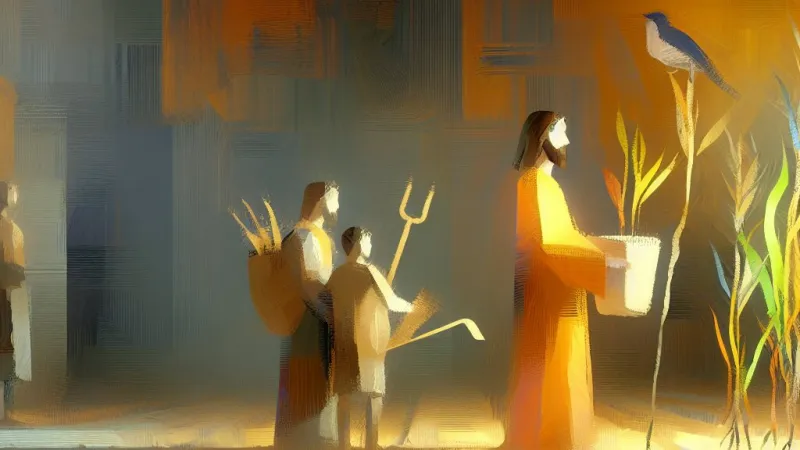
Jesus of Nazareth was an extraordinary communicator, known for his distinctive use of parables – vivid, memorable stories employed to teach profound spiritual truths. One of the most well-known among these stories is the Parable of the Sower, in which Jesus depicts a sower scattering seed on various types of ground, each with differing results. More than a simple tale about agriculture, this parable illuminates the diverse ways individuals can respond to the message of God. By describing the different destinies of the seeds, Jesus explores themes of openness, resistance, and spiritual maturity. This essay aims to explore the layers of meaning within the Parable of the Sower, examining its historical context, the significance of its details, and its implications for spiritual growth both in ancient times and today. To do so, the essay will, first, consider the parable’s cultural and religious background; next, analyse the four types of ground and their meanings; then, discuss the wider spiritual significance; and finally, explore how the parable remains relevant within contemporary faith contexts.
---
I. Contextual Background of the Parable
A. Historical and Cultural Setting
To fully appreciate the Parable of the Sower, it is crucial to understand its setting in first-century Palestine, where agriculture shaped daily life. The image of a sower casting seed onto the land would have been intimately familiar to Jesus’ audience. In such a setting, rocky soils, trampled paths, and thorny patches were commonplace challenges for farmers. The unpredictability of seed growth was thus a natural metaphor for life’s uncertainties and complexities.Within the Jewish tradition, oral teaching was highly esteemed, with teachers making use of parables – ‘mashal’ in Hebrew – to elucidate moral and spiritual lessons in a way that was accessible and memorable. Parables function by inviting the hearer to move beyond superficial understanding, prompting them to seek deeper truths beneath the surface narrative.
B. Purpose of Parables in Jesus’ Ministry
Jesus made parabolic storytelling a cornerstone of his teaching. Parables disclose truth to those receptive to new understanding, while concealing it from those unwilling or hostile. This duality is explicitly stated in Matthew’s Gospel when Jesus says, “Though seeing, they do not see; though hearing, they do not hear or understand” (Matthew 13:13). The parables are thus both a pedagogic tool and a spiritual sieve, sifting those open to God’s message from those closed to it.C. Placement within the Gospels
The Parable of the Sower is found in all three Synoptic Gospels: Matthew, Mark, and Luke, highlighting its significance. It marks a turning point in Jesus’ public ministry, as he begins to focus more directly on the nature of the Kingdom of God and the factors affecting its reception. In many respects, the Sower parable sets the stage for subsequent teachings about faith, discipleship, and the obstacles that can hinder spiritual development.---
II. Detailed Analysis of the Four Types of Ground
A. The Path (Hardened Ground)
The first scenario in the parable sees the sower’s seed falling on the path, where the earth is so compacted that the seed cannot penetrate. Birds swiftly devour these seeds, symbolising how those who hear the message without understanding have it snatched away by external forces. This is a vivid depiction of spiritual unresponsiveness, where hearts are unreceptive – perhaps hardened by cynicism, prejudice, or sheer indifference.Contemporary life offers many parallels: the constant barrage of digital media, a culture saturated with material distractions, or environments hostile to faith can easily harden one’s outlook, rendering spiritual truths incomprehensible or irrelevant. This soil type reminds us that intellectual curiosity and emotional openness are preconditions for genuine engagement with deep truths.
B. Rocky Ground
The second outcome describes seed landing where there is little soil above rock. The plant springs up quickly, yet withers as soon as the sun beats down, for it has no roots. This characterises those who initially receive the message with enthusiasm, but whose interest is superficial and not sustained through adversity.This scenario asks us to consider the depth of our own convictions. In times of trial – whether family difficulties, peer pressure, or the scepticism so common in British secular society – faith that is not anchored will likely falter. Writers such as C. S. Lewis in “The Screwtape Letters” touch upon this fragile enthusiasm, reminding us that steadfastness is built not in moments of excitement, but through disciplined growth. Strengthening faith may require regular spiritual practices, engagement with community, and the willingness to wrestle with doubts, so that our beliefs can withstand life’s inevitable tests.
C. Thorny Ground
Next, Jesus describes seed that begins to grow, but is choked out by thorns – distractions or “cares of the world and the deceitfulness of wealth”, as the Gospel records (see Matthew 13:22). In the UK today, with its consumer-driven culture and relentless stress around achievement, these thorns might take many forms: the pressure of career advancement, the pursuit of material comfort, or social acceptance.Many church leaders across Britain speak about ‘compartmentalised faith’ – religious belief that is boxed off from daily life, squeezed out by competing priorities. Sustaining authentic spiritual growth amidst such distractions requires conscious resistance to the pull of these ‘thorns’, as well as the cultivation of disciplines like regular prayer, sabbath rest, and simplicity.
D. Good Soil
Finally, Jesus celebrates seed that falls on good ground, yielding a rich harvest – “some a hundredfold, some sixty, some thirty”. Here is the picture of receptive hearts: individuals who listen, understand, and respond with action. Throughout British history, there are countless examples of such ‘good soil’: from William Wilberforce, whose Christian convictions drove him to campaign tirelessly for the abolition of slavery, to the many believed saints and ordinary parishioners who have quietly shaped their communities with compassion, integrity, and service.Good soil does not come about by accident; it is prepared through openness, reflection, and nurturing. In practical terms, it leads to active involvement in both the local church and broader society: volunteering, supporting the vulnerable, and living out ethical convictions in daily decisions.
---
III. The Broader Theological and Spiritual Significance
A. The Role of Evil and Spiritual Opposition
In Jesus’ explanation, the birds that snatch away the seed represent the work of Satan, or evil influences that destroy the possibility of faith before it can even begin. While views on spiritual warfare vary within UK churches, there remains a broad recognition of negativity – whether that be internal doubts, societal pressures, or overt hostility toward belief – that undermines spiritual openness.B. Human Responsibility in Receiving the Word
At the heart of the parable lies the principle that each individual bears responsibility for how they respond to spiritual truth. Free will is central to the Christian tradition, and Jesus’ story does not place the blame on the sower or the seed, but on the condition of the soil. It is an invitational parable, emphasising the need for willingness to learn, reflect, and invest effort in nurturing faith. Practices such as prayer, careful study of scripture, communal worship, and acts of kindness are proven ways to cultivate ‘good soil’.C. Growth as a Process
Spiritual maturity is presented here as a gradual process, not an instant transformation. The British poet George Herbert, in his work “The Temple”, frequently reflected on the slow, sometimes painful path of growth in faith. Jesus’ parable encourages patience – both with oneself and with others. The work of transformation, like the growth of a plant, is incremental and often unseen.D. The Kingdom of God as Presented in the Parable
Finally, the Sower Parable situates individual spiritual growth within the larger vision of God’s Kingdom. Fruitfulness is not just for personal edification but for the transformation of communities and societies. The history of the Church of England, including the social gospel movements and countless charitable initiatives, testifies to the reality that, when nurtured, faith can yield wide-reaching results.---
IV. Contemporary Applications and Reflections
A. Use in Modern Religious Education
Within British schools and churches, the Parable of the Sower remains a staple for teaching young people about faith. Creative activities such as planting seeds, reflective journaling, and group discussions encourage self-examination: what distracts me from spiritual growth? Which ‘soil’ describes my life?B. Personal Reflection and Self-Assessment
For readers of any age, the parable is a challenge to honest self-reflection. It invites us to ask: do I resist challenging ideas? Is my faith superficial, or easily withered? Have I become entangled in distractions? What practical steps might I take to create a more receptive, reflective life – joining a discussion group, volunteering, or simply setting aside time for quiet contemplation?C. Broader Societal Implications
On a larger scale, the parable encourages faith communities to foster supportive environments – churches and schools where questioning is welcomed, doubts are addressed, and growth is nurtured. In an era marked by secularism and rapid change, the parable’s image of patient cultivation calls us to resist quick fixes and empty promises, instead investing in deeper, long-term transformation.---
Rate:
Log in to rate the work.
Log in