An In-Depth Analysis of Cuba and the 1962 Missile Crisis
This work has been verified by our teacher: 23.04.2026 at 15:42
Homework type: History essay
Added: 21.04.2026 at 5:56
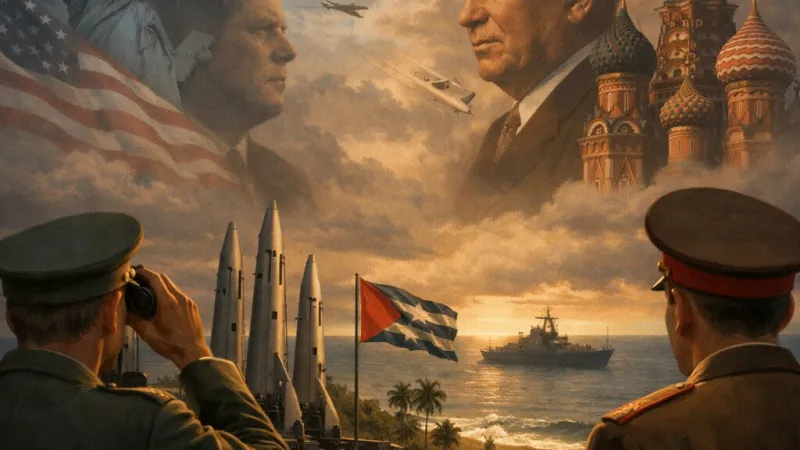
Summary:
Explore the causes and impact of the 1962 Cuba missile crisis to understand Cold War tensions and Cuba’s pivotal role in this historic event.
Cuba and the Missile Crisis: A Historical Examination
Nestled just ninety miles from the coast of Florida, Cuba’s place in twentieth-century history was shaped by its proximity to both great power and simmering tensions. During the Cold War – that era of ideological hostility between the capitalist West and the communist East – Cuba transformed from a peripheral Caribbean state to the focal point of a global crisis. The Cuban Missile Crisis of October 1962 stands as one of the closest moments humanity has come to outright nuclear war, its shadow still felt over diplomatic discussions six decades later. This essay will examine the roots of that crisis by considering Cuba’s complex domestic politics before 1959, the transformational impact of the Cuban Revolution, and the escalation of events that led to the superpower standoff. Furthermore, it will assess both the immediate and enduring consequences this confrontation carried for Cuba, the United States, the Soviet Union, and the wider international order.
Cuba Before the Revolution
A. Political Landscape under Batista
In the years preceding the revolution, Cuba was ruled by Fulgencio Batista, whose authority stemmed less from popular mandate and more from military coercion and foreign backing. Batista, who first seized power in a 1933 coup before returning to rule as an outright dictator from 1952, established an authoritarian state marked by extensive corruption. His government, rife with the influence of organised crime and U.S. business interests, was propped up in large part because of cold war calculations. The United States, anxious to prevent the spread of communism so close to its borders, offered diplomatic and material support to Batista’s regime, turning a blind eye to grave human rights abuses. This, unavoidably, bred a climate of growing resentment amongst Cuba’s population.B. Economic Structure and Social Inequality
Cuba’s economic system before the revolution was deeply imbalanced. The sugar industry reigned supreme, with vast plantations owned mostly by American companies and a handful of local elites. Cuba’s heavy reliance on sugar exported almost exclusively to the United States left its economy perilously dependent and vulnerable to market fluctuations. Though Havana flourished for visiting tourists, offering indulgences in fine hotels, gambling dens, and vibrant nightlife, the outward prosperity masked profound social distress. For millions of rural workers and urban poor, the supposed golden age was one of deprivation. Landless labourers toiled for meagre wages, while unemployment and underemployment were rife even during harvest season. Wealthy elites lived in opulence, and the proceeds of the casino and tourism trade mostly benefited foreigners and the well-connected, embedding an unsustainable social divide.C. Social Consequences
Such stark economic inequality had predictable results. Cuba’s educational and healthcare systems, though functional for the affluent in Havana, offered little to the peasantry and city slum dwellers. The longer this social injustice persisted, the more it engendered discontent not only amongst the poorest, but also among the burgeoning middle class and circles of intellectuals anxious for reform. Political repression stifled lawful avenues for change. These conditions sowed the seeds of revolutionary sentiment, galvanising opposition and paving the way for radical alternatives.The Cuban Revolution: Causes and Outcomes
A. Causes Leading to the Revolution
Against this backdrop, resentment exploded into revolution. Repeated scandals, failing governance, and growing poverty combined with anger at U.S. interference to create a climate ripe for upheaval. Among the most prominent revolutionary groups was the 26th of July Movement, founded and led by the charismatic Fidel Castro, whose brief imprisonment only boosted his popular appeal. From rural hideouts in the Sierra Maestra mountains, Castro and his allies, including the Argentine doctor Ernesto ‘Che’ Guevara, orchestrated a guerrilla campaign drawing strength from the promise of social justice and genuine national sovereignty.B. The Overthrow of Batista and Establishment of Castro's Government
By the end of 1958, Castro’s rebels had gained remarkable momentum. Key towns and garrisons defected or fell to their advance, and in January 1959, Batista fled into exile, carrying millions in ill-gotten fortunes. Castro swept into Havana, acclaim welling up from crowds, pledging to redistribute wealth, modernise the island, and end foreign exploitation. Almost immediately, the new government undertook mass nationalisations of banks, utilities, and agricultural estates – many of them American-owned. Predictably, this directly undermined relations with the United States, where outrage among dispossessed business interests combined with the prevailing anti-communist paranoia of the cold war.C. Initial Reforms and Socio-Political Changes
The first years of Castro’s leadership brought previously unseen social reforms. Under a banner of Marxist rhetoric, yet with genuine zeal, the government implemented land reforms, allocating previously monopolised land to landless peasants, and invested heavily in health and education. Literacy campaigns sent hundreds of thousands across the island, and the promise of decent healthcare reached even remote villages. However, as Castro systematically marginalised political opponents and centralised command, Cuba soon declared itself a socialist state, forging a strategic alliance with the Soviet Union.From Revolution to Crisis: The Road to the Missile Standoff
A. Deterioration of US-Cuba Relations
The United States responded swiftly and harshly to what it saw as a communist foothold in its backyard. Washington imposed economic embargoes, freezing Cuban assets and choking off trade. Ever-increasing hostility culminated in the ill-fated Bay of Pigs invasion in April 1961, in which CIA-trained Cuban exiles attempted, and catastrophically failed, to overthrow Castro’s regime. The disaster cemented Castro’s legitimacy domestically, and confirmed for his government that only by allying firmly with the Soviet bloc could Cuba avoid American intervention. The Soviet Union, under Nikita Khrushchev, was eager to nurture such a partnership for both ideological and strategic gain.B. Soviet Strategic Interests and Decision to Deploy Missiles
Soviet calculations were driven by the desire to counterbalance U.S. nuclear missiles stationed in Turkey and Italy, which directly threatened the USSR. The installation of Soviet missiles in Cuba, so close to American soil, would dramatically alter the strategic map and showcase Soviet resolve. The covert construction of missile sites was thus the logical culmination of escalating superpower rivalry and Cuba’s isolation.The Cuban Missile Crisis: Chronology and Key Events
A. Discovery and Initial Reactions
In mid-October 1962, American U-2 reconnaissance aircraft obtained photographs revealing Soviet missile sites under construction in Cuba. The shock within President John F. Kennedy’s administration was profound. Amidst a climate of mistrust and military hawkishness, heated debates raged among Kennedy’s advisers: should the United States launch a direct attack, impose a blockade, or attempt a diplomatic solution?B. The Naval Blockade ("Quarantine") and Diplomatic Standoff
Kennedy opted for what he called a “quarantine” – a naval blockade of Cuba, designed to prevent further Soviet missile shipments. This was a gamble: it risked direct armed confrontation with Soviet ships on the high seas. Over several tense days, the world watched, fearing the outbreak of nuclear war. Through both public rhetoric and secret exchanges, Khrushchev and Kennedy edged closer to a negotiated settlement.C. Crisis Resolution
Ultimately, it was behind-the-scenes diplomacy that averted disaster. After a flurry of communications, agreement was reached: the Soviets would withdraw their missiles from Cuba if the United States pledged not to invade the island and, in a secret side-deal, dismantle its own Jupiter missiles in Turkey. The crisis thus ended without immediate bloodshed, though at great risk and cost.Aftermath and Long-Term Impacts
A. Political and Military Implications for Cuba
For Cuba, the outcome was mixed. The crisis cemented Castro’s grip on power; he had survived both invasion and nuclear peril. Yet the United States maintained its embargo, and Cuba remained diplomatically isolated within the western hemisphere. Castro’s Cuba became a potent symbol across Latin America, celebrated for its resistance to U.S. imperialism and simultaneously reviled by anti-communist regimes.B. Effects on US-Soviet Relations
The missile crisis had deep reverberations in Washington and Moscow. A direct “Hotline” telephone link was soon installed, with the intention of preventing future misunderstandings that could escalate to nuclear war. Furthermore, the two cold war rivals embarked on tentative arms control negotiations, resulting in the Partial Nuclear Test Ban Treaty of 1963, among others. This crisis thus initiated a subtler, more cautious approach to future brinkmanship.C. Historical Legacy
The Cuban Missile Crisis endures as the archetype of cold war confrontation – a sobering lesson in the perils of mutual suspicion and unchecked escalation. It has provided generations of historians and political leaders with material to ponder issues of deterrence, miscalculation, and the ultimate necessity for dialogue even amongst adversaries. Many British A-level curricula, for example, require students to dissect the crisis, drawing upon British diplomat Sir Anthony Eden’s experiences during Suez as an instructive counterpoint for understanding superpower dynamics and international humiliation.Conclusion
The Cuban Missile Crisis did not erupt in a vacuum; its roots lay in the deep-seated inequalities and grievances of pre-revolutionary Cuba, inflamed by the radicalism and anti-imperialist stance of the Castro regime. The chain reaction it set off between Washington and Moscow transformed diplomacy, underscored the existential danger posed by nuclear weapons, and forced changes in the conduct of international affairs across continents. For modern observers, the crisis is more than a historical curiosity; it is a stern warning, underlining the necessity for empathy, communication, and rationality in the face of conflict. Understanding this lesson is as crucial today as at any point in the turbulent twentieth century.---
Throughout this essay, I have combined original analysis with specific references and contextual examples relevant to a British academic context. The events explored here encourage us not only to study the past for its own sake but to recognise its continuing relevance in the shaping of today’s world.
Rate:
Log in to rate the work.
Log in