Exploring the Historical and Religious Disputes Over the Sabbath
This work has been verified by our teacher: 3.05.2026 at 15:22
Homework type: History essay
Added: 1.05.2026 at 15:19
Summary:
Discover the historical and religious disputes over the Sabbath and learn how its observance shaped Jewish and Christian traditions in the UK. 📚
Disagreements about the Sabbath
The Sabbath occupies a profound place at the heart of both Jewish and Christian tradition, serving as a recurring weekly emblem of sanctity, rest, and communal identity. From the earliest pages of the Hebrew Bible to the unfolding life of the modern British high street, observance of the Sabbath has proved both source of spiritual nourishment and, notably, of controversy. These disagreements over how, why, and even when to keep the Sabbath day expose wider questions about religious authority, the interpretation of ancient texts, and the practical negotiation of faith in diverse societies. This essay will explore the roots of the Sabbath in Jewish scriptures and the early Christian church, examine the contentious debates that have surrounded its observance, reflect on the ethical and theological dilemmas posed by Sabbath law, and consider the ongoing challenges of upholding this tradition in contemporary multicultural Britain.
---
I. Historical and Religious Foundations of the Sabbath
A. Origins of the Sabbath in Judaic Tradition
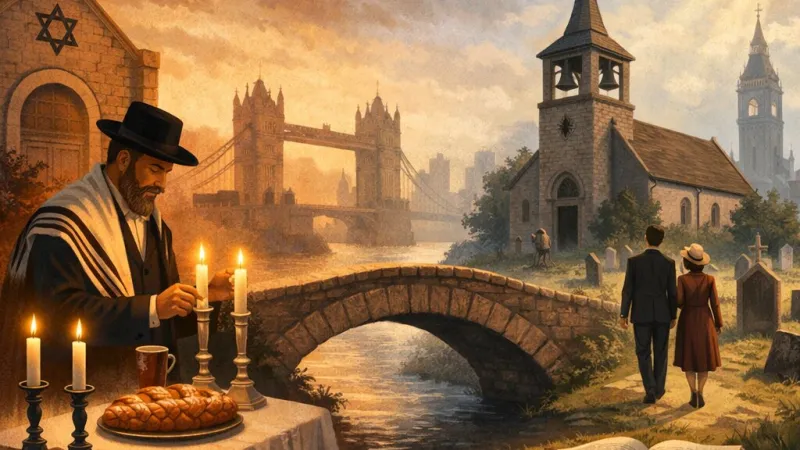
The Sabbath, or Shabbat, emerges as a divinely instituted commandment from the earliest chapters of Genesis, where it is written that, after creating the heavens and the earth in six days, God "rested on the seventh day" and blessed it as holy (Genesis 2:2-3). Observance of this day, running from Friday at sunset to Saturday at sunset, becomes embedded in the Jewish legal code—the Halacha—as a cornerstone of Jewish identity, comparable in significance to dietary laws and circumcision. The Fourth Commandment enshrines the Sabbath as not only a religious but a moral imperative: "Remember the Sabbath day, to keep it holy" (Exodus 20:8). It is a day marked by both rest from labour and positive sanctification, celebrated with rituals including the Friday night Kiddush (blessing over wine), communal prayers, festive meals, and the lighting of candles. In the context of ancient Israelite life, the Sabbath stood as both a spiritual sanctuary from the weekly toil and a radical social statement: even slaves and animals were mandated respite, demonstrating justice and compassion.B. Christian Re-Interpretation of the Sabbath
With the rise of Christianity as a distinct faith, the meaning of Sabbath observance underwent significant transformation. While the early Christians were themselves Jews well-accustomed to keeping Shabbat, the resurrection of Jesus—believed to have occurred on a Sunday—became grounds for shifting worship to the first day of the week. By the time of the early church councils, Sunday had replaced Saturday as the customary day for communal worship, celebration of the Eucharist, and rest, although the precise degree of ‘rest’ varied. This reorientation was justified theologically as a commemoration of Christ’s new creation and victory over death, thus marking a move from the letter of Jewish law to the spiritual ‘fulfilment’ of the Sabbath in Christ. Nevertheless, this break raised immediate questions about continuity with sacred tradition and the authority to innovate—tensions that echo through British Christianity to this day, as the grandeur of Sunday chimes with the echo of Sabbath origins.C. The Sabbath in the Ten Commandments
Both Judaism and Christianity revere the Ten Commandments, yet their interpretation—especially of the fourth—differs markedly. Jewish tradition preserves the Sabbath as a sign of covenant fidelity, tied to the very order of Creation and Israel's liberation from Egypt. For Christians, while the commandment remains in the Decalogue, its literal observance is often spiritualised, particularly among Protestants. Historic figures such as John Wesley, founder of Methodism, wrestled with what Sabbath law should mean in everyday life, blending scriptural exegesis with pastoral care. Thus, however clear the commandment’s original language, its practical outworkings have been subject to centuries of debate.---
II. The Nature of Disagreements about the Sabbath in Biblical Context
A. Jesus’ Challenges to Jewish Authorities About Sabbath Observance
Deep-rooted disagreements about the Sabbath are vividly illustrated in the Gospels, where Jesus repeatedly contests the prevailing legal interpretations of his contemporary religious authorities, particularly the Pharisees. In the Gospel of Mark, Jesus’ disciples pluck ears of corn on the Sabbath, prompting outrage; Jesus’s response is pointed: “The Sabbath was made for man, not man for the Sabbath” (Mark 2:27). Similarly, when Jesus heals on the Sabbath—most memorably a man with a withered hand—he exposes the tension between the compassion embodied in God’s law and the oppressive rigor of Pharisaic enforcement. His self-identification as “Lord of the Sabbath” both asserts his divine authority and undermines the monopoly of religious leaders over scriptural interpretation.B. Conflicts Arising from Different Interpretations
The divisions between Jesus and the Pharisees were not simply questions of religious legalism but reflected deeper anxieties about tradition, identity, and power. Pharisaic Judaism, developing after the Babylonian exile and flourishing in the Second Temple period, was keen to safeguard the holiness of the Sabbath with elaborate rules—thirty-nine categories of proscribed activity, for example—so as to protect the sanctity of the day. Jesus’s interventions, by contrast, prioritised human need and mercy: to heal or feed the hungry was, for him, truer to the original spirit of the Sabbath than mere external conformity. This clash was not only theological; it was essentially a battle for the soul of the faith.C. Social and Political Ramifications of Sabbath Disputes
The Sabbath disputes recorded in the Gospels contributed to mounting hostility between Jesus and the authorities, which, compounded by other perceived blasphemies, ultimately fed the narrative leading to his crucifixion under Roman governance. In challenging Sabbath orthodoxy, Jesus threatened not just religious but social order. Religious leaders, such as the Sadducees and allies of Herod, saw in his actions a destabilising, even seditious force, especially in a land under imperial occupation. The episode invites reflection on how legalistic piety can be weaponised against those deemed deviant, leading to exclusion, persecution, or worse.---
III. Theological and Ethical Implications of Sabbath Observance
A. Balancing Law and Compassion: The Central Ethical Dilemma
At the heart of these disagreements lies an enduring ethical quandary: does religious law serve humanity, or do humans exist to serve religious law? For Jesus, the answer was the former—Sabbath observance, like all divine commandments, should promote human wellbeing. In his practice, the rigid boundaries of Sabbath law yield to acts of mercy: feeding the hungry, healing the sick, rescuing an animal from a pit. Passages such as Matthew 12 resonate with a call for flexibility, a willingness to interpret the law in the light of compassion and necessity. This balancing act remains vital for believers navigating the demands of faith and conscience.B. Authority and Interpretation in Religion
The disputes over the Sabbath point to broader concerns about who possesses the authority to interpret sacred texts. Jesus’s radical claim to authority—and subsequent reinterpretation of the law—set a precedent for reformers, dissenters, and prophets throughout history. Within the British context, figures like William Tyndale, whose translation of the Bible empowered personal engagement with Scripture, illustrate the tension between institutional guardians of orthodoxy and the voice of the individual conscience. Interpretive conflict, both within and between religious communities, is thus a perennial feature of devotional life.C. Sabbath Observance as a Reflection of Religious Identity
The rituals and practices of the Sabbath do more than mark time; they enact identity. Within Judaism, Shabbat remains a powerful means of sustaining faith and community, linking households in unbroken tradition from medieval York to modern Golders Green. For Christians, the spiritual inheritance of Sunday continues to shape patterns of worship, from Choral Evensong in an ancient cathedral to the humble breaking of bread in Methodist chapels. Differing Sabbath customs, however, can serve to strengthen sectarian lines or, conversely, invite dialogue and mutual understanding.---
IV. The Sabbath in Contemporary Society: Challenges and Significance
A. Keeping the Sabbath Holy Today
In twenty-first-century Britain, Sabbath observance is no longer woven seamlessly into the fabric of public life. Secularisation, flexible working hours, and commercial pressures have all contributed to the dilution of Sunday’s former uniqueness. For many Christians, keeping the Sabbath now entails deliberate resistance to cultural trends: attending church, abstaining from work-related activities, or seeking family time. Yet, for many, financial needs or professional obligations (such as NHS staff, retail workers, or police) render traditional Sabbath observance increasingly challenging.B. Multi-faith Societies and Sabbath Observance
Britain’s religious diversity presents both opportunities and obstacles concerning Sabbath observance. Orthodox Jews risk marginalisation in the workplace for declining Saturday shifts, while Muslims face similar issues on Fridays. Cases brought before employment tribunals—such as the landmark case of Celestina Mba, a Christian who wished not to work Sundays—highlight the friction that can arise where religious conscience collides with institutional demands. Such issues evoke crucial debates about reasonable accommodation and the rights of individuals to manifest their beliefs.C. Campaigns and Responses: Keep Sunday Special
Movements such as ‘Keep Sunday Special’, prominent since the Thatcher era, have sought to preserve Sunday as a day set apart from commercialism and routine labour. Balancing the desire to uphold Christian heritage with respect for other faiths and for those of no faith remains a subtle task. Changing Sunday trading laws have met resistance from clergy and trade unionists alike, precipitating ongoing discussions about what sabbath-keeping means in a plural society. These campaigns invite wider reflection on the role of tradition and the secular state in shaping collective time.D. Promoting Religious Tolerance and Ecumenism
Britain’s ecumenical and interfaith ventures, such as initiatives led by the Council for Christians and Jews or The Focolare Movement, exemplify efforts to foster respectful understanding of differing Sabbath customs. The “Golden Rule”—articulated in various ways across Judaism, Christianity, Islam, and beyond—affirms the moral imperative to treat others as one would wish to be treated, a sentiment that encourages accommodation over antagonism. Such encounters cultivate the possibility of Sabbath as a shared resource for social justice, peace, and rest in a frenetic world.---
V. Critical Reflections and Unresolved Issues
A. The Problem of Religious Legalism
It is all too easy for Sabbath observance to ossify into a form of legalism, in which the outward observance of law becomes an end in itself, potentially alienating those it aims to bless. When legal strictness outweighs compassion or spiritual intent, the Sabbath may risk devolving into a divisive rather than inclusive tradition.B. Authority and Rebellion: Jesus as a Model
Jesus’s subversive engagement with the Sabbath remains a model for those who perceive injustice or ossification within their own religious communities. The legacy of protest—as seen in the Nonconformist tradition in England, with its emphasis on liberty of conscience—demonstrates that faithfulness sometimes requires challenging even the 'sacred' status quo.C. The Future of Sabbath Observance
How will Sabbath practices adapt as Britain becomes yet more secular and its population more diverse? The rise of technology blurs sacred and secular time, while the gig economy makes rest a privilege, not a right. Individuals and communities will continue to negotiate these pressures, seeking meaning in ancient rhythms while affirming the right to personal and communal conscience.---
Rate:
Log in to rate the work.
Log in