Eva Smith in An Inspector Calls: Character analysis and social role
This work has been verified by our teacher: 5.02.2026 at 15:50
Homework type: Analysis
Added: 2.02.2026 at 8:40
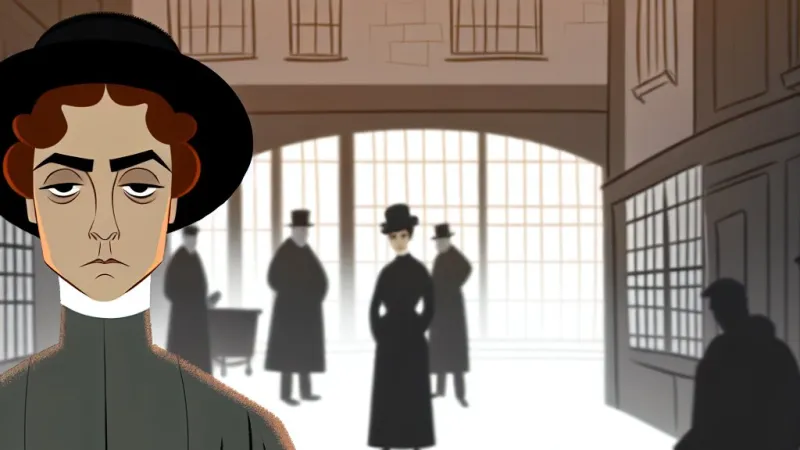
Summary:
Explore Eva Smith’s character in An Inspector Calls to understand her social role, symbolism, and impact on themes of class and responsibility.
Eva Smith Analysis
Introduction
Eva Smith, though never appearing on stage in J.B. Priestley’s *An Inspector Calls*, is the linchpin of the entire drama. Her story, constructed through the fragmented, self-serving accounts of the Birling family and Gerald Croft, compels the characters—and by extension, the audience—to confront uncomfortable truths about social responsibility, class, and morality. Set against the backdrop of Edwardian Britain, Eva embodies the vulnerable working class, suffering beneath the indifference and self-interest of her social superiors. The purpose of this essay is to analyse Eva Smith’s complex role: not merely as a tool to move the plot forward, but as a symbol wielded by Priestley to interrogate issues of class, gender, and collective responsibility, both in his own time and within our own society. In dissecting her interactions with each principal character and the thematic resonance of her narrative, this essay asserts that Eva Smith serves as the play’s most forceful moral presence, prompting both characters and viewers to re-examine the boundaries of empathy and justice.Contextual Background and Significance of Eva Smith
Historical and Social Context
To fully grasp Eva Smith’s function within *An Inspector Calls*, it is vital to understand the world she inhabits. The play is set in 1912, a time when Britain’s social hierarchy was sharply defined and largely inflexible. The ruling classes—industrialists such as Arthur Birling—enjoyed wealth and security at the expense of a burgeoning, disempowered working class. Factory work, most often the only path open to young women of limited means, was typically insecure and poorly paid; women like Eva depended not only on their own labour, but also on the benevolence (or cruelty) of their employers. Priestley, writing in 1945, exploits this historical moment to highlight the gulf between capitalist interests and human need. Eva Smith’s experiences typify the lack of agency and protection available to working-class women, making her more than an individual character: she is a composite, shaped by society’s failings.Role within the Play’s Structure
Although she never appears, Eva Smith dominates the drama’s moral landscape. The audience only glimpses her life through the piecemeal recollections of the Birlings and Gerald, who each contribute to her downfall. This absence is significant: Priestley robs Eva of a literal voice to underscore the extent to which the working poor were silenced and rendered invisible. Her story emerges collectively, each confession chipping away at the Birlings’ self-assurance while exposing their hypocrisy. This deliberate structural choice amplifies Eva’s role as an everywoman, a stand-in for countless “Evas and John Smiths,” whose lives were profoundly shaped—often ruined—by attitudes and decisions made far above their heads. In this sense, Eva is less a traditional protagonist than a moral echo: resonant, ever-present, yet always at the mercy of those in power.Eva Smith as a Symbol of Social Injustice
Representation of Working-Class Struggles
Eva’s journey through the play—sacked from Birling’s factory, dismissed from Milwards under Sheila’s influence, preyed upon by Gerald and Eric, finally turned away by Mrs Birling—encapsulates the precarity of working-class existence. Her multiple losses are not simply matters of misfortune, but consequences of systemic exploitation and prejudice. Priestley uses her experience to illuminate the grim reality faced by many—lives shaped by the whims of people who neither know nor care for them. The Birlings’ tendency to blame Eva for her fate (“It was her own fault,” Mrs Birling proclaims) illustrates the ease with which the privileged rationalise suffering so long as it remains out of sight. By keeping Eva voiceless, Priestley mirrors the way society renders the poor invisible, forcing the audience to recognise complicity—both then and now.Embodiment of Moral Testing Ground
Eva Smith is also the moral barometer by which all other characters are measured. Each major figure’s treatment of her reveals not only their individual flaws—selfishness, greed, emotional cowardice—but the broader failings of their class and time. Eva exposes the chasm between professed values and real actions. Arthur Birling’s respectability collapses under the weight of his callousness; Sheila’s self-image shatters as she realises the consequences of her thoughtless actions. For the audience, Eva becomes an uncomfortable reflection—Priestley’s challenge to consider the consequences of one’s choices and biases. The empathy which her story evokes is not just for one character, but for a whole class of people systematically denied compassion.Eva Smith’s Interactions with Each Key Character and Their Moral Responses
Arthur Birling: Capitalist Employer
Arthur Birling’s involvement with Eva Smith begins as her employer at the local works. When Eva dares to be part of a strike for fairer wages—a modest demand for a living income—Birling responds by making an example of her, sacking her outright. His justification (“If you don't come down sharply on some of these people, they’d soon be asking for the earth”) reflects the hard-nosed, profit-driven values of industrial capitalism. Birling’s later comments, dismissing Eva’s suffering as unfortunate but irrelevant, mark him as deeply unsympathetic. He refuses to acknowledge any personal responsibility, seeing business as detached from morality. Priestley uses this portrayal to critique a system in which economic success is built on individual misery, and those who benefit feel no obligation to those they exploit.Sheila Birling: Privileged but Developing Conscience
Sheila’s encounter with Eva Smith occurs at Milwards, an upmarket shop. Eva, working as a sales assistant, inadvertently becomes the focus of Sheila’s jealousy and insecurity. In a fit of temper, Sheila exploits her social status to have Eva dismissed, later describing it as a “silly” act, but one she deeply regrets. Unlike her parents, Sheila is shaken by her complicity; her emotional reactions, marked by a “little cry” and her honest confession, signal a capacity for empathy and self-reflection. Priestley invests hope in the younger generation, presenting Sheila as the character most capable of growth. Her guilt is genuine, her desire to change heartfelt—she is the first to recognise that “these girls aren't cheap labour—they’re people.” Through Sheila, Priestley criticises the casual cruelty of privilege but also signals the potential for a more compassionate future.Gerald Croft: The Upper-Class Gentleman and Romantic Involvement
Gerald Croft’s relationship with Eva (then going by “Daisy Renton”) is more complex. He offers her temporary kindness and comfort, sheltering her from destitution for a short while. Yet, this mercy is fatally flawed: it is self-serving and transient, ending when Gerald tires of the affair. Gerald’s genuine regret cannot undo the damage; his class and gender shielded him from any real consequences. Priestley uses Gerald to embody the superficial benevolence of the upper classes—prepared to “rescue” the poor, but never to address the structures that keep them vulnerable. Gerald’s emotional compartmentalisation—his ability to be sorry but not fundamentally changed—offers a microcosm of upper-class inertia and privilege.Mrs Birling: Social Snobbery and Moral Rigidity
Mrs Birling’s part in Eva’s downfall is perhaps the harshest. When a pregnant and desperate Eva seeks help from the charitable committee chaired by Mrs Birling, she is dismissed on the grounds of impertinence and dishonesty, after giving herself the false surname “Birling.” Mrs Birling’s refusal is rooted in snobbery and self-righteousness; her statements blame Eva entirely for her predicament, showing no flicker of remorse or understanding. Priestley attacks the hypocrisy of “respectable” charity, exposing how social institutions were often run by people intent on preserving their own superiority rather than helping the needy. Mrs Birling’s rigid morality serves only to further isolate the vulnerable, making Eva’s tragedy not just personal but societal.Eric Birling: Guilt, Responsibility and Immaturity
Eric Birling’s involvement combines irresponsibility, guilt, and—eventually—a painful awakening. He meets Eva at a club and, under the influence of drink, their relationship results in her pregnancy. Eric’s initial behaviour is selfish and reckless, but unlike his parents, he cannot evade the consequences forever. By the end of the play, he is tormented by guilt, acknowledging that “We did her in, all right.” This recognition sets him apart from Mr and Mrs Birling, whose main concern is reputation. Eric’s remorse, while belated, holds out a glimmer of moral hope: an admission that change is possible, but only through confrontation with the truth and acceptance of personal responsibility.Themes Illustrated Through Eva Smith’s Character
Social Class and Inequality
Eva Smith’s narrative is a microcosm of the British class system at its most brutal. Every turn in her short life is dictated by the privilege, prejudice, or apathy of her social superiors. Priestley’s play offers a blistering critique of the way upper-class comfort is built on the hardship of others. The notion that “community and all that nonsense” (in Birling’s words) is irrelevant is shown to be both absurd and morally hollow.Collective Responsibility
The Inspector’s repeated refrain—“We are members of one body”—anchors Priestley’s socialist reading of society. Eva’s demise is not the fault of any one person, but a tragic product of collective neglect. This challenges the individualism cherished by the Birlings; Eva Smith’s suffering is proof that societal well-being depends on mutual consideration.Morality and Empathy
Priestley crafts Eva’s story to awaken empathy in both characters and audience. Though the audience never sees Eva, their emotional responses—pity, outrage, and guilt—are manipulated to force reflection on real-world social issues. Her voicelessness makes her both a specific victim and a universal symbol, broadening the play’s emotional appeal.Gender and Vulnerability
Eva Smith is doubly disadvantaged: not only is she working-class, but she is also a young woman, navigating economic insecurity alongside sexual exploitation and social stigmatisation. Her fate—pregnancy, poverty, and ultimately suicide—emphasises the dangers facing women in patriarchal societies. Gender, as much as class, consigns Eva to powerlessness.Eva Smith’s Enduring Impact on Audience and Modern Relevance
Emotional and Ethical Resonance
Eva’s anonymity ensures that her story resonates beyond the confines of the play. She is anyone and everyone who has ever been denied a voice or compassion. This universality invites the audience to see themselves, and their world, reflected in hers—to feel not only pity for her, but also anger at the systems which facilitate such suffering.Didactic Purpose in the Play
Priestley’s intentions are not simply to entertain, but to instruct: *An Inspector Calls* is as much a call to arms as it is a play. Eva’s story is the moral engine, prompting the audience to ask: What do we owe to one another? How might our indifference contribute to others’ pain?Relevance to 21st Century Issues
Although set in 1912 and written in the aftermath of the Second World War, the play’s themes remain uncomfortably current. In Britain today, inequality persists, with debates about workers’ rights, poverty wages, and social care still on the political agenda. The exploitation and marginalisation Eva endures find echoes in the lives of the contemporary underprivileged, underscoring Priestley’s belief in the need for perpetual vigilance and reform.Conclusion
Eva Smith, present only in recollection and imagination, is the most potent character in *An Inspector Calls*. Through her, Priestley exposes the failings of an entire society, laying bare the consequences of selfishness, prejudice, and wilful ignorance. Each character’s response to Eva is a mirror, reflecting larger truths about power, class, and conscience. Priestley’s ultimate lesson is clear: it is not enough only to feel sorry for Eva Smith, nor to see her story as an artefact of a distant past. Instead, we are urged to recognise our ongoing responsibilities to one another, taking seriously the call for social justice and empathetic action. Only by acknowledging Eva Smith—as a symbol, a warning, and a rallying cry—can we hope to fashion a world in which no one is invisible, and no suffering goes unchecked.Frequently Asked Questions about AI Learning
Answers curated by our team of academic experts
What is Eva Smith's role in An Inspector Calls character analysis?
Eva Smith is the central moral figure in the play, used to highlight issues of class, social injustice, and collective responsibility.
How does Eva Smith represent social injustice in An Inspector Calls?
Eva Smith's experiences show the exploitation and vulnerability of the working class in Edwardian Britain, illustrating society's failure to protect the disadvantaged.
Why is Eva Smith never seen on stage in An Inspector Calls?
Eva Smith remains unseen to emphasise the silencing and invisibility of the working poor, making her a symbol rather than a traditional character.
What is the significance of Eva Smith's social role in the play?
Eva Smith represents all vulnerable workers, serving as a moral test for the characters and exposing their complicity in social inequality.
How does Eva Smith's character influence the Birling family analysis?
Eva Smith's story forces the Birling family to confront their actions and hypocrisy, acting as a catalyst for their moral examination.
Rate:
Log in to rate the work.
Log in