An Analysis of McCarthy's Tactics During the Red Scare and Their Impact
This work has been verified by our teacher: 4.04.2026 at 11:17
Homework type: Analysis
Added: 1.04.2026 at 10:29
Summary:
Explore McCarthy's tactics during the Red Scare and understand their impact on politics and society with this detailed analysis for UK students.
McCarthy and the Methods He Used: An Analysis of Tactics and Impact During the Red Scare
The aftermath of the Second World War gave rise to a fraught period of global uncertainty and suspicion, particularly between the United States and the Soviet Union. This era, commonly known as the Cold War, was marked by an intense ideological struggle that permeated everyday life and politics, not just in the United States but across the Western world. Against this backdrop, the fear of communist expansion became a significant force shaping public sentiment and government policy. The phenomenon of the ‘Red Scare’—a wave of anti-communist suspicion—found its most notorious champion in Senator Joseph McCarthy, a figure whose name is now synonymous with public accusations and political paranoia.
This essay will delve into the methods McCarthy used to propel his anti-communist crusade, evaluating not only the techniques themselves, but also their profound impact on American society and political culture. By assessing the effectiveness and fallout of McCarthy’s approach, we gain an understanding of the dangers posed by unfounded accusations and the manipulation of public fear—a lesson whose relevance endures today.
The Political and Social Climate That Enabled McCarthy’s Methods
To appreciate the rise of McCarthyism, one must first consider the global and domestic anxieties of the late 1940s and early 1950s. With Europe devastated by war and the Soviet Union asserting itself as a nuclear power, Western countries looked on with growing apprehension. International developments such as the Soviet acquisition of the atomic bomb and the establishment of communist rule in China intensified the sense of an ever-expanding threat.In the United States, these global events bred a culture of suspicion. Government investigations into suspected Soviet agents, like those of Alger Hiss—a high-ranking State Department official—and the execution of Julius and Ethel Rosenberg for espionage, fed public anxiety. British students might draw a parallel with the ‘Cambridge Five’—a group of spies who passed information to the Soviets—demonstrating that such fears were not exclusive to America.
The US government, responding to these anxieties, established loyalty boards and initiated countless investigations into individuals suspected of left-wing sympathies. The FBI, led by J. Edgar Hoover, played a prominent role in rooting out supposed subversion. With the machinery of state stoking fear, society was primed for a figure who could channel these anxieties into political action.
McCarthy’s Emergence on the National Stage
Prior to 1950, Joseph McCarthy was not a well-known figure on the national scene. As a relatively new Republican senator, he sought greater recognition and influence. The US political landscape at the time rewarded those who could capture public attention, particularly through bold and sensational claims.McCarthy’s moment arrived in February 1950 with a speech delivered in Wheeling, West Virginia. He asserted that he possessed a list of communists employed in the State Department—a claim he never substantiated with concrete evidence. The ensuing media frenzy catapulted McCarthy into the national spotlight, at a moment when Americans were already on edge about communist infiltration. Rather than providing tangible proof, McCarthy excelled at making vague but alarming statements, leveraging the public’s nervousness and the press’s appetite for sensation.
Techniques and Methods Used by McCarthy
Relentless Accusations and Innuendo
Central to McCarthy’s approach was his readiness to make grave allegations without any tangible evidence. In his speeches and public statements, he regularly insinuated that government institutions were riddled with communist agents. He frequently employed guilt by association, suggesting that acquaintance or past political activity was evidence enough of subversion. Many individuals were named or accused on little more than suspicion, hearsay, or circumstantial connections with left-wing organisations. This climate of suspicion devastated reputations, with the accused often finding it nearly impossible to clear their names.Manipulation of Official Investigations
McCarthy proved adept at co-opting existing government mechanisms designed to investigate loyalty. When state institutions or the FBI uncovered information—however circumstantial—he would tout these findings as proof of sweeping conspiracies. Selective disclosure was key; McCarthy cherry-picked details that supported his narrative, obscuring the nuance and complexity of real investigations. He magnified fragmentary evidence into claims of deep-rooted disloyalty, playing to an audience desperate for reassurance that the state was vigilant.Public Hearings as Spectacle
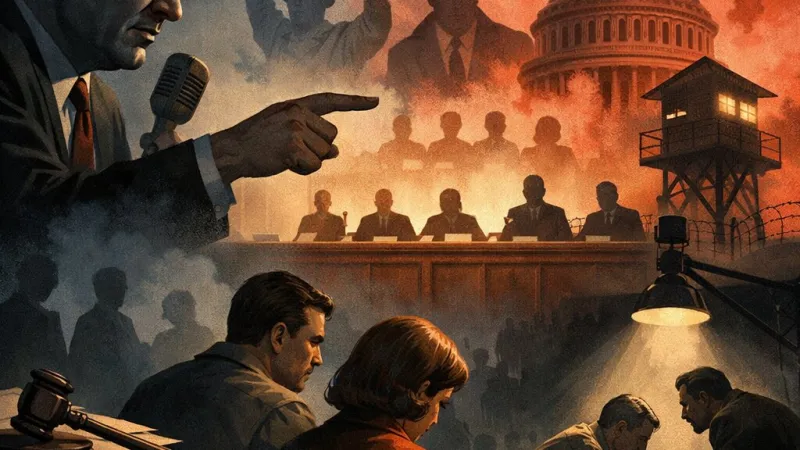
One of McCarthy’s most distinctive tactics was his conduct during public hearings. Through aggressive, often domineering questioning, he sought to disorient and intimidate witnesses. These sessions, widely covered by emerging television networks, became dramatic spectacles. The threat of being publicly grilled by McCarthy terrified both government workers and private citizens. The psychological toll on those summoned cannot be overstated: careers were ruined, families stigmatised, and a sense of paranoia pervaded. In the realm of the arts, figures such as playwright Arthur Miller—whose play "The Crucible" would later reflect on themes of mass hysteria and accusation—were inspired by such events.Mastery of the Media
McCarthy was acutely aware of the power of the media. By feeding reporters shocking claims, he ensured that headlines were filled with his accusations, however unfounded. The repetition of names and vague threats of “lists” reinforced a sense of immediacy. Sensationalist reporting, and the press’s tendency to privilege dramatic stories over measured analysis, played into his hands. Rather than coolly investigating the basis for McCarthy’s assertions, many newspapers simply repeated them, intensifying the climate of dread.Supporters and Enablers: Allies in the McCarthyite Enterprise
McCarthy’s rise was not a solo performance. Sections of the media proved willing partners, either motivated by fear of appearing sympathetic to communism, or by the commercial lure of sensational stories. Just as the British press would at times inflame public panics—one need only think of the reporting around the Profumo affair—the American media gave McCarthy a national microphone.Within the political sphere, McCarthy received backing from conservative colleagues who viewed anti-communism as a useful electoral weapon. Ambivalence or timidity among his opponents, particularly within the Democratic Party, allowed his methods to persist unchecked for too long. The broader culture—a heady mixture of patriotism and the dread of "the enemy within"—created an environment ripe for McCarthy’s message.
The Consequences of McCarthy’s Methods
Personal and Professional Ruin
The human toll of McCarthyism was severe. Thousands lost their jobs due to the mere suggestion of left-wing sympathies. Hollywood screenwriters, directors, and actors—often targeted through blacklists—were rendered unemployable. In academia, teachers and lecturers suspected of unorthodox opinions were forced out. Ostensibly apolitical government workers were tarred with suspicion, excluded from positions on the basis of the slimmest evidence.Political and Institutional Fallout
On a broader political level, McCarthy’s methods had a corrosive effect on the tone of debate. Congressional committees such as the House Un-American Activities Committee (HUAC)—which bore some parallels to the inquisitorial Commissions in British history—adopted adversarial and intrusive investigative practices. Democratic processes and civil liberties were curtailed; honest dissent and political pluralism became dangerous pursuits.Lasting Effects on Society
McCarthyism did lasting damage by embedding a culture of mistrust and fear. The assumption of guilt before innocence, and the normalisation of public shaming, left a deep scar. In time, this led to a backlash as the American public and political establishment recognised the dangerous excesses of such methods.The Decline and Discrediting of McCarthy
The tide began to turn during the televised Army-McCarthy hearings of 1954. When McCarthy overreached by attacking the US Army—long venerated as a patriotic institution—support wavered. The spectacle of his badgering and browbeating tactics, beamed into millions of homes, revealed his methods for what they were: coercive and lacking in substance. Key moments, such as the rebuke from Joseph Welch (“Have you no sense of decency, sir?”), captured a shift in public mood.The US Senate’s decision to censure McCarthy later that year marked the effective end of his influence, although the consequences of his actions lingered. Journalists and politicians who formerly hesitated, now spoke out against his destructive tactics.
The McCarthy era stands as a warning. Rash accusations and public hysteria can unravel the fabric of democratic societies—paralleling, in some ways, the witch trials and purges that pepper British and European history, from Matthew Hopkins’ “Witchfinder General” era to more modern panics about subversives and traitors.
Conclusion
McCarthy’s methods—accusation without evidence, manipulation of inquiries, theatrical public hearings, and exploitation of the media—brought both short-term power and enduring harm. His techniques corrupted public trust, undermined civil liberties, and led to innumerable personal tragedies.The episode teaches us the importance of scepticism, fairness, and adherence to due process. In a world where fear and partisanship can easily reignite irrational panics, the story of McCarthy is a cautionary tale that transcends its time and place. For students of history, especially in the UK, it reinforces the need to balance security concerns with the fundamental values of justice and liberty—reminding us that vigilance against the abuse of power is always necessary, whatever form it may take.
Rate:
Log in to rate the work.
Log in