Evaluating subcultural theories of crime and deviance
This work has been verified by our teacher: 16.01.2026 at 15:39
Homework type: Essay
Added: 16.01.2026 at 15:26
Summary:
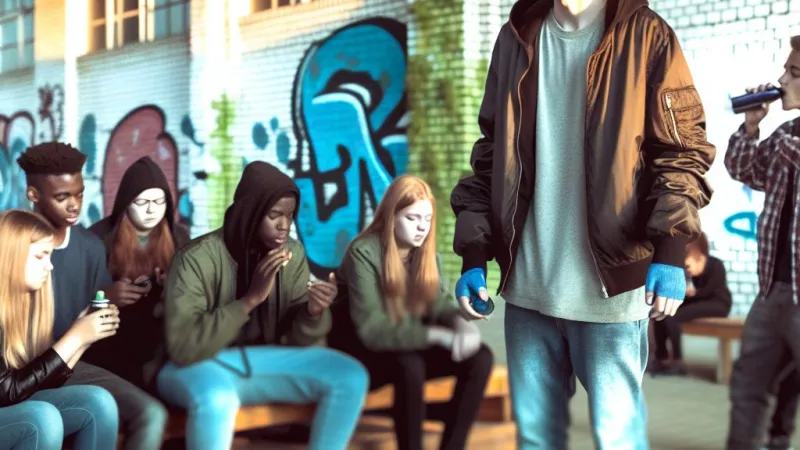
Subcultural theory: youth crime stems from group values reacting to blocked opportunities; explains status-seeking but overlooks gender, race, economic change.
Crime and Deviance: Evaluating Subcultural Theory
Crime and deviance are unavoidable realities in any society, but their explanation remains fiercely contested in sociological thought. ‘Subculture’ describes a group whose values and lifestyles distinguish them from the mainstream, often in ways that conflict with wider societal norms. 'Deviance' refers to behaviours that transgress social expectations, while ‘crime’ denotes those acts officially prohibited by law. Subcultural theories were developed to explain how particular groups – especially some youth cohorts – come to adopt values and behaviours that lead to offending and rule-breaking. These perspectives build upon the interaction between cultural values and structural blocks, shifting our understanding from individual psychological failings to collective, contextual responses. Although subcultural theory remains influential, it is not without its limitations, particularly where matters of gender, ethnicity and the realities of a changing economy are concerned. This essay will outline the main subcultural approaches, evaluate their strengths and weaknesses, relate them to contemporary evidence, and discuss their policy implications.Theoretical and Historical Context
Subcultural theory emerged in the wake of classic sociological accounts like Merton’s strain theory, which observed how pressures to achieve socially sanctioned goals could lead individuals to resort to deviant means. Subcultural theorists, such as Cohen and Cloward & Ohlin, extended this approach by highlighting group adaptation: when social barriers restrict access to success, young people sometimes band together, forming their own alternative routes to status and belonging. These theories are inextricably linked to Britain’s post-war context – a period marked by rapid urbanisation, rising youth visibility and anxiety about rising delinquency in working-class neighbourhoods, all chronicled in case studies of ‘Teddy Boys’, Mods and Rockers, and the later skinhead and punk movements.Key Subcultural Theories and Their Evaluation
1. Status Frustration and Reaction Formation (Albert Cohen, 1950s)
Cohen’s work focused on working-class boys who, finding academic and social success blocked in school, formed groups that inverted mainstream values. Within these peer groups, status was no longer won through academic achievement, but by acts of defiance – vandalism, truancy, and ‘showing out’. These behaviours, which may at first glance appear pointless, can be seen as rational within the alternative status system the group constructs.Cohen’s arguments were supported by school observation studies in the UK, where patterns of ‘anti-school’ cultures were identified amongst the excluded or underachieving. A classic example lies in Paul Willis’s Learning to Labour (1977), which documented how working-class ‘lads’ resisted school authority and found meaning in opposing teachers and rules.
A key strength is that Cohen’s theory links educational failure and class relationships to the emergence of non-utilitarian crime (such as vandalism), which cannot be explained by monetary gain alone. However, the approach has its limitations. The focus on male, working-class experience excludes girls, minority ethnic groups, and fails to explain why not all excluded youths become involved in criminal subcultures. Moreover, later critique pointed out the danger of ascribing too much causal power to schooling, whereas exclusion and status-seeking may also occur in other institutional settings or family environments.
Contemporary evidence can be observed in the rituals and practices of some youth gangs, where reputation built through defiance and ‘street credibility’ becomes a central goal. School exclusion data continue to show over-representation of boys from working-class and certain minority backgrounds among both exclusions and later offending.
2. Differential Opportunity Structures (Cloward & Ohlin, 1960)
Cloward and Ohlin built on the idea that not all blocked opportunity leads to the same kind of subculture. They distinguished three types of adaptations, depending on the types of illicit opportunities available locally. Some areas, with established criminal hierarchies, foster organised crime groups where offending is learned and passed down (the ‘criminal’ subculture). Others, lacking such structure, see ‘conflict’ subcultures, marked by violence and status-seeking. Finally, some young people – unable to access either legitimate or successful criminal routes – retreat into substance abuse (the ‘retreatist’ subculture).Their model’s strengths lie in drawing attention to how local contexts and illegal ‘career’ structures matter. For example, in British cities like Liverpool and Manchester, studies have traced the persistence of family-based criminal enterprises, while other areas see more transient, violence-prone youth gangs.
Yet, this model is not without flaws. Real neighbourhoods rarely fit such neat boundaries; people move, cultures mix, and opportunities are often less fixed than the theory assumes. The theory pays limited attention to variations by gender and ethnicity, and cannot fully account for broader economic or political shifts, such as deindustrialisation or changes in welfare policies.
Empirical research into UK drug networks, for example, reveals shifting hierarchies, online coordination, and a more fluid movement between ‘types’ of offending than Cloward & Ohlin’s typology suggests.
3. Cultural Focal Concerns (Walter Miller, 1958)
Miller’s approach shifted focus towards the positive values fostered within working-class neighbourhoods, such as toughness, trouble, excitement and autonomy. For Miller, deviance does not arise from the rejection of mainstream values, but rather from an emphasis on different priorities – for instance, valuing ‘standing up for oneself’ leads to greater involvement in fights, which in turn increases encounters with police.This approach’s main strength lies in recognising the agency and coherence of alternative values, rather than seeing the working class as simply responding to exclusion. It also helps explain why certain patterns of risk-taking and bravado, particularly among young men, persist despite efforts at deterrence. For example, UK statistics continue to point to the over-representation of young men in offences involving violence or criminal damage, and media accounts of ‘postcode wars’ often highlight the performative, status-driven nature of group conflicts.
However, Miller has been criticised for cultural determinism – the risk of blaming ‘the culture of the poor’ and ignoring diversity within working-class communities. Not all young people in deprived areas adopt these values, and focusing on culture risks deflecting attention from structural disadvantage.
4. Consumer Aspirations and Cultural Adaptation (Contemporary Developments)
With the rise of mass consumerism and social media, new versions of subcultural theory suggest that young people become absorbed in aspirations for branded goods and lifestyles. Where legitimate means are lacking, illicit enterprise – including theft, resale, and online scams – appeals as a way to partake in the symbolic ‘success’ sold by popular culture.UK-based ethnographies, such as Macdonald’s investigation into ‘underground economies’ in the North East (1994), highlight how young people pursue various ‘hustles’ to obtain the latest trainers or technology. Recent years have seen a growth in cases where secondary school pupils are recruited into ‘county lines’ drugs operations, blending traditional gang hierarchies with entrepreneurial aspiration and digital coordination.
The strengths of this approach lie in its contemporary relevance and ability to explain symbolic as well as material forms of status-seeking. Yet, many young people remain law-abiding despite the same pressures, and the model neglects how policing and structural policy can shape both opportunities and risks associated with criminal involvement.
Cross-Cutting Critiques: Methodology, Structure and Change
Much evidence for subcultural theory comes from observation and case study, offering rich insight but suffering from limits of scale and objectivity. The influence of researchers, selectivity of informants, and difficulty of measuring ‘culture’ all mean findings should be interpreted with caution.The main theoretical criticisms are as follows: - Gender blindness: Most foundational studies focus on boys, neglecting girls’ differing experiences and pathways into (or away from) deviance. Feminist criminology has highlighted issues like the ‘double deviance’ of women and the intersection of gender with class and ethnicity. - Ethnicity and race: Traditional subcultural theory is insufficient for understanding the experiences of minority groups, who may face racism within both wider society and policing, compounding exclusion. - Agency vs. passivity: There is a danger of subcultural theory depicting young people as ‘trapped’ by environment and culture, without scope for resistance or change. - Changing opportunity structures: Deindustrialisation, the fragmentation of work, and online activity have undermined older patterns of group formation and criminal opportunity. New subcultures form in digital spaces, such as online forums dedicated to hacking, trolling or cryptocurrency frauds, requiring updated frameworks.
Complementary perspectives – such as labelling theory on the impact of negative public and police reaction, and Marxist accounts linking criminalisation to structural inequalities – provide useful counterpoints, broadening explanation beyond subculture alone.
Empirical Evidence and Case Studies
Case Study 1: A 2018 Home Office report into London youth gangs highlighted the interplay of school exclusion, exclusion from mainstream opportunities, and the status afforded by local group participation – echoing Cohen’s analysis. Ethnographic research in Peckham, South London, for instance, linked lack of local employment and alienation from mainstream schooling to the sense of loyalty and belonging offered by gangs, some of which operate sophisticated drug distribution networks (illustrating Cloward & Ohlin’s ‘criminal subculture’).Case Study 2: Football hooliganism, particularly in the 1980s and 1990s, offers a well-documented example of an organised subcultural phenomenon with its own distinct rituals, codes of honour, and opportunities for status. ‘Firms’ associated with teams like Millwall and West Ham structured their participation around showing loyalty, courage, and group identity, even if it led to official sanction.
Case Study 3: Recent media reports and academic studies have drawn attention to ‘scambaiting’ and online fraud, where young people form collectives to commit digital crime, motivated by prestige, peer recognition, or the acquisition of consumer goods. Much of this behaviour illustrates contemporary extensions of subcultural adaptation in response to blocked legitimate success.
Limitations of such evidence include under-reporting, bias in police statistics, and the changing nature of group membership and activities across different contexts.
Policy Implications and Future Direction
Understanding subcultural theory has practical implications for intervention and prevention. On the education front, reforms that reduce exclusion, introduce vocational routes, and support alternative forms of achievement have been shown to reduce pathways into offending. Community projects, such as youth clubs and apprenticeship schemes, work best when locally led and sensitive to young people’s own priorities for status and belonging. Targeted policing approaches (such as focused deterrence or youth diversion) must avoid heavy-handedness, since excessive enforcement can, paradoxically, reinforce subcultural cohesion against authority.Cultural interventions – tackling unrealistic consumer pressures, highlighting positive role models, promoting media literacy – may address some of the motivations underpinning non-utilitarian crime. The best policies typically blend multi-agency approaches, combining structural reform with the co-production of credible alternatives for young people at risk.
Importantly, interventions must avoid stigmatising entire neighbourhoods or groups, a tendency which can harden boundaries and entrench division.
Exam Technique and Essay Structure — Practical Advice
When approaching essay or exam questions on subcultural theory, students should: - Begin by defining key terms and outlining their core argument. - Use the PEEL structure (Point, Evidence, Explanation, Link) for each paragraph. - Link theories to named studies and contemporary UK examples. - Evaluate theories as well as describe them – noting both strengths and weaknesses. - Cover the role of gender, ethnicity and economic change. - Conclude by synthesising perspectives, judging the relative strengths, and making policy-relevant suggestions.Common mistakes include simply describing theories without evaluation, ignoring contemporary evidence, or treating group cultures as unchanging.
Conclusion
In summary, subcultural theories illuminate how collective values and group-level adaptations foster patterns of offending, especially among youth facing structural blocks to mainstream success. Their enduring usefulness lies in connecting class, education, and opportunity to non-utilitarian as well as acquisitive forms of crime. Nevertheless, these perspectives require supplementation – especially with reference to gender, ethnicity and structural change – and are most powerful when integrated with labelling, Marxist and realist insights. Ultimately, effective solutions require both recognition of structural constraints and respect for the cultural agency of those most affected – a guiding principle for both sociological explanation and humane, grounded social policy.---
Final Checklist: - Are key terms defined at the start? - Does the essay signpost its argument and follow a logical structure? - Are at least two theories/theorists and contemporary UK examples mentioned? - Is there balance between explanation and evaluation? - Does the conclusion offer a clear, reasoned judgement?
Rate:
Log in to rate the work.
Log in