Animal behaviour: mating systems, parental care and communication
This work has been verified by our teacher: 23.01.2026 at 11:59
Homework type: Essay
Added: 21.01.2026 at 8:31
Summary:
Explore animal behaviour focusing on mating systems, parental care, and communication to understand how wildlife survives and thrives in the British countryside.
Comprehensive Exploration of Animal Behaviour: Mating Systems, Parental Care, and Communication
The study of animal behaviour offers a fascinating insight into how species survive, reproduce, and interact with both their environment and one another. Observing the intricate rituals of nesting swans on a quiet British lake, or the complex social dynamics of a badger sett in a patch of ancient woodland, reminds us that every action in the animal world serves a vital purpose. This essay will delve into the principal themes of animal mating systems, the strategies animals employ for rearing their young, and the multifaceted ways they communicate. This integrative exploration will also consider the distinction between instinctive and learned behaviours, referencing examples familiar to the British countryside and temperate wildlife. By doing so, we will appreciate the depths of evolutionary ingenuity found in our native fauna and beyond, and investigate how animal behaviour underpins both the diversity and success of life on Earth.
---
I. Animal Mating Systems: Patterns and Evolutionary Significance
A. Overview of Mating Systems
Mating systems in animals are the structured relationships and interactions around reproduction. The two principal systems are monogamy, where a male and female form an exclusive breeding partnership, and polygamy, which includes arrangements where one animal mates with multiple partners. These systems are not randomly distributed, but are shaped by ecological pressures, resource distribution, and the benefits accrued from different investments in reproduction.B. Monogamy in the Animal Kingdom
Monogamy is perhaps most beautifully exemplified by the mute swan, a familiar sight on British rivers. These birds often form lifelong bonds with a single partner, jointly defending a territory and sharing the demanding task of rearing cygnets. Similarly, puffins, which breed on northern Scottish cliffs, return year after year to the same mate and the same burrow, demonstrating strong pair fidelity. The advantages of such partnerships are clear: both parents’ investment increases the likelihood that offspring will survive to adulthood, particularly in environments where food is patchy and predator threats require constant vigilance. However, strict monogamy can be restrictive. If one partner dies or fails in their parental duties, the entire breeding attempt may fail, potentially wasting precious reproductive opportunities.C. Polygamous Mating Systems
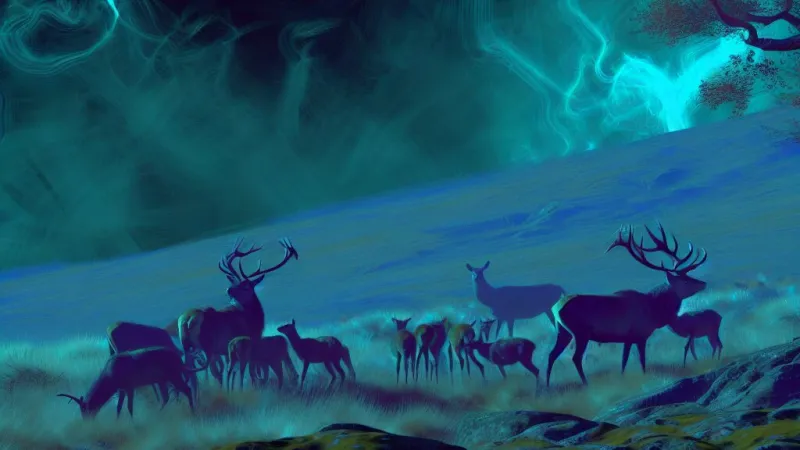
Polygamy, by contrast, encompasses a range of strategies such as polygyny (one male, many females) and, less commonly, polyandry (one female, several males). Within the British Isles, while true polygamy is rare among mammals, some deer species, such as the red deer of Scotland, display classic examples of polygyny during the rut. Stags compete fiercely for control of a group of hinds, with dominance granting exclusive mating rights. This system rewards the most robust and genetically fit males, but comes at a high cost: the energy expended in battles and the peril of injury. For females, choice and competition play a pivotal role. They typically select males with the best territories, physical prowess, or display features, ensuring their offspring inherit advantageous genes. Polygamous systems often result in a skewed distribution of reproductive success amongst males, with ‘alpha’ individuals contributing disproportionately to the next generation.D. Transitional Strategies and Variability
Not all species adhere rigidly to one system. Flexibility in mating strategies is observed in several animals depending on environmental conditions. For instance, in songbirds like the dunnock, mating systems can shift from monogamy to polygynandry (multiple males and females forming a group) based on food availability and territory size. This adaptability enables populations to maximise reproductive output when resources are abundant, or focus on intensive care when survival demands it. Such variability showcases the influence of both evolutionary pressures and ecological context in shaping social and reproductive behaviours.---
II. Reproductive Behaviour and Courtship Rituals
A. Purpose and Importance of Courtship
Courtship is a critical precursor to mating, fulfilling the roles of mate assessment, synchronisation of reproductive cycles, and reduction of inter-species mating. Complex courtship behaviours allow animals to gauge each other’s health, genetic quality, and readiness to invest in offspring. For many species, hormone cycles prime animals to be receptive only during optimal times, ensuring that mating coincides with peak fertility.B. Male Displays and Female Choice
Visual displays are central to many courtship rituals. The resplendent plumage and theatrical display of the male peacock, although Southeast Asian in origin, are echoed less flamboyantly by native UK birds. The great crested grebe, for example, performs elaborate 'weed dances' on water during spring. In these rituals, males exhibit their vitality and coordination, a proxy for genetic fitness. Females tend to be more drab in colour, providing camouflage when nesting—a vital adaptation in species like the common moorhen, whose eggs are vulnerable to predation.C. Other Courtship Strategies
Visual cues are often augmented by sound, movement, and even chemical communication. The song thrush, from a hidden perch, declares territory and fitness through complex, melodious calls, attracting females and challenging rivals. Some insects, including certain moths, utilise pheromones to draw mates from impressive distances. Gift-giving is also present: male kingfishers have been observed presenting fish to potential mates, demonstrating their prowess as providers but also investing directly in courtship. These displays, though energetically costly and sometimes risky, are favoured by natural selection as they increase the chances of successful mating.D. Case Studies
Environmental conditions deeply affect courtship. For example, poor weather may suppress song output in small passerines, reducing their attractiveness. Moreover, amongst adders on British heaths, temperature influences both the timing of emergence and likelihood of mating displays, illustrating how climate and habitat can mediate reproductive success.---
III. Parental Care: Strategies and Evolutionary Benefits
A. Parental Care in Birds
In the avian world, parental care takes many forms. Birds such as the European robin meticulously build nests, selecting concealed locations and camouflaging them with moss and leaves. Incubation is a joint effort in many species; both the male and female blue tit, for instance, share the strenuous duty of keeping eggs at a constant, warm temperature. After hatching, the nestlings are fed on an almost continuous basis—a familiar sight in gardens when adults flit back and forth with beaks full of caterpillars. Some birds, like the lapwing, will fake injury to lure predators away from vulnerable chicks, demonstrating remarkable behavioural adaptations.B. Parental Care in Mammals
Mammalian care differs since young develop internally and are, on birth, either helpless (altricial) or relatively mature (precocial). Hedgehogs, a cherished and declining native species, give birth to blind, vulnerable hoglets, whom the mother suckles and protects in a carefully lined nest for several weeks. In contrast, fallow deer fawns are up and about within hours, but rely on their mother for milk, guidance, and protection until weaning. The production of rich milk not only nourishes but also confers passive immunity to disease—another example of evolutionary fine-tuning.C. Evolution of Parental Care Behaviours
Parental care cannot be understood without reference to parental investment theory, which posits that any expenditure (time, energy, resources) by a parent increases the likelihood of offspring survival, at the cost of future reproductive opportunities. This can lead to striking adaptations: skylarks fiercely mob predators, risking their own lives, while spiny stickleback males fan their egg clutches to increase oxygenation. The evolution of such behaviours reflects an ongoing balance between self-preservation and the imperative of passing on one’s genes.---
IV. Innate vs Learned Behaviour in Animals
A. Definition and Distinction
Behaviour in animals stems from a blend of innate instincts—hardwired responses present from birth—and learning, where experience shapes actions. Both are indispensable; instinct offers reliability, whilst learning brings flexibility.B. Examples of Instinctive Behaviours
Instincts are evident in the way newly hatched cuckoo chicks in British nests instinctively push out other eggs to monopolise food, or in the way lambs immediately seek their mother’s udder. Such fixed action patterns occur without prior learning and are crucial for survival in the dangerous first moments of life.C. Learning Mechanisms
Learning allows animals to adapt to novel circumstances. Classical conditioning, famously illustrated by Ivan Pavlov but more locally observable in domestic dogs responding to mealtimes, involves associating a neutral cue with a significant event. Operant conditioning, where animals learn from the consequences of their actions, underpins the training of sheepdogs vital to British agriculture. Habituation, where an animal grows accustomed to harmless stimuli, explains why urban pigeons no longer flee from people. Imprinting, seen in ducklings following the first moving object they see (often their mother), demonstrates the importance of critical periods in early learning.D. Practical Applications of Conditioning
Humans leverage behavioural learning in practical contexts—police horses are gradually exposed to crowds and noises, for example, until they remain calm on bustling city streets. Guide dogs receive extensive operant conditioning to obey commands vital for their handler’s safety. Such examples underscore how learning processes are not only natural but can also be harnessed for inter-species cooperation.---
V. Animal Communication: Methods and Functions
A. Importance of Communication
Effective communication lies at the heart of animal societies. It coordinates group activities, warns of danger, facilitates mating, and establishes territory. Communication enables complex organisation in ant colonies but is equally vital for a robin defending its garden patch or a fox warning others of danger.B. Modes of Communication
Acoustic signals abound: from the roaring of stags in autumnal glens to warn rivals, to the piping call of the oystercatcher along British estuaries alerting others to threats. Chemical communication, especially through pheromones, is vital for solitary and social insects—a bumblebee leader marking a route to a rich flower patch, for example. Visual signals range from the aggressive display of a red squirrel’s tail to the subtle use of body posture by badgers within their clan. Even the humble honeybee employs a ‘waggle dance’ in the hive to inform nestmates of distant nectar sources.C. Case Examples of Communication Strategies
Each mode of signalling can be found in British wildlife. The alarm calls of blackbirds are instantly recognised by woodland dwellers and alert other species to the presence of cats or sparrowhawks. Rabbits thump the ground as a warning, and nocturnal moths navigate using scent plumes invisible to other animals. Many species employ multi-modal signals; for instance, male grasshoppers both chirp and display body coloration to ensure effective mate attraction.D. Experimental Tools for Studying Behaviour
In classrooms and laboratories, animal preferences and behaviours are often studied using choice chambers—simple devices that allow, say, woodlice to choose between humid or dry environments. Such experiments, taught in schools across the UK, illustrate the scientific approach to understanding the decision-making processes underlying animal behaviour.---
Rate:
Log in to rate the work.
Log in