Classical Conditioning: Pavlov's Dogs and Their Psychological Legacy
This work has been verified by our teacher: 1.02.2026 at 16:26
Homework type: Essay
Added: 29.01.2026 at 5:41
Summary:
Explore classical conditioning through Pavlov’s dogs and learn how their experiments shaped psychological theories on learned behaviour and responses.
Classical Conditioning: The Legacy of Pavlov’s Dogs
Within the sphere of psychology, few experiments have achieved the iconic status and enduring influence as Ivan Pavlov’s studies into classical conditioning using dogs. This work did not merely alter the course of psychological research; it laid a cornerstone for the entire behaviourist movement, which shaped much of 20th-century psychological thought. Classical conditioning involves the acquisition of learned responses by associating two previously unrelated stimuli, and its principles inform countless domains today, from clinical therapy to education. Through a systematic exploration of Pavlov’s foundational experiments, this essay aims to critically evaluate the methodology and findings, assess their wider implications for understanding human and animal behaviour, explore ongoing debates and limitations, and reflect upon the continuing legacy of classical conditioning in contemporary psychological science.
Background and Theoretical Foundations
To appreciate the significance of Pavlov’s research, one must consider the state of scientific understanding prior to his investigations. At the turn of the twentieth century, scientists viewed many behaviours—especially those observed in animals—as either innate physiological reflexes (such as an infant’s grasp reflex or a dog’s salivation at food) or as complex voluntary actions. The idea that certain responses could be learned through experience, and not merely hard-wired into an organism, was neither widely accepted nor robustly evidenced.Ivan Pavlov, a Russian physiologist, initially embarked upon research into the mechanisms of digestion, for which he later won the Nobel Prize. His primary interest lay in understanding how the nervous system controlled gastric and salivary secretions in animals. Dogs provided an ideal subject owing to their comparatively placid nature and the reliability of their digestive responses, especially salivation. During meticulous experiments, Pavlov observed that his canine subjects would often begin to salivate not only when presented with food (an unconditioned stimulus, UCS) but also in anticipation at the sight of lab assistants or the sound of a door—stimuli that should, in theory, have been neutral.
Pavlov thus drew clear distinctions between unconditioned stimuli (which naturally and automatically provoke unconditioned responses, UCR, such as food triggering salivation) and neutral stimuli (which elicit no specific response). However, through association, these neutral elements could function as conditioned stimuli (CS) capable of provoking conditioned responses (CR) independently. This framework introduced a new model for conceptualising learned behaviour, moving beyond the realm of simple reflex arcs and towards nuanced theories of associative learning.
Detailed Description of Pavlov’s Experiment
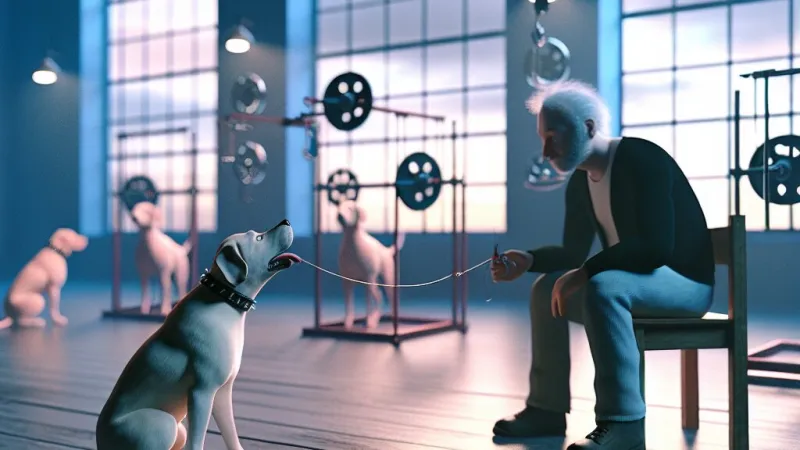
Pavlov’s greatest innovation arguably lay in the rigour and systematic nature of his experimental design. Choosing dogs as his experimental animals was no accident; their relatively stable temperaments and strong, easily observable salivary reflex made them suitable candidates for laboratory study, especially for measuring a purely biological response.The experimental setup was precise: dogs were surgically fitted with fistulas or tubes that allowed researchers to collect, and thus accurately measure, the saliva produced in response to various stimuli. Initially, researchers would present food powder and record baseline salivation (UCS → UCR). Next, an entirely neutral stimulus—most famously, a bell—was introduced. This sound, when rung alone, did not elicit any salivation. However, after repeatedly pairing the sound of the bell with presentation of food, the dogs began to salivate purely upon hearing the bell, even when no food was forthcoming (CS → CR).
The strength of Pavlov’s method lay not merely in its simplicity, but in his attention to control and standardisation. He minimised external distractions, ensured consistent timing between stimuli presentations, and recorded the volume of saliva with scrupulous accuracy. The main independent variable across experimental trials was the presence or absence of food with the bell; the dependent variable was the amount (or onset) of salivation provoked. It is this laboratory precision that enabled later researchers to replicate, and thereby validate, his results.
Results and Interpretation
Pavlov observed that, over repeated pairings, dogs would gradually display salivary responses to the bell alone—where previously only food prompted this reaction. The process of learning was gradual: initial trials would produce no salivation to the bell, but as associations formed, measurable saliva production to the conditioned stimulus rapidly increased.Furthermore, Pavlov documented the phenomena of extinction and spontaneous recovery. If the conditioned stimulus (bell) was presented repeatedly without the unconditioned stimulus (food), the conditioned response (salivation) weakened and eventually vanished—an effect known as extinction. However, after a period of rest, the reintroduction of the bell would often produce a brief resurgence of the conditioned response, which Pavlov termed spontaneous recovery. These findings supported the notion that associative links could be both strengthened and weakened over time, providing an empirical foundation for theories of learning.
Even without the benefit of neuroscience or advanced imaging then available, Pavlov speculated that repeated pairings strengthened neural pathways connecting the representations of stimulus and response in the brain—a prescient foreshadowing of modern understandings of synaptic plasticity.
Broader Implications of Pavlov’s Research
Pavlov’s experiments contributed foundational principles that would later define the behaviourist school of thought, as exemplified by figures such as John B. Watson and B.F. Skinner. For behaviourists, psychology should concern itself not with introspection, but with observable, measurable behaviours and the environmental factors shaping them.Applications of classical conditioning soon filtered into other domains. For example, the development of phobias in humans can be explained as a product of learned associations between neutral objects and traumatic events—a principle later examined by Watson and Rayner in the “Little Albert” experiment, wherein a child developed a fear of a previously harmless rat after it was repeatedly paired with a loud, frightening noise. Likewise, aversions to specific foods or tastes often arise after a single pairing with illness, a fact harnessed in some therapies for conditions like alcoholism.
In the classroom, conditioning principles informed teaching methods that employed reinforcement, repetition, and structured association to maximise learning. In clinical contexts, techniques such as systematic desensitisation—first formalised in Britain by Joseph Wolpe—draw directly from classical conditioning, aiming to replace fear responses with calmness by gradual exposure paired with relaxation techniques.
Critical Evaluation
Pavlov’s contribution earns merit for its scientific rigour and the clarity with which it defined core concepts in learning theory. His use of objective measures and strict controls established a methodological standard for experimental psychology.Yet, his research has faced considerable critique. The reliance on non-human subjects raises questions of generalisability: can mechanisms observed in dogs be assumed to apply to complex human behaviours and emotions? Moreover, the reduction of all learning to stimulus-response pairings, championed by strict behaviourists, oversimplifies the role of cognition, expectation, and meaning that subsequent cognitive psychologists, such as Jean Piaget and Jerome Bruner, highlighted. Ethical concerns, also, emerge regarding the invasive surgical procedures and the potential distress to animal subjects—an issue addressed with far stricter guidelines in today’s universities and research institutions across the UK.
Further developments have revealed that classical conditioning does not operate in a vacuum. Factors such as latent inhibition (where prior exposure to a neutral stimulus diminishes future conditioning) and biological preparedness (where certain associations are more easily formed due to evolutionary pressures, as with taste aversion) complicate the original model. Furthermore, research from the likes of Robert Rescorla demonstrated that the mere contiguity of stimuli is not always sufficient—animals seem to learn about the predictiveness and meaning of cues, not just their presence.
Modern Extensions and Current Research
With advances in neuroscience, modern researchers in the UK and abroad have mapped the precise neural circuits involved in associative learning. For instance, the amygdala’s involvement in conditioned fear responses highlights the intricate interplay between emotion and learning. The role of neurotransmitters such as dopamine in encoding reward prediction aligns with Pavlovian concepts, demonstrating a tangible, biological substrate for associative learning.Comparative psychologists have shown that classical conditioning occurs across a vast array of species, underscoring its evolutionary value in enabling animals—including humans—to adapt flexibly to shifting environments. Real-life examples abound: urban foxes learning to associate human bins with food, or sheep learning to avoid certain plants that make them ill—phenomena directly relevant for British students of environmental and animal behaviour.
More recently, principles of classical conditioning have been applied to understand and develop techniques for managing addictions, compulsive behaviours, and even aspects of autism spectrum disorder. There is burgeoning interest in applying associative models to artificial intelligence—a field in which researchers develop algorithms that mimic the trial-and-error learning first illuminated by Pavlov.
Conclusion
Ivan Pavlov’s research into the digestive responses of dogs catalysed one of the most profound advances in the history of psychology: the scientific articulation of classical conditioning. Through scrupulously controlled experiments, he demonstrated that animals could learn to respond to new cues via association, a finding which has shaped countless approaches in education, therapy, and behavioural science.While subsequent criticism has highlighted the model’s limitations—particularly its neglect of cognitive processes and the challenges of cross-species generalisation—Pavlov’s legacy endures. Classical conditioning forms a theoretical backbone for modern psychology, continues to inform research from brain science to machine learning, and provokes ongoing debate about the nature of learning and adaptation.
Perhaps most significantly, Pavlov’s dogs challenge us to remain attuned to both the power and the nuance of scientific enquiry: to recognise that even the most apparently simple behaviours are shaped by complex webs of association—webs formed, as in a British classroom or clinic, whenever two ideas, two stimuli, or two experiences, come together and alter the very fabric of mind.
Rate:
Log in to rate the work.
Log in