The Essential Role of Yeast in Food Production: Biology and Industry
This work has been verified by our teacher: 19.02.2026 at 12:52
Homework type: Essay
Added: 18.02.2026 at 6:41
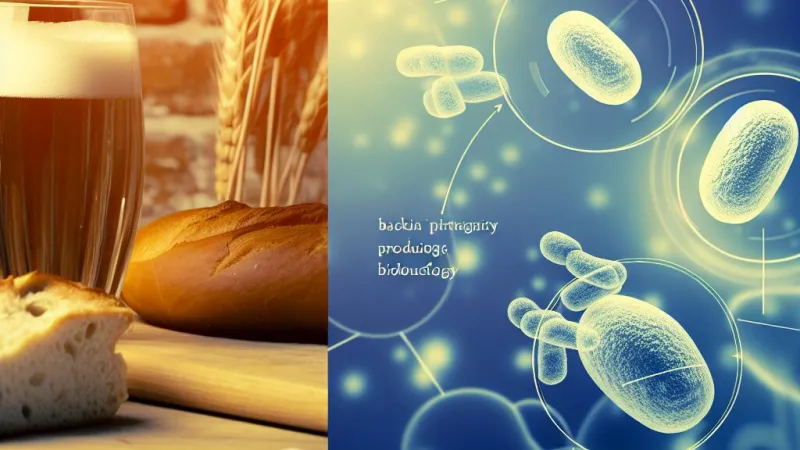
Summary:
Explore the essential role of yeast in food production, biology, and industry to understand its impact on baking, brewing, and UK food culture. 🍞
The Crucial Role of Yeast in Food Production: Science, Tradition, and Innovation
Microorganisms, though invisible to the unaided eye, underpin much of human food production and preservation. Within this vast domain, yeast—a single-celled fungus—has exerted a particularly profound impact on how societies bake, brew and sustain themselves. In the United Kingdom, from traditional farmhouse loaves to the iconic pints poured in village pubs, yeast is foundational to both culture and economy. This essay will unravel the biological complexity of yeast, explore its metabolic activities, examine its historical and industrial uses in food and drink, and reflect on the environmental and ethical considerations woven through its enduring legacy. By tracing yeast’s journey from basic cellular mechanisms to its transformative role in industry, it becomes evident that this humble organism exemplifies the intricate interplay between science and human society.---
Understanding Yeast Biology
Yeast: A Microscopic Eukaryote
Yeast stands apart from other common food-related microbes by virtue of its structure. Whereas bacteria, which also participate in fermentation (e.g., in yoghurt or sauerkraut), are prokaryotes without a true nucleus, yeast are eukaryotic. This means every yeast cell contains a clearly defined nucleus, where its genetic material—DNA—is neatly packaged. Encasing this vital core are additional features: cytoplasm, wherein metabolic processes unfold; a plasma membrane controlling what enters or leaves the cell; and, notably, a substantial cell wall that provides both protection and shape. The complexity of eukaryotic organisation grants yeast greater versatility in how it processes nutrients and responds to its environment. For UK biology students, understanding these differences aids in appreciating why yeast, and not bacteria, underpins many food and drink fermentations.Reproduction by Budding and Beyond
The most familiar reproduction method for baker’s and brewer’s yeast (*Saccharomyces cerevisiae*) is budding. Here, a small bulge forms on the parent cell, accumulating genetic material and cellular contents until it pinches off to become a genetically identical offspring. This rapid, asexual reproduction enables yeast populations in dough or wort to expand swiftly, supporting industrial-scale output. Although less common in food contexts, yeast can also reproduce sexually under certain stresses or nutrient shortages, forming spores with new genetic combinations. This sexual cycle is exploited in some research and breeding programmes to create strains with novel characteristics, such as improved tolerance to alcohol or high temperatures.Metabolic Mastery: Respiration and Fermentation
Yeast’s dual metabolic pathways—respiration and fermentation—are key to its multifaceted applications. Under aerobic (oxygen-rich) conditions, yeast breaks down sugars like glucose entirely into carbon dioxide and water, maximising energy yield in the form of ATP (adenosine triphosphate). This enables fast growth, useful in the early stages of bread rising. However, oxygen soon becomes depleted in dense dough or brewing vats. Yeast then switches to anaerobic metabolism (fermentation), converting sugars into ethanol (alcohol) and carbon dioxide. This transition is not just a biological curiosity: it is the force behind the rising of bread and the alcoholic strength in beers and wines. Underpinning these processes is a fine interplay of enzymes and cellular machinery, borne out of yeasts’ eukaryotic complexity.---
Yeast in Historical and Cultural Food Production
Ancient Roots and Local Traditions
Long before the mechanised bakeries and breweries of modern Britain, ancient peoples stumbled upon yeast’s fermentative powers. Archaeological findings on the banks of the Nile show Egyptians using yeasted dough over six millennia ago. Similarly, evidence from the ancient Near East records wine-making activities dating almost as far back, suggesting a longstanding human-yeast partnership. Closer to home, the Anglo-Saxon “barm” method—skimming yeast-rich foam from fermenting beer to leaven bread—illustrates how traditional knowledge harnessed nature’s invisible processes. In these eras, wild yeasts drifting from fruit skins or the air initiated fermentation, making outcome unpredictable but often delicious.Natural Versus Controlled Fermentation
Wild fermentation is as old as agriculture. When fruit is left to decay, the blooming of natural yeast and bacteria causes sugars to ferment spontaneously, producing alcohol and carbon dioxide. This phenomenon is not merely culinary; it has ecological and evolutionary implications. Some theorists posit that animals—including our primate ancestors—were attracted to mildly alcoholic, fermenting fruits, perhaps influencing our later domestication of fermentation processes. Today, most industrial food and beverage production uses carefully selected yeast strains to ensure consistency, safety, and flavour, yet many craft bakers and brewers still experiment with wild or sourdough cultures to capture unique local tastes.---
Bread: The Alchemy of Yeast Leavening
Science Behind the Rise
The transformation of dense flour and water into airy bread represents perhaps the most tangible effect of yeast in everyday life. In making dough, yeast first consumes simple sugars under aerobic conditions, growing rapidly. As mixing and kneading traps air, yeast flourishes until the available oxygen is used up. Then, anaerobic fermentation takes over. Carbon dioxide bubbles form and swell the dough, while trace amounts of ethanol are produced—though the latter mostly evaporates during baking. Factors such as dough temperature, sugar concentration, type of flour, and oxygen availability all impact the speed and extent of this biological leavening. Cold conditions, for instance, slow yeast metabolism, extending fermentation for richer flavours (e.g., in sourdough and artisan loaves).Craft and Consistency in Baking
Professional bakers, from Orkney to Cornwall, select yeast strains not only for vigour but also for the desired crumb structure and flavour profile. Modern commercial yeast, typically *S. cerevisiae,* delivers predictable results, while traditional or organic bakeries may favour wild or mixed cultures. Controlling fermentation time and temperature—sometimes with precision digital tools—ensures loaves are consistent in rise, texture, and taste. By-products of yeast action, especially aromatic alcohols and organic acids, contribute to bread’s complex aroma and flavour, distinguishing a rustic farmhouse loaf from the spongier slices of supermarket bread.---
Brewing and Winemaking: From Sugar to Spirit
The Journey from Malt to Pint
Britain’s brewing heritage is intertwined with yeast. Making beer begins with malting barley: grains are soaked to begin germination, then dried, activating enzymes that convert starch reserves into fermentable sugars. The resulting malt is mashed with hot water to produce a sugary liquid called wort, which is then boiled with hops—imported into England from mainland Europe since the Tudor period—for bitterness and preservation. Once cooled, yeast is added, swiftly working through the wort’s sugars via anaerobic fermentation. Over several days to weeks, sugars are converted into ethanol and carbon dioxide, before maturing into the myriad ales and lagers gracing pub taps today.Wine-Making: The Art of Fermentation
Winemaking, though less prevalent than brewing in the UK, nonetheless occupies a prestigious niche, especially as climate change renders the South of England amenable to grape cultivation. Here, the source sugars are naturally present in grapes. After crushing and pressing the fruit, yeast—be it natural or cultured—is added to the juice, setting off the fermentation that generates both alcohol and the subtle complexities sought by vintners. Following fermentation, wine is clarified to remove yeast residues and matured to allow flavours to develop. The careful management of yeast here can influence everything from the alcohol content to the bouquet and mouthfeel of the final vintage.Comparison and Craft
Though both processes rely on yeast, differences abound. Beer depends on yeast breaking down malt-derived sugars; wine on fermenting grape sugars. Brewers introduce hops for flavour and preservation, while winemakers depend on fruit character and terroir. Fermentation times, temperatures, and the choice of yeast strains vary, reflecting both biological and cultural influences. These distinctions underpin the extraordinary diversity of beers and wines found within the UK and across the world.---
Industrial Importance and Scientific Development
Advantages of Yeast in Food Industries
Yeast’s rapid growth, efficient sugar metabolism, and adaptability make it ideal for large-scale, repeatable food and drink production. Its metabolic flexibility allows for precise control over alcohol production and leavening, while decades of research have fine-tuned yeast strains for specific processes—be that for a fluffy sliced loaf or a strong, clear lager. The economic implications are vast: from supermarket bread aisles to the multibillion-pound brewing industry, the reliable activity of yeast sustains jobs and traditions alike.Innovation: From Genetics to Biotechnology
Modern industry has not rested on tradition alone. Yeast strains are continually assessed and bred for superior qualities: resistance to contamination, higher alcohol tolerance, faster fermentation, or distinct flavour profiles. Recent advances in genetics have allowed for direct modification, unlocking potential in fields beyond food, such as the pharmaceutical industry and biofuel production. However, such interventions carry their own challenges, from regulatory scrutiny to societal debate.Challenges and Risks
Despite its utility, yeast is a sensitive organism. Contamination by wild strains, bacteria, or changes in temperature and acidity can spoil batches, ruin taste, or even risk consumer health. Managing these variables, ensuring quality control, and safely disposing of by-products such as spent grain or waste yeast are all integral to responsible industry practice.---
Environmental and Ethical Considerations
Sustainability and Societal Impact
Yeast-based food production often depends on renewable resources—wheat, barley, grapes—and is generally less land- or energy-intensive than animal farming. Even so, questions remain regarding the sustainability of large-scale monoculture crops, water usage, and waste management. Many breweries and bakeries in the UK now repurpose spent grains as animal feed or fertiliser, demonstrating a circular approach.Culture and Controversy
Yeast’s place in British diet and celebration—think of the significance of the pub, or the Sunday teatime loaf—reflects its embeddedness in culture. Yet, ethical considerations around alcohol production (from health implications to advertising) surface regularly in public debate. Striking a balance between tradition, innovation, public health, and sustainability remains an ongoing challenge for producers and policymakers.---
Conclusion
Yeast, characterised by both its biological sophistication and practical utility, straddles the worlds of science, tradition, and industry. Its ability to convert simple sugars to carbon dioxide and ethanol powers the baking and brewing processes that enrich British society, both literally and culturally. With emerging technologies and deeper scientific understanding, yeast’s role may expand—from even tastier bread to greener fuels, or more sustainable methods of food production. As we savour a slice of crusty bread or a locally brewed ale, it is worth appreciating not just the flavour, but also the ancient, unseen partnership between people and yeast—a partnership forged through curiosity, observation, and scientific ingenuity. Where tradition and biology meet, yeast rises still.Frequently Asked Questions about AI Learning
Answers curated by our team of academic experts
What is the essential role of yeast in food production biology?
Yeast acts as a key microbe driving fermentation in food production, converting sugars into carbon dioxide and alcohol. This enables bread to rise and beverages like beer and wine to develop alcohol.
How does yeast reproduce in food production industries?
Yeast primarily reproduces asexually through budding, allowing quick population expansion. This rapid growth supports efficient large-scale baking and brewing.
Why is yeast important in UK food production industry?
Yeast is foundational to UK baking and brewing, producing bread and drinks integral to national traditions. It supports both cultural practices and the economy.
What makes yeast different from bacteria in food production?
Yeast is a eukaryote with a true nucleus and complex cell structure, unlike bacteria. This complexity allows yeast to efficiently ferment sugars in various foods and drinks.
How do yeast's metabolic activities influence bread and alcohol production?
Yeast shifts from respiration to fermentation, generating carbon dioxide for bread rising and ethanol for alcoholic beverages. This metabolic versatility is vital for industry.
Rate:
Log in to rate the work.
Log in