The Gunpowder Plot: Causes, Events and Enduring Legacy
This work has been verified by our teacher: 23.01.2026 at 13:46
Homework type: History essay
Added: 22.01.2026 at 6:09
Summary:
Explore the causes, key events, and lasting legacy of the Gunpowder Plot in this detailed history essay for secondary school students in the UK.
The Gunpowder Plot: Causes, Events, and Controversies
The attempted destruction of the Houses of Parliament in 1605—now famed as the Gunpowder Plot—remains one of the most celebrated and debated episodes in the annals of English history. Not only did this conspiracy threaten the life of King James I and the survival of Protestant rule, but it also set into motion a legacy of annual remembrance, political intrigue, and the enduring image of Guy Fawkes. This essay seeks to examine the background that gave rise to the plot, the men who enacted it, the dramatic events of its unmasking, the shadowy theories that continue to swirl around it, and its considerable cultural impact. In doing so, it becomes clear that the Gunpowder Plot was as much a symptom of its turbulent times as it was a defining moment that shaped the centuries to come.---
I. Historical Background: Religious and Political Context
The English Reformation and Its Legacy
Perhaps no event shaped the political and religious climate of early seventeenth-century England more profoundly than the English Reformation. It began in earnest under Henry VIII, whose bitter conflict with the papacy over his marriage led to the creation of the Church of England. This seismic break transformed not only the monarchy’s relationship with the Catholic Church, but also the everyday spiritual lives of the English people. No longer could Catholics worship openly or hold significant positions in public life.The reign of Elizabeth I entrenched these divisions, as ‘recusants’, those refusing to attend Anglican services, faced harsh penalties—heavy fines, property confiscation, even imprisonment. State-sanctioned persecution forced English Catholics underground, fostering a climate of suspicion and resentment. Literature of the era, such as John Foxe’s *Book of Martyrs*, fanned anti-Catholic sentiment, while contemporary playwrights often included veiled references to religious controversy.
The Ascension of James I and Fading Hopes
When James VI of Scotland became James I of England in 1603, there was brief hope among Catholics for leniency. James, after all, was the son of Mary, Queen of Scots, herself a Catholic martyr in the eyes of many. Early gestures hinted at compromise. Yet, James soon made clear his intention to uphold Protestant supremacy, reinforcing punitive measures against the Catholic minority. Recusancy fines rose, priests were expelled, and Catholic laypeople felt further ostracised.Societal Exclusion and the Rise of Radicalism
Faced with mounting imprisonment, social isolation, and restricted civil rights, some Catholics lost patience with prospects for peaceful reform. The state’s aggressive stance not only stigmatised Catholicism but also fuelled the formation of secret societies, preparing the ground for those whose faith now bred contempt for compromise.---
II. The Conspiracy’s Origins: Motivations and Key Players
Robert Catesby: Leader and Instigator
Robert Catesby, a gentleman from Warwickshire, stands at the heart of the Gunpowder Plot. His family’s recusant background exposed him early to the dangers faced by England’s Catholics. Charismatic and persuasive, Catesby had previously flirted with armed resistance, notably in the ill-fated Essex Rebellion. Convinced that peaceful protest was futile, he became determined to act decisively against a monarch who, in his eyes, had betrayed Catholic expectation.The Inner Circle: Fawkes, Wintour, and Percy
The plot soon drew in a diverse circle. Thomas Wintour, skilled diplomat and devout Catholic, served as a vital link between English conspirators and sympathetic foreign powers. Thomas Percy, with ties to the powerful Northumberland family, provided both legitimacy and access. Most infamously, Guy Fawkes—a Yorkshireman and veteran soldier—lent his expertise in explosives, having acquired military experience fighting for Catholic Spain.Each man’s involvement was shaped by a mixture of faith, personal grievances, and a shared readiness to risk all for their cause. The group was bound not just by ideology, but by oaths of secrecy and mutual trust.
Motivations: Beyond Martyrdom
For Catesby and his compatriots, assassination was not an end in itself. The intention was to eliminate the king and senior government officials as Parliament assembled, clearing the path for a Catholic figurehead—perhaps Princess Elizabeth, James’s young daughter—to ascend to the throne. In their view, this explosive intervention could trigger a popular Catholic uprising and reverse decades of repression.---
III. Planning the Plot: Secrecy and Strategy
From Tavern to Tunnel: Laying the Groundwork
The conspirators’ earliest meetings, shrouded in secrecy, took place in obscure London taverns such as the ‘Duck and Drake’. Choosing the ceremonial opening of Parliament as their moment of action, they sought to maximise political impact. Their initial scheme—digging a tunnel under Parliament—proved impractical, prompting them instead to lease a cellar directly beneath the House of Lords. The ease with which this was accomplished has fuelled later suspicions regarding official oversight.Accumulating Gunpowder and Avoiding Suspicion
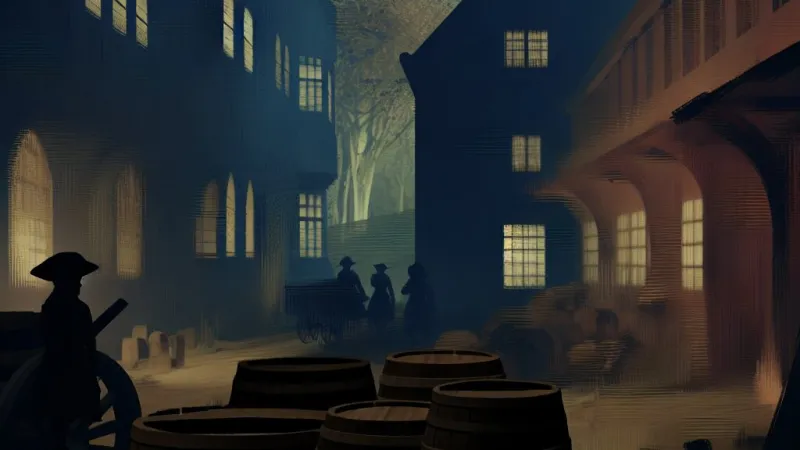
Acquiring thirty-six barrels of gunpowder was no mean feat—official records were supposed to tightly control its distribution in these fraught times, yet the group managed to transport the explosive unchecked. The barrels, concealed alongside firewood, were watched over by Guy Fawkes, posing as a caretaker named John Johnson.Swelling Numbers, Heightening Risks
As planning progressed, the core group reluctantly recruited more participants to manage finances, secure safe houses, and coordinate the planned Catholic revolt outside London. This inevitable expansion increased the risk of betrayal, yet the conspirators pressed forward, convinced that their cause was righteous and divinely sanctioned.---
IV. Discovery and Failure
The Fateful Warning Letter
On 26 October 1605, Lord Monteagle, a prominent Catholic peer, received a cryptic anonymous letter imploring him to avoid the opening of Parliament. Whether the letter was dispatched by an anxious conspirator or fabricated by officials remains a point of controversy. Monteagle’s decision to hand it over to the authorities—specifically Robert Cecil, James’s astute Secretary of State—proved pivotal.Foiling the Plot: Arrest in the Dead of Night
For several days, Cecil hesitated, perhaps monitoring the conspirators’ movements. On the night of 4 November, a search of Parliament uncovered Guy Fawkes in the undercroft, surrounded by barrels of gunpowder. He was arrested and, despite threats and torture, initially withheld the names of his associates—a testament both to his resolve and his training in secrecy.Chains, Confessions, Show Trials
Eventually, many plotters were apprehended or killed in flight. Confessions, often extracted through coercion, were paraded before the public via sensationalist pamphlets. The subsequent trials ended in the gruesome executions—hanging, drawing, and quartering—reserved for traitors. These spectacles were carefully staged to send a chilling warning to others who might harbour dissent.---
V. Controversies and Conspiracy Theories
Was the Plot Encouraged or Engineered?
From the moment of its exposure, questions have lingered over whether the plot was genuinely an independent Catholic conspiracy, or a scheme manipulated by government agents to justify tighter anti-Catholic laws. Robert Cecil’s sophisticated intelligence network was legendary, and the swiftness with which the authorities responded has prompted some historians, such as Antonia Fraser and John Gerard, to propose that the plot was allowed to develop under watchful eyes.The Missing Records and Monteagle’s Role
Central to this skepticism are the missing records relating to gunpowder purchases and the curious ease of access to the Parliament cellar. Monteagle’s ambiguous position—simultaneously a Catholic and confidante of Cecil—raises the possibility of state involvement or, at the very least, careful orchestration of events after the fact.Ongoing Historical Debate
While firm evidence remains elusive, the debate over the extent of government complicity endures. For many, the Gunpowder Plot is emblematic of the ways in which authorities can focus public anger—constructing a ‘Catholic menace’ in order to unite and discipline Protestant England.---
VI. Aftermath and Legacy
Crackdown and Catholic Emancipation
In the immediate aftermath, the lot of English Catholics worsened considerably. Laws became more draconian; fines multiplied; public suspicion soared. Families like the Talbots and Howards faced fresh scrutiny. Catholic worship remained a criminal act for centuries, with full emancipation only achieved in the nineteenth century.Shaping State and Society
The disaster strengthened the monarchy and Parliament, lending a convenient villain to rally against in an age rife with anxiety. Commemorative sermons and literature—Ben Jonson’s “The Devil Is an Ass” among them—enshrined the event in the national consciousness, often distorting its realities for political gain.Lighting the Bonfire: Modern Resonance
Few British traditions are as widespread or enduring as Bonfire Night, celebrated every 5th of November since 1606. Initially marked with official sermons and the burning of “the pope”, it has transformed into communal festivities, fireworks, and the effigy of Guy Fawkes—sometimes depicted as devil, sometimes as folk-hero.In contemporary Britain, the Guy Fawkes mask, popularised by Alan Moore’s *V for Vendetta* and global protest movements, stands as a paradoxical symbol—both of resistance to authority and of the ongoing public fascination with conspiracy, rebellion, and unresolved history.
---
Rate:
Log in to rate the work.
Log in