How Cell Recognition Shapes the Immune System’s Defence Mechanisms
This work has been verified by our teacher: 28.02.2026 at 13:49
Homework type: Essay
Added: 26.02.2026 at 12:46
Summary:
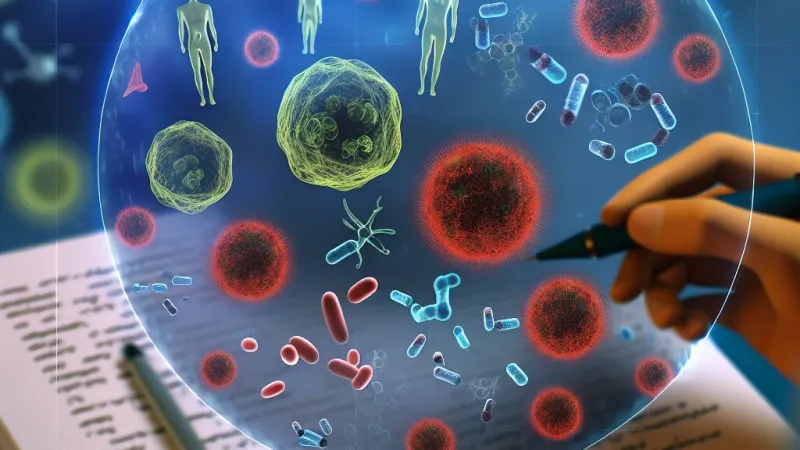
Explore how cell recognition shapes immune defence by teaching key mechanisms and responses vital for understanding secondary school biology and health topics.
Cell Recognition and the Immune System: Mechanisms, Responses, and Implications
The immune system is often portrayed as a silent sentinel, tirelessly patrolling the body’s internal landscape to defend against disease and infection. Its effectiveness rests upon an exquisite ability to distinguish between the body’s own cells and those of invading microorganisms. Central to this is the process of cell recognition—whereby immune cells survey cellular and molecular cues, mounting tailored responses to friends and foes alike. Within the British secondary curriculum, such as A Level Biology, understanding cell recognition is pivotal, linking biological theory to public health concerns, vaccination programmes, and the devastating impact of viral diseases such as HIV/AIDS. This essay will explore the sophisticated mechanisms driving cell recognition, examine the orchestration of innate and adaptive immune responses, and consider the challenges posed to these processes by viral evasion, with particular attention to the case of HIV. Through this, the significance of cell recognition in wider health contexts will become apparent, underlining the ongoing need for immunological research and medical innovation.
---
The Basis of Cell Recognition in Immunity
Distinguishing ‘Self’ and ‘Non-self’
At its core, immunity depends upon an internal catalogue of ‘self’—molecules unique to the individual’s own tissues—against which potential ‘non-self’ threats are compared. Each cell in the body is studded with surface molecules acting as molecular identity cards. Among these, Major Histocompatibility Complex (MHC) proteins, known as HLA in humans, play a vital role, displaying fragments of proteins upon the cell surface. As covered in the AQA A Level syllabus, recognition of these MHC molecules allows immune cells to distinguish between healthy host cells and those harbouring pathogens or undergoing malignancy.Failure of this system can lead to catastrophic consequences. In organ transplantation, for example, mismatch of MHC antigens incites aggressive immune rejection, a phenomenon familiar in NHS transplant clinics.
Antigens and Immune Recognition
Antigens are the characteristic ‘flags’ found on the surface of all pathogens, from bacteria like *Streptococcus pneumoniae* to viruses such as influenza. They are typically complex molecules—proteins or polysaccharides—that are unique enough to be reliably identified as foreign. When these antigens are encountered, they bind specifically to receptors on immune cells, triggering a cascade of defensive actions.Receptor Diversity in Immune Cells
Pattern Recognition Receptors (PRRs), found on macrophages and neutrophils, recognise broad molecular motifs found on groups of pathogens—such as lipopolysaccharides on Gram-negative bacteria—mirroring the non-specific, rapid response of innate immunity taught early in the OCR specification. Meanwhile, the adaptive immune system’s specificity sweeps in with its army of lymphocytes. T and B lymphocytes each possess unique antigen receptors, generated in part through V(D)J recombination—a process by which gene segments are shuffled in developing lymphocytes. This ingenious mechanism allows the immune system to respond to untold millions of potential threats, a concept beautifully illustrated in Rosalind Franklin’s structural studies on DNA, and essential for effective vaccination strategies used by the NHS.---
Phagocytosis: Britain’s First Line of Defence
Phagocytosis is an ancient and highly effective defence mechanism, well-explained in textbooks by Mary Jones and Geoff Jones (Cambridge International). Macrophages patrol tissues, while neutrophils rush to sites of infection in blood and tissue alike, guided by chemical distress signals in a process known as chemotaxis. When bacteria, such as *Mycobacterium tuberculosis*, invade the lungs, damaged tissues and the pathogens themselves release attractant molecules that summon phagocytes.Upon arrival, phagocytes use receptors to latch specifically onto antigens present on the pathogen’s surface. For instance, the CD14 receptor on macrophages is essential for detecting bacterial endotoxin. Enveloping the pathogen, the phagocyte engulfs it into a membrane-bound vesicle, the phagosome, which then fuses with lysosomes—organelles filled with destructive enzymes like lysozymes. The microbe is digested, its components rendered harmless.
Crucially, fragments of digested antigens are subsequently loaded onto MHC class II molecules and displayed on the phagocyte surface, transforming the cell into an antigen-presenting cell (APC). In the British scientific tradition, this process is often compared to ‘showing the enemy’s standard to rally the troops’, preparing for a coordinated adaptive immune response.
---
Adaptive Immunity: The Body’s Specialist Defenders
Cell-mediated Immunity
Adaptive immunity is both specific and adaptable, conferring long-term protection that underlies vaccination. The cell-mediated branch involves T helper cells, which are first activated when their T cell receptors recognise antigens presented by APCs on MHC class II molecules. Mitosis follows, producing numerous identical, or clonal, T cells. Some of these become memory cells, poised to respond rapidly to future encounters. Others activate cytotoxic T cells, instructing them to destroy body cells infected by viruses, as seen in the immune response to the common cold or glandular fever, both familiar illnesses in UK schools.Moreover, activated T helper cells enhance the microbe-digesting activity of phagocytes and provide crucial assistance to B lymphocytes, orchestrating a harmonised immune response.
Humoral Immunity
The term ‘humoral’ refers to bodily fluids; here, B lymphocytes are mobilised. Upon encountering their specific antigen—ideally with assistance from T helper cells—they proliferate and differentiate into plasma cells, which secrete antibodies, and memory B cells, which underpin long-term immunity.Antibodies, or immunoglobulins (Ig), come in various types—IgG is most abundant in circulation, whereas IgM is produced early in infection. Their Y-shaped structure enables them to bind specifically to antigens, clumping pathogens together (agglutination), neutralising toxins (such as those from *Corynebacterium diphtheriae*, a historic scourge in Britain), and flagging invaders for destruction (opsonisation).
Crucially, the magnitude and speed of the immune response are vastly enhanced on second exposure to the same pathogen, a secondary response exemplified by the protection conferred by the MMR vaccine throughout UK childhood immunisation schedules.
---
Molecular and Cellular Signalling in Immune Responses
Communication between immune cells is mediated by cytokines—chemical messengers such as interleukins and interferons. These molecules drive cell proliferation, inflammation, and antiviral states. Interferons, for instance, are released in response to viral infection, halting replication and summoning additional immune cells.Immune checkpoints and co-stimulatory signals ensure that immune cells only activate when appropriate, guarding against inappropriate responses that could cause autoimmunity or allergy, a concern addressed by researchers at the University of Oxford in studies of allergic asthma.
Cytotoxic T cells, once activated, induce apoptosis in infected or abnormal cells by releasing perforin and granzymes—a mechanism relevant not only to viral infections but to cancer immunotherapy, an emerging NHS treatment strategy.
---
Immunological Challenges and HIV
The Human Immunodeficiency Virus (HIV), the cause of AIDS, poses a profound challenge to cell recognition. HIV is enveloped in a lipid membrane studded with unique glycoproteins (notably gp120) that enable it to attach specifically to CD4 molecules on T helper cells. Once bound, the virus fuses with the host membrane, releasing its RNA and crucial enzymes, such as reverse transcriptase, into the cell. Here, viral RNA is transcribed into DNA and integrated into the host genome, a process which permits viral dormancy or endless replication.The tragic result is the progressive destruction of T helper cells, undermining both humoral and cell-mediated immunity. This leaves the sufferer vulnerable to opportunistic infections rarely seen in healthy individuals. The development of antiretroviral drugs, championed by British scientists such as Dame Sally Davies, has transformed HIV from a lethal disease to a manageable chronic illness, curbing viral replication and restoring immune function.
Nonetheless, the constant mutation of HIV and its capacity to hide within host DNA challenge vaccine development and immune recognition, providing a sobering lesson in evolutionary arms races.
---
Practical Applications and Modern Implications
Vaccination, first pioneered in England by Edward Jenner, is the most impactful application of immune memory—stimulating the production of memory cells without causing disease. Child immunisation and seasonal flu jabs are now routine in the NHS, exemplifying science’s ability to harness adaptive immunity.Beyond HIV, immunodeficiencies may be congenital or acquired, as in children born with Severe Combined Immunodeficiency (SCID), a condition now treatable with gene therapy—an advance first trialled in the UK.
Conversely, autoimmunity arises when cell recognition fails, and the immune system targets its own tissues, as in type 1 diabetes or multiple sclerosis. Therapies targeting immune modulation, such as monoclonal antibodies (e.g., rituximab), have revolutionised management of these disorders.
---
Rate:
Log in to rate the work.
Log in