Understanding Product Liability Law and Key Cases in the UK
This work has been verified by our teacher: 13.03.2026 at 14:16
Homework type: Essay
Added: 10.03.2026 at 16:39
Summary:
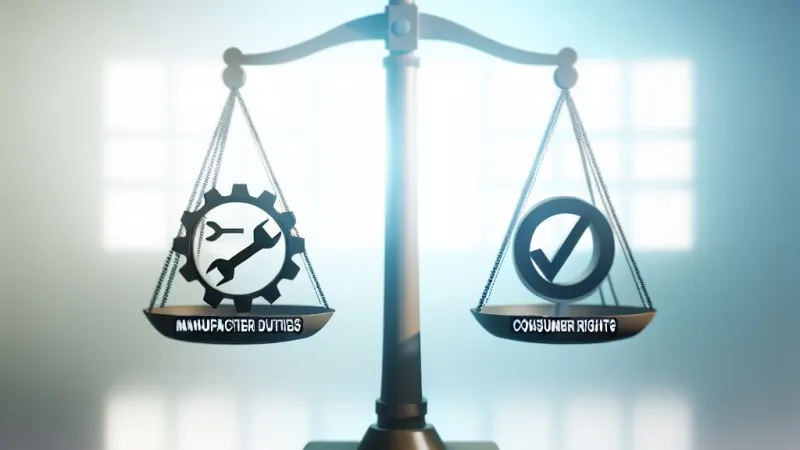
Explore product liability law in the UK, key cases, and legal principles to understand manufacturer duties and consumer protection in your essay.📚
Product Liability: Legal Principles, Case Law and Contemporary Challenges in the United Kingdom
Product liability occupies a crucial place within both consumer protection and tort law in the United Kingdom. At its essence, product liability concerns the legal obligations that manufacturers, importers, and others in the supply chain owe to anyone injured or financially harmed by defective goods. Its significance can hardly be overstated: every day, consumers place trust in the safety of myriad products, from the food they eat and medicines they consume, to household appliances and complex machinery. Breaches of this trust can lead to devastating consequences. This essay will examine the development of product liability law in the UK, its key legal frameworks and underlying principles, practical scenarios and prominent case law, available defences, the interplay with related legislation, and the impact on stakeholders. In doing so, it will demonstrate how product liability both reflects and reinforces evolving societal expectations regarding commercial responsibility and consumer safety.
---
Historical Context and Development
In the earliest days of English law, a claim against a seller or manufacturer for a defective product was generally considered a matter of contract. This meant that, under the doctrine of privity, only those who had directly purchased a product could bring a claim if it turned out to be defective. The limitations of such a system were evident: imagine a scenario where a parent buys a toy which later injures their child. In strict contract law terms, the injured child, not being a party to the contract of sale, had no claim against either seller or manufacturer, no matter how egregious the fault.This unsatisfactory state began to shift with the seminal decision in *Donoghue v Stevenson* [1932] AC 562. Here, Mrs Donoghue consumed a bottle of ginger beer purchased for her by a friend in a Paisley café, only to discover a decomposed snail floating in the bottle. She fell ill and brought a claim against the manufacturer, despite no contractual relationship between them. Lord Atkin’s famous “neighbour principle” established that manufacturers owe a duty of care to all persons who might foreseeably be affected by their products, effectively eroding the barrier of privity and laying the groundwork for modern product liability.
Nonetheless, traditional negligence continued to present hurdles for claimants: they had to demonstrate that a duty existed, this duty was breached, and the breach caused their loss. Proving these elements—especially fault or foreseeability—could be a daunting task, particularly in cases involving complex products or supply chains. As consumer markets expanded and technologies grew more sophisticated, pressure mounted for legal doctrines less reliant on proving fault. Thus, the transition towards statutory strict liability models, epitomised by the Consumer Protection Act 1987, began to gain traction.
---
Key Principles of Product Liability
At common law, negligence continues to play a significant role. To succeed in negligence, a claimant must show that the defendant owed a duty of care (established by *Donoghue v Stevenson*), breached this duty (failures to meet the standard of the reasonable manufacturer), and that this breach directly caused their injury or loss. Importantly, recoverable losses under tort traditionally exclude pure economic loss unconnected to physical harm or property damage—a limitation that continues to influence claims today.However, strict liability models, as introduced by statute, remove the necessity to prove fault. Under strict liability, a claimant need only demonstrate that a product was defective, that they suffered loss, and that there is a causal connection between the two. This regulatory approach allocates the risk to producers, reflecting the belief that those who profit from selling goods are best placed to anticipate and insure against risks. Importantly, this also serves public policy aims of both deterring unsafe production and compensating the victims of industrial society.
---
The Consumer Protection Act 1987: Core Provisions
The Consumer Protection Act 1987 represents the cornerstone of statutory product liability in the UK. It transposes, with typically British adaptations, the requirements of the European Product Liability Directive into domestic law. The Act imposes strict liability upon “producers,” which includes not only manufacturers of finished goods but also those who process raw materials, importers of goods into the UK, and—in certain circumstances—own-branders and suppliers if the actual producer cannot be identified.A product is considered “defective” if it fails to meet the safety expectations of the average consumer, judged by reference to the presentation of the product, any instructions or warnings, the expected uses of the product, and the time at which it was put into circulation. Notably, the Act does not insist on proof of negligence or fault—the presence of a defect and resulting harm suffices.
The forms of recoverable damage under the 1987 Act are purposely limited to personal injury, death, and property damage above a certain minimum (£275 at present). The cost of replacing the faulty product itself, or pure financial loss, does not fall within its ambit. The claimant retains the burden of linking the defect with their injury—a requirement that, while arguably lighter than proving negligence, can still present evidential challenges in complex scientific or industrial disputes.
---
When Product Liability Claims Arise: Practical Illustrations
Not all situations invite a contractual claim. For instance, injured parties may not be the ultimate purchaser (as in *Donoghue v Stevenson*), or the retailer might no longer exist. Everyday examples abound: people injured by contaminated or mislabelled foods find themselves reliant on tort rather than contract; consumers harmed by electrical faults or fires caused by household appliances may otherwise lack a cause of action if the retailer has gone out of business or was simply an intermediary.A well-publicised illustration arose from the so-called “contaminated blood” cases of the 1990s and 2000s, where patients contracted hepatitis C and HIV from blood products. Here, claimants could make use of the strict liability provisions of the CPA 1987, sidestepping the need to prove that the National Blood Authority had acted negligently.
Although it remains possible to pursue a negligence claim where the circumstances support it, Part 1 of the CPA is now generally preferred by claimants for its relative simplicity and the reduced evidential burden.
---
Defences under the Consumer Protection Act
Producers are not left defenceless under the Act. Several statutory defences are available, including:- The producer did not supply the product (for example, in cases involving counterfeit or stolen goods); - The defect did not exist at the time the product was supplied; - The defect arose from compliance with a requirement imposed by law; - The “development risks” defence, which excuses liability if, at the time of supply, the scientific or technical knowledge available did not make the discovery of the defect possible.
The effectiveness of these defences was examined in *A and Others v National Blood Authority* [2001]. Here, the Authority argued that it could not have known about the hepatitis C risk in blood products at the time they were produced. The court found against the Authority, holding that if safer alternatives were available or risks were foreseeable based on current knowledge, the defence failed.
---
Leading English Case Law
*Donoghue v Stevenson* remains the touchstone for modern product liability, standing for the principle that manufacturers must have regard to the end consumer, not just contractual counterparties. The decision in *A and Others v National Blood Authority* provides a powerful illustration of the strictness of the legislative regime: the court severely limited the availability of the development risks defence, finding that mere absence of actual knowledge would not always suffice.Other cases continue to shape the field—for example, *Wilkes v Depuy International Ltd* [2016] clarified how courts decide whether a product is defective in light of reasonable consumer expectations and industry standards.
---
Complementary Legislation and Regulation
Product liability exists within a broader framework of consumer and commercial law. The General Product Safety Regulations 2005 impose obligations on producers and distributors to ensure that only safe products reach the market, with enforcement being a matter for Trading Standards and criminal prosecution rather than compensation. Other statutes, such as the Sale of Goods Act 1979 and the Consumer Rights Act 2015, provide alternative avenues for redress for contractual parties, typically allowing for repair, replacement, or refund—but are generally unavailable to injured third parties.Owing to pre-Brexit membership of the EU, many UK principles continue to echo the European Product Liability Directive, with a continuing focus on the responsibilities of importers and own-branders in a globalised marketplace.
---
Practical Considerations for Stakeholders
For consumers, awareness of their rights is vital, as are the practical steps needed to assert those rights: documentation of injury, prompt medical evidence, and retention of faulty items are essential. Manufacturers and suppliers must guard against liability through rigorous quality control, comprehensive testing, clear consumer guidance, and appropriate product recall mechanisms. Increasingly, insurance and risk assessment are integral commercial considerations. Legal advisers must carefully weigh the evidential merits of both negligence and statutory claims, marshal appropriate expert evidence, and anticipate potential defences.Policy-makers face a continual balancing act. They must ensure that product liability law remains robust in the face of technological change—artificial intelligence, autonomous vehicles, and biotechnology all pose new and complex risks—while ensuring that liability is not so onerous as to stifle innovation or drive businesses from the market.
---
Conclusion
The development of product liability law in the United Kingdom has travelled an eventful path: from strict privity in contract, through the generalities of negligence, to the specific, consumer-friendly regime established by statute. The CPA 1987, complemented by safety regulations and parallel contractual rights, strives to balance fairness towards claimants with the economic realities of modern business. Product liability is, above all, a living area of law: one that adapts to new scientific knowledge, social values, and commercial practices. In a world ever reliant on complex products and international trade, the principles governing liability must remain both rigorous and flexible to meet the needs of consumers and producers alike.---
Suggested Further Reading and Resources
- Howells, G., ‘Product Liability Law in Practice’ (Sweet & Maxwell) - Consumer Protection Act 1987 (Statute) - General Product Safety Regulations 2005 (SI 2005/1803) - Wilkes v Depuy International Ltd [2016] EWHC 3096 (QB) - Law Commission Reports on Consumer Law - Department for Business and Trade: Guidance on product safety and liabilityFor deepening understanding, students may wish to review leading judgments in detail and explore governmental guidance notes on consumer safety and marketplace standards, as well as comparative approaches in other European jurisdictions.
Rate:
Log in to rate the work.
Log in