How the Human Body Defends Against Infectious Diseases
This work has been verified by our teacher: 22.03.2026 at 13:07
Homework type: Essay
Added: 20.03.2026 at 13:11
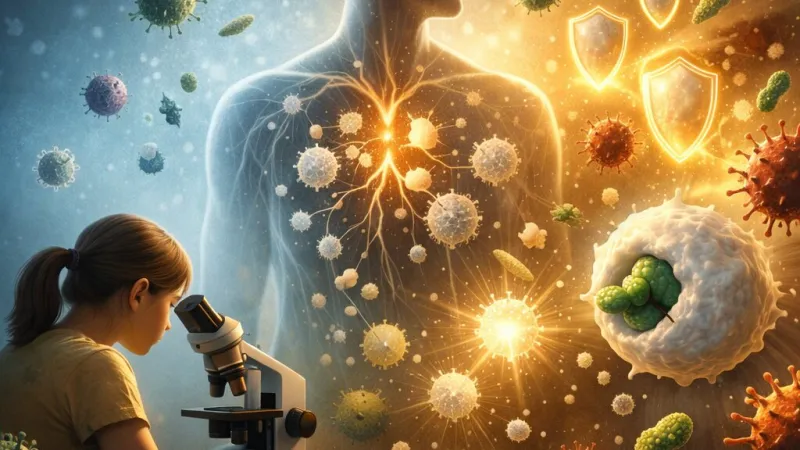
Summary:
Explore how the human body defends against infectious diseases by learning about pathogens, immune responses, and key protection mechanisms for students.
Defence Against Infectious Diseases
Introduction
Infectious diseases have shaped human history, dictating the outcome of battles, altering societies, and compelling scientific advancement. These diseases, caused by a diverse array of microscopic agents—collectively termed pathogens—constitute a persistent threat to human health and well-being. Considering their capacity for rapid spread and devastation, defending against infectious diseases remains a central concern for healthcare systems and governments, particularly so in the United Kingdom, where dense urban populations and global connectivity have accentuated their significance. Pathogens, be they bacteria, viruses, fungi, or protoctists, each possess unique characteristics and strategies to invade and exploit the human body. Through examining the routes these pathogens use to spread, the array of bodily defences, and the interventions society has developed, it becomes clear that an ongoing and dynamic struggle exists between humanity and infectious agents. This essay will explore not only the mechanisms by which infectious diseases gain foothold and propagate, but also the natural and assisted strategies essential in countering their impact.I. Understanding Infectious Diseases and Pathogens
A. What are Pathogens?
A pathogen is any organism capable of causing disease within its host, with the term encompassing a sweeping range of microscopic life. Bacteria, for instance, are unicellular organisms reproducing independently, often distinguished by their role in ancient pandemics such as the Black Death, which swept medieval Britain and beyond. Viruses, by contrast, are far smaller entities, lacking cellular structure altogether; they exist as genetic material encased in a protein coat, relying entirely on invading host cells for replication. Their dependency makes them notably insidious, often lurking undetected within the body’s own cells. Fungi, relegated in common imagination to mould on bread or the rings of athlete’s foot, occasionally incite severe illnesses, especially in those with weakened immune systems. Finally, the protoctists—or protists—represent an assorted collection of single-celled organisms such as *Plasmodium*, the agent of malaria, infamously imported to the British Isles by returning travellers. Each group differs in complexity, size, and operating mode: viruses, being the simplest, further elude easy treatment because they are not alive in the conventional sense.B. Mechanisms of Pathogen Survival and Multiplication
The strategies pathogens employ to multiply are as varied as their forms. Bacteria, for instance, reproduce via binary fission; once established in a favourable environment—say, a cut in the skin or undercooked chicken—they can double their numbers in as little as twenty minutes. Some excrete toxins as by-products, which, rather than the bacteria themselves, are often the culprits behind disease symptoms—*Clostridium botulinum*, known for causing botulism, is a classic example. Viruses, unable to replicate alone, hijack the host cell’s machinery, transforming it into a viral factory until the cell bursts or is otherwise destroyed; this causes tissue damage and the familiar malaise of illnesses such as seasonal flu. Fungi, most prominently represented by *Candida albicans*, may colonise mucosal surfaces, leading to thrush, particularly when the natural balance of microbial flora is disturbed. Protoctists such as *Plasmodium* pass through complicated life cycles, exploiting both human and insect hosts to survive, which complicates control and eradication efforts. Each group’s ability to persist, adapt, and exploit vulnerabilities in the body or environment underscores the persistent challenge posed by infectious diseases.II. Transmission Routes of Infectious Pathogens
A. Direct Transmission
1. Horizontal Transmission
Direct contact is arguably the most intuitive means by which diseases spread, comprising activities that bring people into physical proximity. Everyday gestures—handshakes, hugs, sharing drinks—can pass pathogens from one person to the next. Infectious conjunctivitis, colloquially “pink eye,” often sweeps through classrooms via such contact, while more severe viruses like influenza disseminate with ease in crowded settings such as London’s underground during winter months.2. Vertical Transmission
In some cases, infectious agents leap the generational divide, travelling from mother to child. Rubella, now controlled by vaccination in the UK following the introduction of the MMR jab, historically led to miscarriages and birth defects before immunisation curbed the threat. HIV, though routinely mitigated today with antiretroviral treatment and screening, can be transmitted to unborn infants—a grave vertical route if left unchecked.B. Indirect Transmission
1. Vehicle-borne Transmission
Indirect routes involve pathogens hitching a ride on objects (fomites), food, or water. Outbreaks of norovirus frequently originate on cruise ships or in hospitals, where a contaminated handrail or doorknob may be touched by hundreds before thorough cleaning intervenes. Advances in the UK’s NHS cleaning guidelines and campaigns such as “Clean Your Hands” attempt to cut off these routes and protect vulnerable populations.2. Vector-borne Transmission
Here, living agents—usually insects—act as intermediaries. While malaria is not endemic in Britain due to climate conditions and public health measures, it remains a threat to travellers and was historically present in marshy regions such as the Fens. The bubonic plague, which devastated Europe in the fourteenth century, was borne to humans via fleas hosted by black rats, a tale often recounted in British classrooms as both a scientific lesson and a warning of complacency.III. The Body’s First Line of Defence: Passive Protection
The body’s first line of defence is not an army poised for battle, but a fortification: a series of barriers designed to prevent entry in the first place. This “passive defence” is present from birth, functioning continuously without conscious thought.A. Barrier Defences by Body Site
1. Skin
The skin is the greatest shield, a tough, waterproof covering. Its outermost layer—the epidermis—consists largely of dead cells, denying most pathogens a suitable environment for growth. Sebaceous glands exude oils containing antimicrobial compounds, making it doubly inhospitable. When this barrier fails, through cuts or abrasions, blood coagulation swiftly seals the breach, trapping invaders within a scab and recruiting immune cells.2. Respiratory Tract
Every breath carries a potential threat. The nose’s hairs and convoluted passages trap dust and bacteria; mucus produced by the epithelial lining ensnares smaller particles, while cilia—tiny hair-like projections—sweep the mucus towards the throat. The British winter, long associated with coughs and sniffles, is a yearly test of the respiratory barriers.3. Eye Protection
Tears act like a refreshing stream, constantly washing the eye’s surface. Embedded within tears is lysozyme, a potent enzyme capable of breaking down bacterial walls, thus reducing eye infections such as conjunctivitis, particularly among pupils sharing sports equipment or towels.4. Digestive System
The mouth begins the assault with saliva, housing enzymes such as amylase that start breaking down bacteria. The stomach follows suit with its acidic environment—hydrochloric acid creating a pH too extreme for most microbes. Should any pathogens persist, digestive enzymes further along the gut work to neutralise them.5. Reproductive System
Both males and females benefit from mucus membranes and natural acidity to discourage pathogen invasion. In women, the vaginal flora and acidic pH act as substantial deterrents, a salient defence during puberty and adulthood.IV. The Body’s Second Line of Defence: Active Immune Responses
Despite such robust passive defences, some pathogens inevitably breach the perimeter. At this point, the body’s internal defences spring into action—a complex interplay of cells and molecules adapting to ever-changing threats.A. Innate Immunity
The first response post-invasion is swift and non-specific. White blood cells called phagocytes patrol the bloodstream and tissues; upon detecting foreign invaders, they engulf and digest them in a process called phagocytosis. Accompanying this is the inflammation response—redness, swelling, and heat at the infection site—encapsulating the threat and summoning more immune troops. Fevers, another hallmark, serve to destabilise temperature-sensitive bacteria and viruses.B. Adaptive Immunity
Whereas the innate system acts indiscriminately, adaptive immunity is highly specialised. White blood cells known as lymphocytes recognise and target pathogens with remarkable specificity. B cells manufacture antibodies—Y-shaped proteins tailored to bind antigens (unique markers) on pathogens, flagging them for destruction or neutralisation. T cells, meanwhile, orchestrate the immune response, sometimes destroying infected cells themselves. Importantly, both arms retain memory; following an infection or vaccination, subsequent exposure triggers a faster, more robust response. Vaccination, a cornerstone of the NHS’s achievements, leverages this memory by exposing the immune system to harmless forms of pathogens, teaching the body to recognise and defeat would-be invaders without ever suffering the disease.V. Preventative Measures and Treatments to Support the Body’s Defence
The triumphs and shortfalls of the body’s defences are amplified by human intervention. Through hygiene, medicine, and public health, society can tip the scales in its favour.A. Hygiene and Public Health
Handwashing campaigns, like the now-ubiquitous “Catch it, Bin it, Kill it” slogan championed during the Covid-19 pandemic, underline the importance of individual action. Measures such as sterilising medical equipment, safe food preparation, use of masks during outbreaks (as seen in British schools in 2020), and improved sanitation (introduction of clean tap water and sewage systems during the Victorian era) all dramatically reduce infectious disease spread.B. Medical Interventions
Treatments have evolved, but must be used judiciously. Antibiotics, most famously penicillin discovered by Alexander Fleming in a London laboratory, have revolutionised bacterial disease treatment. Yet misuse creates resistant strains, such as MRSA, now a persistent threat in UK hospitals. Antiviral medicines, often less universally effective due to the rapid mutation rate of viruses, offer targeted assistance (e.g., oseltamivir for influenza). Vaccination remains one of the UK’s proudest public health achievements, having eradicated smallpox and dramatically reduced diseases like polio and measles. In times of outbreaks, isolation and quarantine protect the community by halting pathogen transmission, a strategy relied upon during recent outbreaks such as Ebola.VI. Challenges and Emerging Issues in Defence Against Infectious Diseases
A. Pathogen Evolution and Resistance
The microbial world is continually changing. Viruses mutate, spawning new variants like SARS-CoV-2’s Omicron lineage, demanding booster vaccinations and updated treatments. Bacterial resistance undermines existing antibiotics, threatening a “post-antibiotic era” where minor infections could again prove lethal.B. Globalisation and Disease Spread
In an era of easy international travel, new diseases can arrive on British soil within hours. Urbanisation and changes in lifestyle (dense living, increased livestock farming) further encourage fast transmission. Recent emerging diseases, such as avian influenza and novel coronaviruses, require responsiveness at both national and global levels.C. Societal and Economic Factors
Defence against infectious diseases is not distributed equally. Poverty, lack of education, and limited healthcare access restrict the effectiveness of interventions. Governments, working within frameworks like Public Health England and the World Health Organisation, play a pivotal role in coordinating responses, but community efforts and informed choice remain essential.Conclusion
A thorough understanding of how infectious diseases spread and the intricate systems arrayed in their defence is essential not only for healthcare professionals but for every individual. The human body mounts a multi-layered defence, from skin and mucous membranes to complex immune mechanisms, but it cannot win this battle unaided. Hygiene, public health infrastructure, vaccination, and swift medical response enhance natural resilience, collectively turning the tide against disease. Yet, pathogens evolve, and social factors continually influence the landscape. Remaining vigilant, supporting ongoing research, and spreading education are the only ways to keep ahead in this enduring contest—a testament to the dynamic balance between nature’s challenges and human ingenuity.Frequently Asked Questions about AI Learning
Answers curated by our team of academic experts
What are the main ways the human body defends against infectious diseases?
The human body uses natural barriers and immune responses to fight infectious diseases. These include physical defences, like skin, and specialised immune cells that identify and eliminate pathogens.
How do pathogens cause infectious diseases in the human body?
Pathogens invade and exploit host tissues, each using different mechanisms. Bacteria release toxins, viruses hijack cells, fungi often target weakened immune systems, and protoctists undergo complex life cycles.
What are common transmission routes for infectious diseases in humans?
Infectious diseases spread through direct contact, such as touching or sharing items. Crowded places increase the risk as pathogens can easily transfer from one person to another.
How does the immune system help defend against infectious diseases?
The immune system detects and destroys invading pathogens using white blood cells and antibodies. It creates memory cells to provide faster responses to future infections.
What is the difference between bacteria and viruses in causing diseases?
Bacteria are living cells that reproduce independently and can release toxins, while viruses are non-living particles that need host cells to replicate and often damage tissues during infection.
Rate:
Log in to rate the work.
Log in