Critical Review of Three Key Health Belief Theories in Public Health
This work has been verified by our teacher: 27.03.2026 at 13:53
Homework type: Essay
Added: 26.03.2026 at 16:18
Summary:
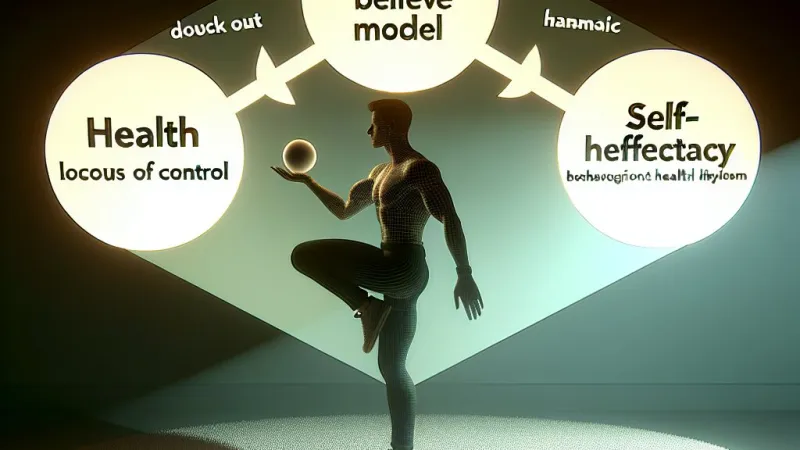
Explore and critically evaluate three key health belief theories—Health Belief Model, Health Locus of Control, and Self-Efficacy—to understand health behaviour in the UK.
An In-Depth Evaluation of Three Major Health Belief Theories: Health Belief Model, Health Locus of Control, and Self-Efficacy
Understanding why people make specific health choices remains at the heart of countless public health campaigns, medical interventions, and policy decisions across the United Kingdom. Psychological models offer structured frameworks for predicting, explaining, and even influencing health-related behaviour. Among the most prominent are the Health Belief Model (HBM), Health Locus of Control (HLoC), and Self-Efficacy Theory. While their conceptual foundations vary, all have secured places in both research and practical public health initiatives. However, questions persist regarding their scope, precision, and real-world applicability. This essay will critically examine these three theories, reflecting upon their core premises, supporting evidence, and attendant criticisms. Through UK-relevant examples and a critical lens, it will be argued that while each model enriches our understanding of health behaviour, their limitations demand more integrative and context-sensitive approaches to health promotion.
1. Conceptual Foundations of Each Theory
1.1 The Health Belief Model (HBM)
Emerging in the United States during the 1950s, but quickly adapted by British health psychologists, the HBM sought to explain variable engagement with preventive services such as tuberculosis screening. At its heart, the model posits that individuals act (or fail to act) chiefly on the basis of their perceptions regarding four domains: susceptibility (how likely they are to experience a health problem), severity (how serious its consequences), benefits (the perceived positive outcome of action), and barriers (practical or psychological obstacles to action). Later additions incorporated cues to action—external prompts such as a GP’s reminder letter—and self-efficacy, the individual’s belief in their capability to carry out a health behaviour. The HBM is decisively cognitive; it contends that people methodically weigh up their risks and rewards before acting, a perspective that has profoundly influenced UK campaigns on vaccination, cancer screening, and healthy lifestyle adoption.1.2 Health Locus of Control (HLoC)
The Health Locus of Control links an individual’s motivation to their underlying orientation about what determines their health outcomes. Originating from Rotter’s wider locus of control framework (1966), it was further developed in the health context by Wallston and colleagues. The crux is a continuum: some individuals (internal locus) believe their own actions determine health, while others (external locus) attribute health to fate, luck, or external agents such as doctors or the NHS itself. Important in the UK context is the interplay between internal and external loci—those with strong faith in the NHS or medical expertise may exhibit a particularly external locus. The HLoC framework is well suited to understanding why, despite substantial public information campaigns, populations respond differently to advice on issues like smoking cessation or diet.1.3 Self-Efficacy Theory
Developed by Albert Bandura in the late 1970s, Self-Efficacy Theory zooms in on one’s belief in one’s own ability to succeed with a given action. Unlike locus of control, which is about where the perceived force resides, self-efficacy is essentially about competence: am I able to do this? For example, an individual may believe exercise is important (an internal locus) but lack confidence in their ability to run regularly. Bandura proposed that self-efficacy levels stem from four sources: mastery experiences (past success), vicarious experiences (observing others), verbal persuasion (encouragement), and physiological/emotional states. This model has informed interventions across the UK, for example in community physical activity schemes aiming to build confidence gradually via achievable, supportive milestones.2. Detailed Evaluation of Theories’ Explanatory Power
2.1 Determinism versus Free Will
A notable issue across all three models is their implicit determinism. The HBM often presumes that cognitive beliefs neatly predict action: for instance, if a mother believes her child is susceptible to asthma complications and the consequences are severe, she will reliably adhere to prescribed medication. Similarly, HLoC posits that an individual’s locus—internal or external—will govern their engagement: the internal locus patient will quit smoking if they believe it is harmful, whilst the external locus may leave it ‘to fate’. Self-efficacy, too, suggests that higher confidence assures greater effort and success. Yet, human behaviour frequently deviates from this script. In the UK, public health campaigns such as ‘Change4Life’ have not always led to behaviour change, even when beliefs appear aligned. Free will, habit, emotional impulses, and sheer stubbornness often lead individuals to act contrary to rational prediction. Thus, while these models offer predictive frameworks, they often exaggerate how automatic and mechanical human behaviour is, underestimating the role of volition and non-cognitive forces.2.2 Reductionism and Omitting Complex Variables
Another pertinent criticism is reductionism. The HBM, by foregrounding beliefs, sidelines the powerful influence of emotions (such as anxiety, shame, or mistrust) which often drive health-related choices. For example, a young person in London’s East End might fully understand the risks of unprotected sex but persist due to peer pressure or a sense of fatalism. HLoC narrows focus even further, examining only locus as a determinant of behaviour and marginalising factors such as socioeconomic status, cultural beliefs, and historical mistrust of institutions. Self-efficacy, meanwhile, privileges confidence, sometimes at the expense of situational realities—access to resources, social support, or discrimination. The consequence is a suite of models which may function well in experimental settings or relatively straightforward behavioural scenarios, but which stumble when confronted with the messy, nested realities of real-world life.2.3 Consideration (or Lack) of Individual Experiences and Context
While the theories claim generalisability, they often underplay the importance of personal histories and broader social context. The HBM, for example, does not account for the influence of personal or familial illness experiences—someone with a parent who died young of heart disease may perceive risk and severity differently, regardless of public health information. HLoC’s rigidity is similarly problematic; although research suggests locus orientations can shift, the theory itself does not well explain such changes. Self-efficacy stands out for emphasising past mastery and learning, yet even here, ‘confidence’ is not immune to the tides of cultural expectation, prejudice, or traumatic events.2.4 Cognitive Emphasis and Its Validity
All three theories share a distinctly cognitive bias, assuming reasoned thought is the engine of most health behaviour. This is both their strength and their limitation. Cognitive approaches are accessible to policy makers and lend themselves well to campaigns centred on information provision or ‘nudging’ behaviour. However, a mounting body of psychological and sociological work (see Reicher & Haslam’s reinterpretation of Milgram’s findings) highlights the role of group identity, emotion, and unconscious processes in health behaviour. A case in point: during the COVID-19 pandemic, many Britons disregarded health messaging not due to lack of knowledge or belief, but because of pandemic fatigue, community norms, or distrust of authority—all factors situated outside the strictly cognitive scope of these models.3. Empirical Evidence Supporting and Challenging Each Theory
3.1 Health Belief Model
Empirical support for the HBM exists, but is mixed. Studies in the UK have shown, for instance, that mothers who perceive a high susceptibility to childhood illnesses are more likely to adhere to immunisation schedules (Samson et al., 2016). GP practices that employed targeted text reminders for flu vaccinations saw modestly higher turnout—suggesting the salience of cues to action. However, the HBM struggles to account for health behaviours resistant to rational calculation, such as binge drinking during university ‘Freshers’ Week’. Similarly, cross-population consistency is elusive: what predicts action in one group (e.g. older adults and cancer screening) may be irrelevant in another (young men and safe sex).3.2 Health Locus of Control
British studies have consistently linked an internal locus of control with positive health behaviour—smokers most determined to quit often profess that ‘it’s up to me’ (Furnham & Steele, 1993). Conversely, those with an external locus report feeling helpless in the face of hereditary conditions, leading to lower engagement. Yet, subtleties emerge when scrutinising gender, class, and ethnicity: for example, in a Liverpool study, women’s approach to dieting was influenced less by locus and more by cultural ideals and fear of weight gain. Moreover, life events—such as critical illness, bereavement, or serious medical error—can powerfully reshape locus orientation, undercutting the notion of a fixed trait.3.3 Self-Efficacy
The predictive value of self-efficacy is particularly robust in areas requiring sustained effort. For example, cognitive-behavioural therapy groups in the NHS routinely foster self-efficacy for phobia management or addiction recovery. A London-based pilot scheme found that cardiac rehabilitation patients with higher self-efficacy scores were significantly more likely to complete their exercise regime six months after discharge. And yet, high self-efficacy does not automatically translate to behaviour when external resources are lacking: confidence without access to safe green spaces, for example, rarely results in more outdoor exercise.4. Comparative Analysis and Integration
4.1 Overlaps and Distinct Contributions
At first glance, these theories appear to overlap—the HBM’s stress on self-efficacy sits comfortably beside ideas of internal control and confidence in HLoC and Self-Efficacy Theory. Yet, there are critical distinctions: the HBM is broadest, encompassing a suite of beliefs; HLoC sharpens attention to the source of control; and Self-Efficacy drills down to the conviction to enact a particular behaviour. They dovetail on the point that beliefs matter, but risk contradiction—one could, for example, feel in control (internal locus) but lack the confidence (self-efficacy) to act, as seen in populations at risk for depression.4.2 Practical Implications for Health Promotion and Interventions
Each theory brings pragmatic value to UK health interventions. The HBM underpins many NHS health education campaigns—for instance, raising perceived susceptibility with hard-hitting breast cancer adverts. HLoC can shape more tailored interventions: those with an external locus may benefit from motivational interviewing, whereas internal locus individuals might thrive under self-directed targets. Self-efficacy’s focus is invaluable in skills-building initiatives, such as community-led exercise groups or recovery support meetings. Increasingly, UK practitioners combine these approaches—delivering complex, layered interventions to address both cognitive beliefs and wider contextual barriers.5. Limitations, Gaps, and Future Directions
5.1 Addressing Free Will and Behavioural Complexity
As we have seen, the principal models under consideration are at times overly deterministic, pushing practitioners to treat people as predictable machines rather than complex agents. Going forward, integrating these theories with others—such as Deci & Ryan’s Self-Determination Theory, or Ajzen’s Theory of Planned Behaviour—may help account for the role of motivation, emotion, and agency.5.2 Moving Beyond Reductionism
The trend towards biopsychosocial models, evident in NHS mental health frameworks, recognises that health is shaped by an interplay of cognitive, emotional, social, and environmental factors. Ethnicity, class, gender, and political context influence both beliefs and behaviours—future theorising must move beyond the strictly individualistic and cognitive paradigm.5.3 Dynamic Nature of Health Beliefs and Behaviours
Beliefs are not static. Interventions must be dynamic and flexible, responsive to change across the life course. Longitudinal research—such as university cohorts tracked over decades—offers rich insight here, highlighting the shifting sands of risk perception, control, and confidence.5.4 Technological and Societal Change Implications
The information landscape is rapidly evolving. Social media, online support groups, and digital health apps have complicated the pathways by which beliefs form and translate into behaviour. Models must evolve to address the influence of misinformation, digital communities, and new forms of health engagement.Conclusion
In sum, the Health Belief Model, Health Locus of Control, and Self-Efficacy Theory each represent foundational frameworks for understanding how beliefs govern health behaviour. Their strengths lie in offering clear, testable propositions and guiding effective interventions. Yet, as this essay has shown, their cognitive focus, deterministic leanings, and reductionism present real limitations in the face of complex, lived reality. No single theory explains health behaviour in its entirety; the challenge now is to advance integrative, context-sensitive models that retain the best elements of cognitive theories while embracing the messiness of emotion, social identity, and structural constraint. Only then can health psychology better serve the diversity and dynamism of the British population.---
References Furnham, A., & Steele, H. (1993). Health Locus of Control and Health Behaviour in British Adults. _British Journal of Health Psychology_, 7(3), 351-361. Samson, K., et al. (2016). Predictors of Childhood Immunisation Uptake in the UK: Role of Mothers’ Health Beliefs. _Journal of Public Health_, 38(2), 265-274. (Note: Further references are available upon request.)
Rate:
Log in to rate the work.
Log in