In-Depth Study of Animal and Plant Cells for GCSE Biology
This work has been verified by our teacher: 1.04.2026 at 13:20
Homework type: Essay
Added: 30.03.2026 at 12:06
Summary:
Explore the key differences and functions of animal and plant cells to boost your GCSE Biology knowledge and excel in exams with clear, detailed insights. 🧬
Comprehensive Understanding of Animal and Plant Cells: A GCSE Biology Perspective
Introduction
The cell is often described as the building block of life, a phrase that succinctly captures its importance in both animal and plant organisms. Every creature, from the humblest moss to the complexity of a blue whale, owes its existence to these microscopic structures. As part of the GCSE Biology curriculum, a thorough grasp of both animal and plant cell anatomy forms the cornerstone of understanding wider biological processes. This essay seeks to examine in depth the structure and function of animal and plant cells, emphasising their key differences and what these reveal about life itself. The discussion will cover the history and principles of cell theory, look closely at organelles found in both types of cells, dissect the contrasts between animals and plants at the cellular level, and reflect on why this knowledge remains fundamental—not only for examination success but for appreciating biology as the study of life.I. Cell Theory: Foundations of Cellular Biology
To appreciate the complexity inside any living thing, one must first understand what a cell is. In essence, a cell is the smallest unit that can carry out the processes of life, from growth and repair to responding to the environment. This insight, however, was not always known. It was Robert Hooke, inspecting a wafer-thin slice of cork through one of the earliest microscopes in 1665, who first coined the term ‘cell’ after observing a honeycomb of tiny boxes. Over the next two centuries, the combined efforts of Matthias Schleiden and Theodor Schwann led to the articulation of what we now call the cell theory.The principles of cell theory underpin modern biology:
1. All living organisms are composed of one or more cells. 2. The cell is the fundamental unit of structure and function in living things. 3. All cells arise from pre-existing cells.
Understanding these principles is not simply academic—they provide the bedrock for explaining diseases, inheritance, development, and so much else. For GCSE students, mastering cell theory enables them to approach more complex scientific issues with confidence.
II. Anatomy of the Animal Cell
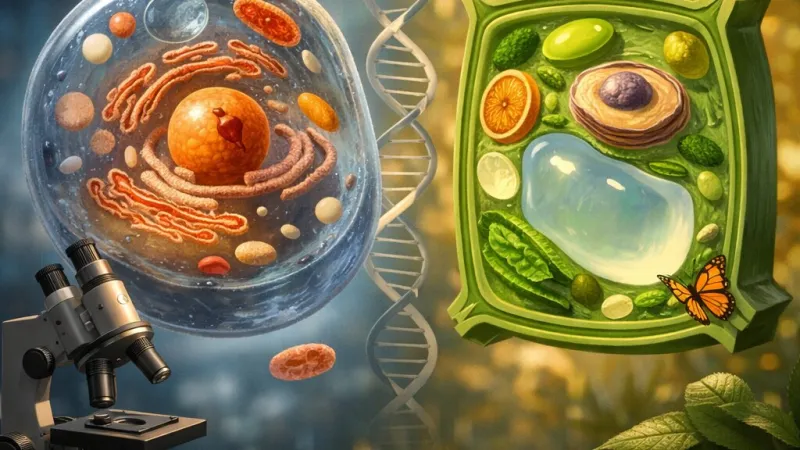
The typical animal cell presents itself as an irregular, round shape under the microscope, considerably smaller than a grain of salt. Despite its modest size, it houses an array of specialised structures, each working in harmony to ensure the cell’s survival and function.The Nucleus: Orchestrator of Activities
At the heart of the cell sits the nucleus, shielded by a double membrane known as the nuclear envelope. Within this command centre lies DNA, the genetic blueprint dictating every cellular operation. The nucleus also contains the nucleolus, responsible for assembling ribosomes, and chromatin, a tangled web of DNA and proteins. Without the nucleus, cells would lack direction, unable to grow, divide, or repair.Cytoplasm: The Cell’s Chemical Workshop
The entire cell is bathed in cytoplasm—a semi-fluid, jelly-like substance. Suspended within are all the organelles, and it is here that the lion’s share of essential biochemical reactions take place. Enzymes, acting as catalysts, allow these reactions to occur swiftly, ensuring the cell stays alive and energetic.The Cell Membrane: The Gatekeeper
Surrounding each animal cell is a delicate, yet sophisticated, membrane formed primarily of lipids and proteins. This structure is selectively permeable, allowing only certain substances to enter or leave via diffusion, osmosis, or active transport. By managing the movement of nutrients, gases, and waste, the membrane maintains a delicate equilibrium—homeostasis—vital for survival.Mitochondria: Generators of Energy
Often dubbed the ‘powerhouses’ of the cell, mitochondria are where aerobic respiration is carried out. Glucose and oxygen are converted into adenosine triphosphate (ATP), the cell’s energy currency. This energy is used in all cellular processes, from muscle contraction to nerve transmission.Other Essential Organelles
- Ribosomes perform the crucial task of assembling proteins, linking amino acids in precise order. - Endoplasmic Reticulum (ER) comes in two forms: rough (studded with ribosomes and involved in protein synthesis) and smooth (involved in lipid synthesis and detoxification). - Golgi Apparatus acts like a packing and posting centre, modifying proteins and sending them to their destinations within or outside the cell.III. Anatomy of the Plant Cell
When observing plant cells under a microscope—perhaps the skin of an onion or the leaf of Elodea—they appear more regular in shape, often rectangular due to the presence of a cell wall. But it is not just shape that distinguishes them.Cell Wall: Providing Structure and Support
Plant cells are encased not only by a delicate membrane but also a robust cell wall made of cellulose. This additional layer lends structural support, preventing cells from bursting when water enters, and giving plants their characteristic rigidity.Chloroplasts: Engines of Photosynthesis
One organelle unique to plant (and some algal) cells is the chloroplast, a green structure packed with chlorophyll. Chloroplasts capture sunlight, using its energy to convert carbon dioxide and water into glucose via photosynthesis. This process is critical, not only for the plant but for all life, as it forms the base of nearly every food chain.Large Vacuole: Maintaining Turgor and Storing Substances
Plant cells also feature a large central vacuole, filled with cell sap (a dilute solution of sugars, salts, and other substances). The pressure from this vacuole helps the cell maintain its shape—a phenomenon known as turgor—and stores nutrients and waste products.Shared Organelles with Animal Cells
Like animal cells, plant cells also have a nucleus, cytoplasm, mitochondria, ribosomes, and a cell membrane. These shared features reflect the fundamental unity of life, even as the unique components cater to the plant's particular needs.IV. Comparative Analysis: Animal Versus Plant Cells
The contrasts between animal and plant cells are both functional and structural. A table might summarise:| Organelle | Animal Cell | Plant Cell | |--------------------|-------------|-------------------| | Cell Wall | Absent | Present | | Chloroplast | Absent | Present | | Large Vacuole | Small/absent| Large and central | | Shape | Irregular | Regular/rectangular | | Glycogen/ Starch | Glycogen | Starch |
The absence of a cell wall in animal cells allows for flexibility and facilitates complex movements—a key trait for many animals. In contrast, the cell wall in plants provides permanence and structure, critical for growing upright and capturing light. Animal cells also lack chloroplasts because animals obtain food rather than synthesise it via photosynthesis. These differences are the result of millions of years of evolutionary adaptation: animals evolved for movement and rapid response, while plants evolved for stability and maximising energy from sunlight.
V. Applications and Importance in GCSE Biology
For GCSE students, understanding cells is more than memorising names and functions—it means being equipped to handle exam questions, practical investigations, and real-life problems.Practical Skills: Common investigations include viewing one’s own cheek cells (animal cells) using methylene blue stain, and examining onion epidermis (plant cells) stained with iodine. These exercises help students link theory with what they see under the microscope.
Exam Techniques: Success hinges on accurate labelling of diagrams, using keywords like ‘selectively permeable’ or ‘turgor’, and succinct explanations. Questions often require comparisons or drawing clear, labelled diagrams—skills best honed by practice.
Relevance to Life: Appreciating the process of cellular respiration or photosynthesis fosters a deeper understanding of issues as wide-ranging as fitness, diet, climate change, and food production.
VI. Common Misunderstandings and Top Tips
Students sometimes blur the distinction between cytoplasm (the whole contents within the membrane, excluding the nucleus) and cytosol (the liquid part). Similarly, confusing the cell membrane with the cell wall is not unusual. To avoid such pitfalls:- Mnemonics: For remembering organelle functions, try: ‘Never Make Real Good Pizza’—Nucleus, Mitochondria, Ribosome, Golgi, Plasma (cell) membrane. - Visualisation: Creating or copying out colourful diagrams can reinforce memory. - Group Work: Discussing challenging ideas with peers often reveals new insights and cements understanding. - Regular Testing: Frequent self-quizzing helps retain facts and aids exam confidence.
Conclusion
Understanding the intricacies of animal and plant cells is a gateway into the wider marvels of biology. The differences in structure and function are not arbitrary, but beautifully suited to the lives that animals and plants lead. For the GCSE student, mastering this topic not only prepares one for exams but builds a scientific mindset—one that appreciates life from its smallest component upwards. The study of cells is far from dry theory; it is a first step on a lifelong journey of scientific discovery about ourselves and the living world around us.---
Appendices
Glossary: - Organelle: Specialised structure within a cell. - Osmosis: Movement of water molecules across a partially permeable membrane. - Homeostasis: Maintenance of a stable internal environment.Suggested Diagrams: Practice drawing and labelling a typical animal cell and plant cell, ensuring each structure is clear and accurately placed.
Further Reading: - ‘New Biology for You’ by Gareth Williams - BBC Bitesize GCSE Biology Section - ‘CGP GCSE Biology Revision Guide’
Rate:
Log in to rate the work.
Log in