Key Principles and Adaptations of Exchange and Transport in Biology
This work has been verified by our teacher: 10.04.2026 at 13:06
Homework type: Essay
Added: 9.04.2026 at 11:18
Summary:
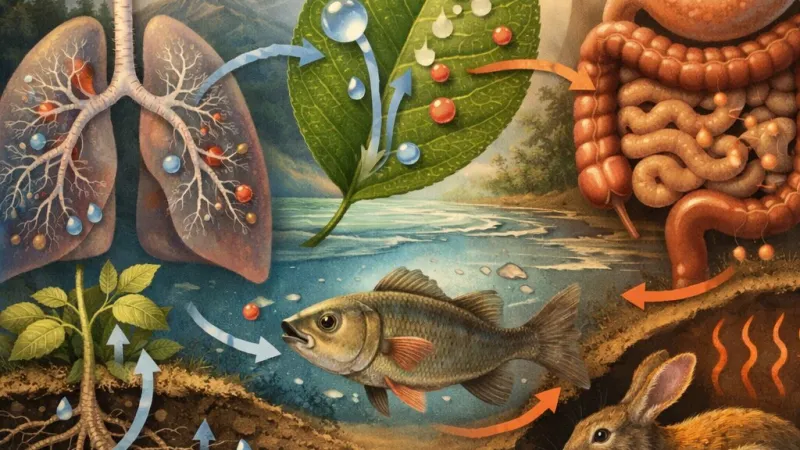
Explore key principles and adaptations of exchange and transport in biology to understand how organisms move gases, nutrients, wastes, and heat effectively.
Exchange and Transport in Organisms – Mechanisms, Adaptations and Principles
Introduction
Biological exchange and transport lie at the heart of life, sustaining every living organism from the simplest bacterium to the most complex mammals. Exchange, in its scientific context, refers to the passage of essential substances – such as respiratory gases, nutrients, and wastes – either between an organism and its surroundings or throughout its internal tissues. These exchanges underpin vital life processes: oxygen is needed for respiration, nutrients fuel metabolism, by-products like carbon dioxide and urea must be expelled, and thermal energy must be managed to maintain stable functioning. Without effective exchange and transport, no organism could survive more than a few minutes in our ever-changing world.This essay will delve into the fundamental principles governing exchange and transport, consider the challenges faced by different organisms based on size and habitat, and scrutinise the myriad adaptations that nature has evolved to address these obstacles. We will explore how single-celled organisms, insects, fish and plants all meet their exchange needs, before examining how larger animals like mammals have developed intricate circulatory systems to overcome limitations imposed by scale. In doing so, real-life British examples, memorable case studies and core concepts taught in UK classrooms will be woven throughout, alongside key scientific figures and formulae relevant to AQA Biology.
Fundamental Principles of Biological Exchange
Substances Exchanged: Gases, Nutrients, Wastes, and Heat
At its core, biological exchange involves the transit of four major classes of substance. First, respiratory gases: animals must absorb oxygen for aerobic respiration and expel carbon dioxide, while plants also take in CO₂ and release O₂ during photosynthesis. Secondly, nutrients such as glucose, amino acids, fatty acids, vitamins and minerals are all vital for cell maintenance and growth. Thirdly, organisms generate metabolic wastes – for example, urea in humans or ammonia in fish – that must be removed to prevent toxicity. Lastly, the effective transfer or retention of heat (thermal exchange) can determine survival, particularly for creatures in the British Isles where temperature fluctuates markedly through the year.Mechanisms of Movement: Diffusion, Osmosis, Active Transport
Substances move in different ways. Diffusion – the net movement of particles from a region of high concentration to one of low concentration – is a passive process requiring no direct input of energy. A classic classroom demonstration might involve the gradual spreading scent of ammonia in a laboratory, a process smoother and faster across thin barriers and short distances. Osmosis, a variant of diffusion, refers specifically to water’s passage across a selectively permeable membrane. Both diffusion and osmosis play central roles in British botanical staples, like the movement of water into potato cells in osmosis experiments.In some scenarios, however, simple diffusion cannot provide sufficient rates of exchange. Here, active transport is vital. Unlike passive processes, active transport uses metabolic energy (in the form of ATP) to move substances against their concentration gradient. For instance, the root hair cells of a daffodil in a peat-poor garden soil may only find dilute nitrate ions in the surrounding water; active transport is needed to absorb these nutrients efficiently.
The Significance of Surface Area to Volume Ratio (SA:V)
As shown in countless sixth-form lab practicals, the surface area to volume ratio (SA:V) principle is essential in biology. Smaller organisms, such as a single yeast cell, present a large surface area relative to their internal volume, enabling rapid diffusion across the membrane. However, as body size increases – as in the case of a hedgehog or a beech tree – volume expands far more rapidly than surface area. This geometric constraint means that diffusion across the surface can no longer support metabolic demand, requiring new adaptations or even dedicated transport systems. Understanding SA:V is a foundation stone of GCSE and A-Level biology alike.Adaptations of Specialised Exchange Surfaces
A successful exchange surface shares several crucial features. First and foremost, maximised surface area – as seen in the leaf’s broad, flattened lamina or the vast array of alveoli in the human lung – ensures that many molecules can cross at any given moment. Thin barriers reduce the distance over which diffusion occurs, increasing speed and conserving energy. Selective permeability ensures only required substances gain entry, while actively impeding harmful agents.Living organisms also employ strategies to maintain high concentration gradients, which drive diffusion. For example, in human lungs, continual blood flow in capillaries and ventilation renews oxygen-depleted air, maintaining a gradient that favours O₂ uptake. All these principles can be mathematically encapsulated in Fick’s Law, often recited by UK biology students:
Rate of diffusion = (Surface Area x Concentration Difference) / Thickness of Exchange Surface
This formula, a staple of AQA assessment, helps predict and explain the efficiency of various natural surfaces.
Exchange in Different Organism Types
Single-Celled Organisms
Single-celled organisms, such as bacteria or amoebae found in British ponds, benefit from high SA:V ratios by virtue of their minuscule size. These organisms rely entirely on diffusion across their cell membranes for the uptake of oxygen and nutrients and the removal of waste. With no structural complexity and often living in aqueous environments, substances can diffuse rapidly throughout the cytoplasm. However, such dependence restricts them to moist habitats and small sizes, as larger forms would suffocate or starve before sufficient exchange could take place.Insects: Exchange and Water Conservation
Insects, from the humble honeybee to the native British stag beetle, face the unique challenge of terrestrial life: gas exchange without fatal water loss. Their solution is a waterproof exoskeleton made of chitin, which minimises evaporation. Gaseous exchange is achieved not through lungs or gills, but via a complex internal tracheal system. Air enters through spiracles – small, adjustable openings on the exoskeleton’s surface – whose valves can close to conserve water.Once inside, air passes through a branching network of tubes (tracheae and tracheoles), delivering oxygen directly to the cells and bypassing the limiting effects of circulatory systems. It is at this microscopic scale that diffusion provides sufficient speed, aided by localised reductions in O₂ and increases in CO₂ from rapid cellular respiration. To further accelerate gas exchange, some insects utilise abdominal movements, effectively ‘pumping’ air through their tracheal systems.
Despite these adaptations, reliance on diffusion restricts insects’ maximum size – a constraint absent in prehistoric times when atmospheric oxygen was higher, as evidenced by fossilised dragonflies with wingspans the size of an A4 exercise book.
Fish: The Countercurrent Magic of Gills
Aquatic life brings its own complications. Fish must extract oxygen from water – a medium where concentrations are far lower than in air and where diffusion is slower due to higher density and viscosity. Fish such as the native brown trout have evolved elaborate gills protected by bony covers (opercula). Each gill comprises multiple filaments, over which very thin, plate-like lamellae project, forming an immense surface area.Perhaps the most ingenious adaptation is the countercurrent exchange mechanism: blood within the gill capillaries flows in the opposite direction to the water passing over the gills. This arrangement ensures that, at every point along the capillary, the water has a higher oxygen concentration than the blood, maximising diffusion. As a result, a fish can extract an impressive 80% or more of the oxygen from water, outclassing all but the most efficient artificial gas exchange surfaces designed by humans.
Plants: Living Lungs in Leaves
Plants, too, must exchange gases to photosynthesise and respire, particularly in the wind-swept fens and meadows of the UK. The leaf is the primary organ of exchange: its broad, flat shape increases the available area while the thin structure shortens diffusion paths. Under the epidermis, a network of air spaces surrounds the spongy mesophyll, ensuring swift distribution of carbon dioxide.Stomata, typically more abundant on the underside of leaves, are small adjustable pores flanked by guard cells. These can open to admit CO₂ for photosynthesis but close during dry conditions to limit water loss – an adaptation observed in drought-tolerant British flora such as gorse or Scots pine. Interestingly, the balance between gas gain and water preservation is a delicate one, and plants modulate stomatal movement in response to light, carbon dioxide concentration, and internal water status.
Gas exchange in plants is also time-dependent: at noon, when photosynthetic demand is high and conditions warm, stomata tend to be open; by nightfall, with less CO₂ needed, they usually close.
Organism Size and Circulatory Systems
Why Diffusion Alone Fails in Large Organisms
As organisms grow larger – consider comparison between a newt and a badger – the SA:V ratio drops, limiting the potential for passive diffusion to deliver life-sustaining substances to distant cells. Rapid, targeted transport is required lest tissues become starved or choked with waste. Evolution’s answer in vertebrates is the development of dedicated circulatory systems.The Mammalian Solution: Closed Double Circulation
In mammals, including humans, rabbits, and the red deer of Windsor Great Park, a closed double circulatory system has evolved. Here, blood remains contained within vessels at all times, propelled by a muscular heart – two separate loops serving the lungs and body respectively. This arrangement maintains high pressure, ensuring efficient movement of oxygen, nutrients, and waste products even in fast-moving or large animals.At the microscopic level, exchange occurs in capillary beds, where networks of ultra-thin, one-cell-thick vessels allow rapid passage of substances between blood and body cells. AQA Biology students often recall the alveoli – tiny air sacs in the lungs – as a prime example of a specialist surface intricately connected to the circulatory system, maximising gas uptake and removal with extraordinary efficiency.
Conclusion
Exchange and transport processes are not merely abstract scientific principles; they are living, breathing realities, shaping every aspect of an organism’s structure, behaviour, and success. From frogspawn in a Cornish pond to the intricate lungs of a marathon runner in London, adaptations for life hinge on the delicate balancing act of acquiring what is needed and expelling what is not. Evolution has bequeathed a vast toolkit: microscopic tracheae, elaborate gills, stomatal pores, and sophisticated circulatory networks. By appreciating these dazzling solutions and linking them to the fundamental constraints of physics and mathematics, British biology students gain not only exam marks, but a lasting admiration for the ingenuity of life.---
Additional Tips for Students
- Where possible, construct and annotate your own diagrams, such as a cross-section of a leaf, a fish gill filament, or the flow of blood through the heart. - Ensure fluency in key definitions and laws – practice explaining Fick’s Law in words and numbers. - Use examples from British nature or agriculture to reinforce your points, e.g., root hair cells in common crops, adaptation of insects in local environments. - Tackle past paper questions involving calculations or analysis of exchange surfaces in unfamiliar organisms. - Finally, regularly review and interlink concepts to see the larger picture that connects structure, adaptation and survival.With this foundation, you will not only thrive in your assessments, but also be able to appreciate the quiet marvel of exchange and transport in the living world around you.
Rate:
Log in to rate the work.
Log in