Understanding Cellular Respiration: Energy Conversion in Living Cells
This work has been verified by our teacher: 12.04.2026 at 16:01
Homework type: Essay
Added: 9.04.2026 at 15:36
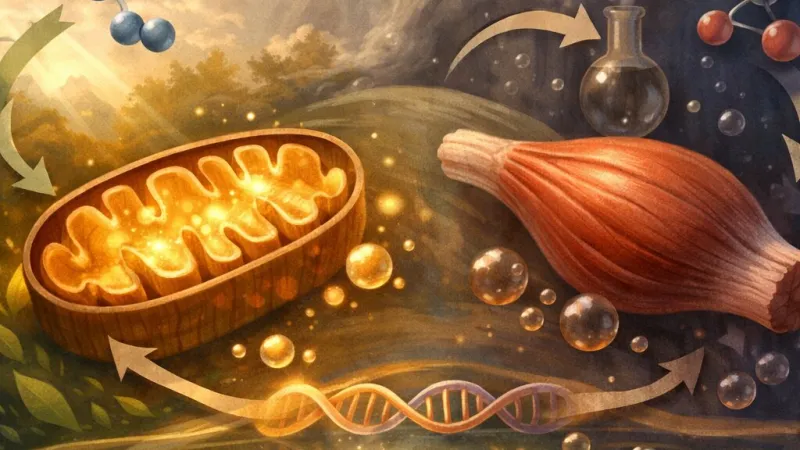
Summary:
Explore how cellular respiration converts energy in living cells, detailing aerobic and anaerobic pathways to help you understand this vital biological process.
Respiration: The Biochemical Pathways of Energy Conversion in Cells
Respiration is a quintessential process that underpins all life, intricately woven into the fabric of cell biology. Often confused with breathing – the physical act of inhaling and exhaling – respiration at the cellular level refers to a series of enzymatically controlled chemical reactions that unlock the energy stored within organic molecules, particularly glucose. It is this liberation of energy, captured and distributed in the universal chemical currency ATP (adenosine triphosphate), that fuels the manifold processes necessary for life: from muscle contraction to nerve transmission and biosynthesis. In this essay, I will explore the nature, mechanisms, and significance of both aerobic and anaerobic respiration, connecting biochemical details to physiological phenomena and everyday experiences. Through examining the various stages and regulatory controls of respiration, alongside real-world applications, we can appreciate the elegance and indispensability of this remarkable biological feat.
Cellular Respiration: An Energy Conversion Process
The fundamental reason for respiration lies in the unrelenting demands of living cells for energy. In every cell, regardless of its function – be it a root hair cell in a daffodil, a red blood cell coursing through a human vein, or a single-celled bacterium in a puddle – energy is required to maintain homeostasis, synthesise complex molecules, actively transport ions, divide, and interact with their environment. ATP is the molecule at the heart of this system. Structurally, ATP comprises adenine (a nitrogenous base), ribose (a sugar), and three phosphate groups. When the terminal phosphate bond is hydrolysed, a substantial amount of energy is released, converting ATP to ADP and inorganic phosphate (Pi). This energy is then harnessed for endergonic reactions across the cell.Although cells can oxidise various substrates – including fatty acids and amino acids – glucose, a six-carbon monosaccharide, is the preferred starting point for most respiration. Its abundance, solubility, and the efficiency with which its bonds can be rearranged make it the ideal fuel. Nonetheless, during times of carbohydrate scarcity, cellular metabolism is flexible enough to catabolise fats and proteins, feeding their breakdown products into respiratory pathways.
Aerobic Respiration: Pathway and Detailed Stages
General Overview
Aerobic respiration represents the most efficient energy-yielding pathway, relying on an abundant supply of molecular oxygen. The process can be summarised by the equation: C₆H₁₂O₆ + 6 O₂ → 6 CO₂ + 6 H₂O + ATPThis reaction, while deceptively simple in symbolic form, encapsulates a dazzling array of intricately coordinated steps taking place within different cellular compartments, particularly the cytoplasm and mitochondria.
Stage 1: Glycolysis
Glycolysis unfolds within the cytoplasm of all living cells. Here, a single glucose molecule (6C) undergoes a series of ten enzyme-catalysed steps, resulting in the formation of two molecules of pyruvate (3C each). Initially, two ATP molecules are consumed to ‘activate’ glucose, a process known as phosphorylation. This can appear counterintuitive; investing energy seems at odds with the net gain required. However, this investment makes the molecule more reactive. Subsequent stages recoup this expenditure, yielding four ATP (a net gain of two). Crucially, glycolysis also generates NADH by transferring hydrogen atoms from intermediates to the coenzyme NAD⁺, providing reducing power for downstream processes.Glycolysis is an ancient pathway, believed to have evolved at a time when ancestral life forms thrived in an oxygen-poor atmosphere. Its persistence across all domains of life underscores its centrality.
Stage 2: The Link Reaction
The pyruvate molecules produced in glycolysis are actively transported into the mitochondrial matrix, where each undergoes decarboxylation (removal of a carbon atom as CO₂) and dehydrogenation (loss of hydrogen atoms, reducing NAD⁺ to NADH). The resulting two-carbon acetate is coupled to coenzyme A, forming acetyl-CoA, which is the pivotal gateway substance into the Krebs cycle. This stage offers the crucial biochemical link between cytoplasmic glycolysis and mitochondrial respiration.Stage 3: The Krebs Cycle (Citric Acid Cycle)
Within the mitochondrial matrix, acetyl-CoA condenses with oxaloacetate (4C) to produce citrate (6C), which is subsequently degraded through a cyclical series of reactions. With each turn, two molecules of CO₂ are released – explaining why animals exhale carbon dioxide as waste – and several molecules of NADH and FADH₂ (another hydrogen carrier) are generated. A single molecule of ATP (or GTP in some cells) is produced directly per cycle. Beyond ATP production, the Krebs cycle is a hub of metabolic integration: many other pathways feed into and out of it, making it central to the cell’s metabolic economy.Stage 4: Oxidative Phosphorylation (Electron Transport Chain & Chemiosmosis)
Arguably the most critical phase in terms of ATP yield, oxidative phosphorylation takes place on the inner mitochondrial membrane. NADH and FADH₂ carry high-energy electrons to a series of protein complexes known as the electron transport chain. As electrons flow down this ‘electrical wire’, protons are actively pumped across the membrane, creating a proton gradient – as Peter Mitchell described in his celebrated chemiosmotic theory. The protons then diffuse back through ATP synthase channels, driving the synthesis of ATP from ADP and Pi, much like water flowing through a turbine generates electricity. Oxygen, the final electron acceptor, combines with electrons and protons to form water. Overall, this stage produces the lion’s share of ATP molecules generated from each glucose, with the total haul reflecting the efficiency unique to aerobic respiration.Anaerobic Respiration: Adaptations to Oxygen-Limited Conditions
Life is not always blessed with ready access to oxygen. Under hypoxic or anoxic conditions, cells must adapt to continue generating ATP, albeit at a reduced efficiency. This is where anaerobic respiration becomes vital.Animal Anaerobic Respiration: Lactate Fermentation
In human muscles during strenuous exercise – think of a 400-metre sprint or a school rugby match – oxygen supply may not keep up with demand. Here, pyruvate is converted to lactate by lactate dehydrogenase. No further ATP is produced beyond that gained from glycolysis, and the accumulating lactate can contribute to the familiar sensation of muscle fatigue. Thankfully, when a person recovers and breathes deeply again, oxygen is used to oxidise lactate back to pyruvate in the liver, in a reversible and carefully regulated process.Plant and Yeast Anaerobic Respiration: Alcoholic Fermentation
Plants and yeasts utilise a different anaerobic pathway, converting pyruvate into ethanol (alcohol) and carbon dioxide. This process is the scientific magic behind bread rising and beer brewing. Both products – the CO₂ and the ethanol – have profound cultural and economic importance in the UK, ranging from the breweries of Burton-upon-Trent to the artisanal bakeries of London.Comparative ATP Yield and Biological Efficiency
Anaerobic respiration may seem crude and energetically wasteful, yielding only two ATP molecules per glucose compared to the up to thirty-eight produced aerobically. Yet, this pathway can mean the difference between life and death in oxygen-limited contexts. Organisms that exploit it can thrive in bogs, waterlogged soils, or even the anaerobic gut of a herbivore.Integration and Regulation of Respiration
Respiration does not occur in isolation. In green plants, photosynthetic and respiratory pathways are entwined: the outputs of one become the inputs of the other, closing the metabolic loop. Lipids and proteins, when metabolised, feed intermediates into glycolysis or the Krebs cycle, testifying to bioenergetic flexibility.Regulation is paramount: feedback mechanisms ensure ATP is produced according to need. For example, high concentrations of ATP inhibit certain enzymes in glycolysis (such as phosphofructokinase), slowing the process. Environmental factors, especially oxygen and substrate availability, further modulate respiratory rates. Specialised cell types, like fast-twitch muscle fibres or active neurons, display tailored adaptations in respiratory enzyme distributions reflecting their functional demands.
Respiratory rates reveal much about an organism’s state. For example, a sudden increase can signal cellular stress, disease, or adaptation to changing environments. On an ecological level, the sum of respiration across all organisms forms a core component of the global carbon cycle, influencing atmospheric composition and climate.
Experimental Methods and Practical Applications
Respiration can be measured experimentally using respirometers, devices that track oxygen uptake or carbon dioxide output. When students in UK schools study woodlice or germinating seeds using simple glassware and coloured fluids, they are contributing to a long tradition of practical biology first championed by figures such as William Harvey and Joseph Priestley.Modern biotechnology exploits anaerobic respiration in yeast to produce not just alcohol and bread, but also biofuels. In medicine, understanding how mitochondrial dysfunctions underlie inherited metabolic diseases is ushering in new therapeutic frontiers. The study of respiratory enzyme poisons, such as cyanide (which blocks the electron transport chain), has informed both toxicology and biochemistry.
Rate:
Log in to rate the work.
Log in