How to Write a Top-Scoring 6-Mark Answer on the Carbon Cycle
This work has been verified by our teacher: 24.04.2026 at 12:07
Homework type: Essay
Added: 22.04.2026 at 9:25
Summary:
Master how to write a top-scoring 6-mark answer on the carbon cycle, exploring key processes like photosynthesis and carbon transfer in UK ecosystems.
Understanding the Carbon Cycle: Writing a High-Scoring 6-Mark Response
The carbon cycle is a fundamental process that underpins life on Earth. It refers to the continuous movement and transformation of carbon among the atmosphere, living organisms, soils, and rocks. This cycling is essential to sustain ecosystems because carbon is at the heart of all organic molecules. Without proper circulation of carbon, living organisms could not survive, and natural systems would quickly become unbalanced. The purpose of this essay is to systematically outline the key steps and biological processes in the carbon cycle, examining the ways in which carbon moves through the biosphere and lithosphere, and to articulate a high-quality response for a typical 6-mark GCSE question on this topic, rooted in the expectations of the United Kingdom science curriculum.
The Role of Photosynthesis in the Carbon Cycle
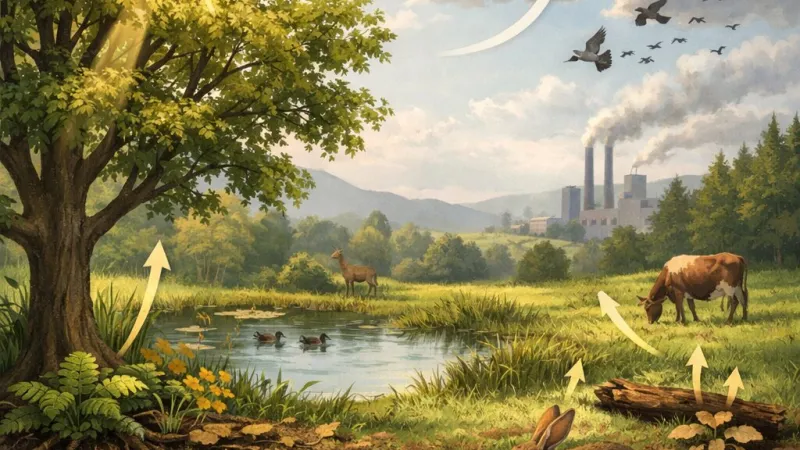
Photosynthesis forms the initial step in the cycling of carbon. It is carried out by green plants, algae, and some types of bacteria, all of which are known as autotrophs. In British woodlands, for example, oak trees and ferns absorb carbon dioxide (CO₂) from the air through their leaves. Sunlight is absorbed by the pigment chlorophyll, which enables these organisms to convert CO₂ and water into glucose—a simple sugar—and oxygen. The reaction can be summarised as:CO₂ + H₂O → (with sunlight and chlorophyll) → C₆H₁₂O₆ + O₂
The glucose produced not only provides energy for the plant itself but also serves as building blocks for more complex molecules like starch and cellulose. These compounds store carbon in plant tissues, forming the basis of the food chain. When photosynthetic activity is at its peak, especially in the summer, there is a notable reduction in atmospheric CO₂, demonstrating the significant influence of plant life on our environment.
Carbon Transfer Through Food Chains
The next stage of the carbon cycle involves the movement of carbon compounds through food chains. Herbivores such as rabbits, deer, and caterpillars consume plant material, extracting energy and incorporating plant carbon into their own bodies. For instance, a caterpillar in an English hedgerow eating hawthorn leaves is, in effect, transferring plant carbon into animal tissue.Carnivores—such as foxes or kestrels—then feed on the herbivores, passing carbon further up the trophic levels. Omnivores, like badgers, participate in both plant and animal feeding, making the flow of carbon within ecosystems even more intricate. Each link in the food chain represents the transformation and redistribution of organic carbon, ensuring that energy and matter move efficiently through the environment.
Respiration: Returning Carbon to the Atmosphere
Crucial to the carbon cycle is the process of respiration, which occurs in all living organisms. Respiration is the means by which energy is released from food, and one of its by-products is carbon dioxide. Plants respire all day and night, although photosynthesis (which removes CO₂) only takes place when light is available. This means that, at night, woodland plants release more CO₂ than they absorb.Similarly, animals respire constantly, breaking down glucose and other compounds to produce energy for movement, growth, and repair. The equation for respiration can be summarised as:
C₆H₁₂O₆ + O₂ → CO₂ + H₂O + energy
This process ensures that carbon taken in by living things is eventually returned back to the air, maintaining the constant cycling essential for environmental equilibrium.
Decomposition and the Role of Microorganisms
When plants and animals die, their bodies become a fresh source of organic carbon. In British woodlands or countryside, dead leaves, animal remains, and other wastes accumulate, and a host of microorganisms—especially bacteria and fungi—begin the process of decomposition. These decomposers break down complex organic materials, releasing nutrients and carbon dioxide back into the environment. Sometimes, particularly in waterlogged soils or bogs common in places such as the Norfolk Broads or Scottish Highlands, carbon may be released as methane, a powerful greenhouse gas.During decomposition, some carbon is locked away in the soil as humus, enriching soil fertility and supporting further plant growth. This soil organic matter also acts as a semi-permanent store of carbon, crucial for preventing excess carbon dioxide release and promoting healthy ecosystems.
Fossil Fuels and Human Activity
Not all carbon from dead material re-enters the active carbon cycle at once. Over millions of years, pressure and heat convert buried organic matter into fossil fuels like coal (abundant in the South Wales Valleys), oil, and natural gas. These fossil fuels represent long-term carbon storage. However, since the onset of the Industrial Revolution in the United Kingdom, humans have been extracting and burning these fuels on a vast scale—whether to power steam locomotives, generate electricity at gas-fired power stations, or run cars and lorries on Britain’s roads.Combustion of fossil fuels releases carbon, previously locked away for millions of years, rapidly back into the atmosphere as CO₂. This process is a major driver of climate change. Burning wood in fireplaces or biomass power stations also releases stored carbon, but in most cases, the carbon forms part of the short-term cycle, since replacement trees can reabsorb CO₂. However, large-scale deforestation for agriculture, especially in overseas British imports, disrupts this balance and adds to atmospheric CO₂.
The Significance of the Carbon Cycle in Climate Regulation
Carbon dioxide is a pivotal greenhouse gas. Its presence in the atmosphere helps trap heat, keeping Earth’s temperature within suitable bounds for life. However, increasing levels of CO₂, especially from human activity in the UK and worldwide, amplify the greenhouse effect, resulting in warmer global temperatures and altered weather patterns—a process acutely felt in recent years with erratic British weather.Disruptions to the natural carbon cycle, such as deforestation or excessive fossil fuel burning, lead to a net increase in atmospheric carbon dioxide. This not only threatens climate stability but also risks undermining the ecosystems and agricultural productivity upon which humans rely.
Therefore, efforts to manage carbon—through reforestation, carbon capture technologies, and a shift towards renewable energy—are crucial for maintaining a healthy carbon balance. The British government’s net-zero emissions goal by 2050 reflects the national importance attached to this issue.
Conclusion
To summarise, the carbon cycle consists of several interconnected processes: photosynthesis (removing CO₂ from the air), consumption through food chains (moving carbon through living organisms), respiration (returning CO₂ to the atmosphere), decomposition (recycling dead matter), and combustion (both natural and human-induced, releasing CO₂ from fuels). Together, these pathways ensure that carbon is constantly recycled, sustaining life.Understanding these connections and their implications is essential for anyone studying environmental science in the UK. As we confront environmental challenges like global warming, knowledge of the carbon cycle is more relevant than ever. It enables informed decision-making—whether by individuals, policymakers, or industries—and highlights the importance of reducing fossil fuel use and protecting natural carbon sinks like woodlands, peat bogs, and grasslands.
How to Answer a 6-Mark Question on the Carbon Cycle
For a top-level 6-mark response, structure your answer logically. Begin by stating that photosynthesis in plants absorbs atmospheric CO₂ to make glucose and other organic molecules. Next, explain that animals eat plants, transferring carbon through food chains. Mention that respiration in both plants and animals returns CO₂ to the atmosphere. Include decomposition: when organisms die, decomposers such as bacteria and fungi break them down, releasing CO₂ or methane and contributing to soil carbon. Complete your answer by discussing combustion: burning fossil fuels or biomass quickly returns stored carbon to the air, increasing CO₂ levels, especially through human activity. Use key terms, give examples where possible, and clearly show how each process links to the next in the cycle.By covering these points concisely and coherently, you can secure full marks and demonstrate an excellent grasp of one of the most important cycles in nature.
Rate:
Log in to rate the work.
Log in