Exploring Brain Functions and Behaviour: Understanding Human and Animal Responses
Homework type: Essay
Added: day before yesterday at 11:33
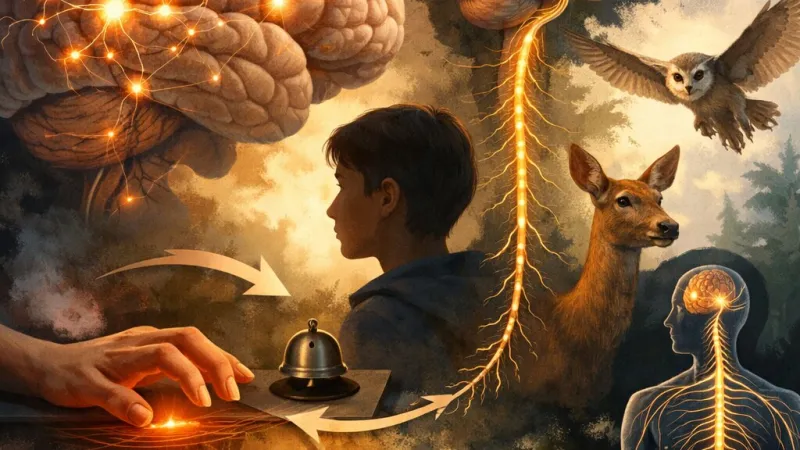
Summary:
Discover how brain functions shape human and animal behaviour by exploring stimuli, responses, reflexes, and nervous system roles for GCSE success.
The Brain, Nervous System, and Behaviour: Understanding the Foundations of Human and Animal Responses
The intricacy of the human brain and nervous system stands at the very core of what it means to respond, perceive, and survive in the world. Whether it is the instinctive withdrawal from a scalding kettle or the concentrated effort of solving a crossword puzzle in The Guardian, our behaviour is constantly shaped by the senses, the nervous system, and the mind. This interplay does not simply concern the domain of biology; it weaves through everyday life, underpinning our capacity to adapt, protect ourselves, and connect with others. Understanding how stimuli produce responses—ranging from automatic reflexes to sophisticated reasoning—offers insight not only into health and medicine but also into the philosophical question of what it means to be human. This essay aims to explore the mechanisms of brain function and nervous responses, from the most basic reflexes to the complex tapestry of conscious thought, while also considering the chemicals that shape our moods and the health consequences that arise when these delicate balances fail.
---
1. Fundamental Concepts: Stimulus, Response, and Behaviour
Central to biological understanding is the concept that behaviour starts with a *stimulus*—an external or internal change detectable by specialised sensory cells called *receptors*. For instance, the sudden hiss of a hot iron touching fabric or the cold snap of a January wind on the Yorkshire Moors serves as a stimulus. The *response* is what follows: the withdrawal of a hand, the wrapping of arms around oneself for warmth.Behaviour may be *innate* or *learned*. Innate behaviour, such as a newborn baby's rooting reflex or the automatic closing of the pupil in bright light, is ingrained by genetic inheritance and is present without previous experience. An example from the British countryside includes the hedgehog’s habit of rolling into a tight ball when threatened; this is an unlearned, protective reaction.
Learned behaviours, by contrast, develop through experience. Consider Pavlov’s dogs, which, although not a British experiment, has parallels in the work of Sir Charles Sherrington and other physiologists whose studies underpin GCSE syllabuses. British birds like tits learning to pierce foil milk bottle tops for cream is a celebrated home-grown example of adaptation through experience. The ability to change behaviour in response to new conditions ensures survival by allowing individuals to find food and shelter and escape danger in an unpredictable world.
---
2. Simple Reflexes and Their Biological Purpose
*Reflexes* are the fastest, most reliable responses the body can muster—automatic and unthinking, forming a cornerstone of neurological health. Everyday examples include the knee-jerk reaction assessed by doctors in surgeries up and down the country, or the swift withdrawal of a child’s hand from a nettle sting during a walk in the Lake District. Reflexes are mediated by a pathway called the *reflex arc*, a marvel of efficiency: stimulus activates a receptor; a sensory neurone conveys the impulse to the spinal cord, where a relay neurone transfers it directly to a motor neurone, prompting the effector (a muscle or gland) to act, all before the brain is consciously aware.In infancy, the presence and then gradual disappearance of certain reflexes serve as critical markers of neural development. For instance, the grasping reflex—where a baby instinctively clings onto a parent’s finger—disappears by around six months, making way for more voluntary movements. Persisting or absent reflexes may raise red flags for paediatricians monitoring neurological maturation.
Reflexes, from the simple blink to the complex rooting response, safeguard the vulnerable young, facilitate feeding, and ensure the newborn can interact with the world. Observing these reflexes in the first days of life in hospitals like Great Ormond Street remains an essential part of newborn assessment, demonstrating biology’s commitment to early health.
---
3. The Human Nervous System: Structure and Function
The nervous system splits neatly into the *central nervous system* (CNS)—consisting of the brain and spinal cord—and the *peripheral nervous system* (PNS), which includes a vast network of nerves spanning the body. The CNS is the hub of processing and co-ordination, ferrying messages to and from the PNS.Information races along specialised cells called *neurones*. Each neurone features a *cell body* (the control centre), *dendrites* (which receive signals), and a long *axon* (which carries impulses away). Many axons are wrapped in a fatty *myelin sheath*, speeding conduction—much as insulated copper wire improves the functioning of a London Underground train’s signalling system. At the end of each neurone lies a tiny gap, the *synapse*, where electrical impulses trigger the release of chemical messengers (*neurotransmitters*). These drift across the synaptic gap, bind to the next cell, and continue the communication chain.
Within the nervous system, signals travel both as electrical impulses (within neurones) and as chemical messengers (between neurones). This system’s swift and precise coordination allows instantaneous reaction to fire alarms, car horns, or the shrill whistle of a PE teacher on the playing field.
---
4. Complex Behaviours and Conscious Decisions
While reflexes serve as the body’s rapid response unit, the human brain’s real marvel lies in its capacity for complex, conscious behaviour. Unlike a simple reflex, complex actions—such as learning to ride a bicycle along the canals of Birmingham or solving a tricky maths problem—require experience, memory, and reasoning; these depend on sophisticated regions of the brain, especially the *cerebral cortex*.This outer layer, distinctive in its deeply folded surface, underpins voluntary actions, creative pursuits, and decision-making. London taxi drivers, famed for their navigational prowess, even show physical changes in their hippocampus, a brain region related to memory, as found in compelling British MRI studies.
The adaptability this confers ensures that both humans and animals with developed nervous systems can learn from their mistakes. Urban foxes, for instance, quickly learn to avoid bins fitted with new animal-proof locks, while children across the UK adapt their social behaviour in school playgrounds and classrooms, learning how to fit in, compete, and co-operate.
Evolutionary success has closely tracked the growth and development of brains capable not just of reflexes but of learning, memory, and flexible, problem-solving behaviours.
---
5. Sense Organs and Receptors: Gateway to Perception
Our ability to respond begins with detecting change: *receptors*—cells adapted to register specific stimuli—are found throughout the *sense organs*: eyes, ears, skin, nose, and tongue.Taking vision as an example, light first enters the eye through the cornea, is bent by the lens, and passes through the variable aperture of the pupil (adjusted by the iris, in an essential reflex), finally hitting the retina. Here, two types of photoreceptor cells—*rods* and *cones*—translate light into nerve impulses. These impulses journey along the *optic nerve* to the brain’s visual cortex, where images take shape. This process allows us to see a sparrow perched on a garden wall, avoid oncoming cyclists, or appreciate the subtleties of Monet at the National Gallery.
Other sense organs detect vibrations (ears for sound and balance), pressure and temperature (skin), chemicals (smell, taste) and more, providing comprehensive input about our world and laying the groundwork for all subsequent action.
---
6. Effectors and Responses: Muscles and Glands
Once a decision is made—conscious or reflexive—a message is sent to *effectors*: either muscles, which contract to produce movement (as in sprinting up castle steps during a school trip to Edinburgh), or glands, which release chemicals or fluids. For example, the salivary glands prepare the mouth for a roast dinner at Sunday lunch, stimulated by the mere aroma wafting from the kitchen.It is vital to distinguish between electrical nervous responses and slower hormonal responses. While the nervous system ensures quick reactions—such as flinching from a bee sting—the hormonal (endocrine) system regulates longer-lasting changes, such as water retention controlled by *antidiuretic hormone* (ADH), important for homeostasis during dehydration or after strenuous sport.
The coordination between these two communication systems sustains health and adaptability, quietly choreographing daily life.
---
7. Neurochemical Modulation of Behaviour and Mood
The smooth function of the brain’s millions of synapses depends on *neurotransmitters*, critical chemical messengers. Among these, *serotonin* is renowned for its role in mood, sleep, and general well-being. A deficiency in serotonin is linked to depression, a widespread health concern within the NHS and across society.Medications such as SSRIs (Selective Serotonin Reuptake Inhibitors), like fluoxetine (marketed as Prozac), are prescribed to boost the availability of serotonin in synapses, aiming to alleviate depressive symptoms. Recreational drugs, including ecstasy (MDMA), also act on serotonin pathways, but with dangerous consequences. Damage to these neural circuits can lead to persistent anxiety, depression, and even life-threatening failures in temperature regulation.
On a different front, medications such as beta blockers operate by tempering the effects of adrenaline, slowing heart rate and reducing anxiety or chest pain (angina), a common prescription for older adults visiting GP surgeries across the UK.
---
8. Case Study: Sudden Infant Death Syndrome (SIDS) and Reflex Maturation
One tragically sobering aspect of early development is Sudden Infant Death Syndrome (*SIDS*), where failure of key protective reflexes can have fatal consequences. An immature respiratory or swallowing reflex can mean that a baby, sleeping face-down on a soft mattress, is unable to recover from airway obstruction. National campaigns—such as the Back to Sleep programme—have markedly reduced SIDS rates by advocating that infants be placed on their backs, on a firm mattress, in an uncluttered cot. These public health interventions underscore how biological knowledge can save lives and guide parental care, as reflected in NHS guidelines disseminated to new parents at maternity hospitals nationwide.---
9. Integration and Summary: How Brain and Mind Interact in Behaviour
In summary, the brain and nervous system together enable organisms to sense their environment, process myriad signals, and respond one moment with rapid reflexes, the next with nuanced, conscious reasoning. While reflexes provide immediate, life-saving action, learning and memory ensure ongoing adaptation. Underpinning all these responses, neurotransmitters modulate how we feel, react, and cope with the world. The harmony of these processes not only secures individual survival but shapes the entire richness of human experience.---
Rate:
Log in to rate the work.
Log in