Royal Navy: How Britain Secured Naval Supremacy, 1793–1815
This work has been verified by our teacher: 2.02.2026 at 17:07
Homework type: History essay
Added: 30.01.2026 at 6:20
Summary:
Explore how the Royal Navy secured British naval supremacy from 1793 to 1815 through innovation, strategy, and key battles shaping history. ⚓
The Royal Navy during the French Wars, 1793–1815
The late eighteenth and early nineteenth centuries were years of turbulence for Britain and her continental neighbours. With the eruption of the French Revolution and the meteoric rise of Napoleon Bonaparte, Europe experienced a seismic shift in its political and military landscape. The French Wars (1793–1815), encompassing both the French Revolutionary and Napoleonic Wars, witnessed a relentless contest for supremacy. While on land, shifting alliances and the might of French armies led to frequent conquests and reversals, it was at sea where Britain’s fate would truly be decided. The Royal Navy, over these two crucial decades, developed itself into an organisation of hitherto unmatched power, directly shaping the outcome of the conflict and establishing British dominance of global seas.
This essay will investigate the myriad aspects underpinning the Royal Navy’s effectiveness during this era. It will examine key technological and tactical innovations, the requirements and realities of recruitment and fleet organisation, the daily and social conditions experienced by sailors, pivotal maritime battles, and finally, the lasting heritage of naval supremacy for Britain, both in the immediate wars and in subsequent history.
---
I. Technological and Strategic Foundations of Power
The backbone of Royal Navy superiority lay not just in the courage of its crews, but in methodical and unprecedented advancement.Shipbuilding, Technology, and Gunnery
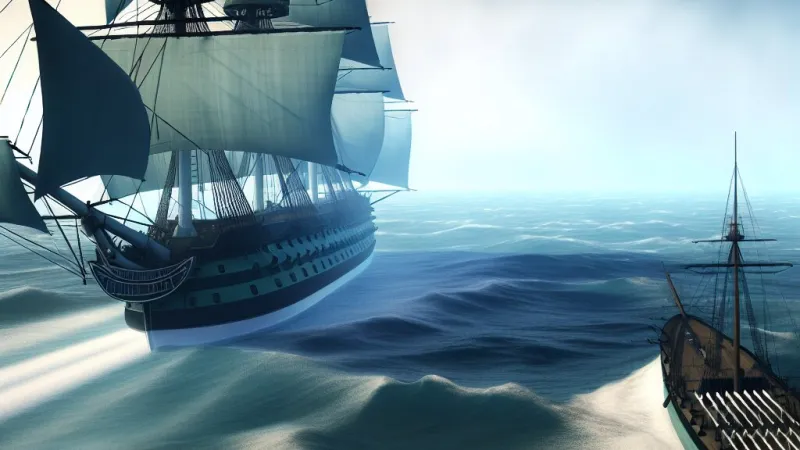
Throughout the period, the Royal Navy’s shipyards hummed with activity, turning out relentless flotillas of fighting ships. The core of the fleet was the ‘ship of the line’ — immense, multi-decked warships, often bearing anywhere from 74 to 120 guns. These wooden leviathans combined the benefits of broadside firepower with the endurance required for prolonged blockades. Construction utilised English oak and robust timbers, which, while resource-intensive, provided ships that could withstand months at sea as well as punishment in battle.A major leap was the widespread use of copper sheathing. Barnacles and shipworm devastated the hulls of wooden ships, slowing them and demanding arduous cleaning. Coppering, first trialled in the late 18th century, protected hulls, preventing biofouling and maintaining speed even after months away from port. This gave British vessels a decisive operational edge over their French and Spanish counterparts, whose unprotected hulls became encumbered with marine growth.
Frigates — smaller, fast, single-decked warships — became another backbone of the Royal Navy. Their speed and manoeuvrability rendered them ideal for reconnaissance and for intercepting French trade or relaying vital intelligence. In the age before wireless communication, a single well-handled frigate could mean the difference between disaster and victory.
Gunnery, too, was revolutionised. Not only did British ships mount some of the heaviest naval artillery afloat, including 32-pounder long guns, but the Royal Navy was famed for the discipline and regularity of its gunnery drills. The ability to fire rapid, accurate broadsides — sometimes as fast as every ninety seconds — often proved the factor that tipped the scales in battle. Men practised at gun stations until they could work in darkness or storm, handling powder, shot, and sponging out barrels under the most trying conditions.
Naval Tactics and Blockades
In terms of naval tactics, the ‘line of battle’ dominated: fleets formed up in long columns, so each ship could bring its broadside to bear without risking collisions or friendly fire. The efficacy of this system, however, depended on the professionalism with which ships maintained formation and the ability of admirals to issue clear instructions amidst chaos. The British became adept at adapting such tactics to suit circumstance, and, as evidenced famously by Lord Nelson at Trafalgar, were unafraid to break convention for the prospect of greater reward.Perhaps the greatest strategic weapon, however, was the blockade. Through close and distant blockades, the Royal Navy strove to bottle up the French fleet in port, starving France of colonial resources and crippling its trade. British blockading squadrons endured months at sea, supported by a robust logistical network that enabled them to remain on station come storm or calm.
---
II. Organisation, Recruitment, and Manning the Fleet
Supremacy at sea depended as much on the quantity and quality of British manpower as on hardware and tactics.Personnel Composition and Recruitment
At the outbreak of war in 1793, the Royal Navy comprised around 120,000 men, swelling to some 145,000 by the zenith of the Napoleonic conflict. This massive manpower requirement placed immense pressures on the Admiralty. Regular volunteers were greatly valued, but demand massively outstripped voluntary supply, resulting in the notorious practice of impressment. Press gangs scoured the port towns of Britain, forcibly recruiting able-bodied men into service. The hated nature of impressment is immortalised in folk song and numerous literary references, from Samuel Taylor Coleridge’s “The Rime of the Ancient Mariner” to the works of Jane Austen, whose brother served as a naval officer.The officer class was by no means strictly aristocratic, but many came from educated or well-connected backgrounds. Service in the American War of Independence meant that by 1793, Britain possessed a cadre of experienced captains and admirals familiar with large fleet actions. Figures such as Jervis, Howe, and Nelson rose as exemplars of courage and professionalism.
The ordinary seamen were a polyglot mix — not only Britons but Irish, Scots, and men from British overseas territories, even escaped or freed slaves and sailors of African, Caribbean, and Asian origin. While the Navy prided itself on discipline, social hierarchy remained pronounced; yet this melting pot contributed to a distinct, sometimes insular, naval identity.
Manning, Logistics, and Organisation
Recruitment was further supported by the Quota Acts, which demanded towns meet targets for supplying men. The consequences infamously led to overcrowding of ships with landsmen, criminals, and the unskilled, who could be a liability amidst experienced crews.Fleets were meticulously organised, with commissions divided amongst theatres: the Channel Fleet protected home waters, the Mediterranean Fleet exerted influence over southern Europe, while squadrons ranged the Atlantic, the Caribbean, and, increasingly as the Empire expanded, the Indian Ocean and Pacific. This vast web of naval stations and dockyards — from Portsmouth and Plymouth to Gibraltar and Jamaica — required elaborate supply and repair infrastructure. It was the procurement, storage, and distribution of food, water, timber, powder, and shot that enabled British blockaders to maintain a relentless presence.
---
III. Life and Conditions for Sailors at Sea
For those aboard, naval service entailed privation and peril as well as glory.Hardship, Diet, and Accommodation
Living conditions were spartan: hammocks slung tightly together below decks, pervaded by salt, damp, and the ever-present stench of unwashed clothing and casks of meat or rum. Voyages of blockade might extend for months on end, with only meagre rations to sustain the crews. The naval diet comprised salted beef or pork, dried peas, hard biscuits, and occasional cheese, washed down with a daily tot of diluted rum. The scourge of scurvy remained a threat, only partially controlled by the increasing provision of citrus juice, propelled by figures such as Gilbert Blane. Pay, while potentially lucrative from prize money, was often delayed or withheld for months, a point of acute grievance.Discipline and Morale
Naval discipline was draconian. Flogging for even minor offences was commonplace; the brutal realities of command are described in contemporary diaries and fictionalised in novels such as those by Patrick O’Brian. Despite the harshness, the efficiency of the Royal Navy depended on this strict order — speed and sureness at the guns, discipline on crowded decks, and the willingness to follow orders in mortal peril were what converted ships into naval machines capable of defeating seemingly larger opponents.Yet discipline risked tipping into disaffection. The great mutinies at Spithead and the Nore in 1797 revealed deep-seated concerns over pay, victualling, and treatment. These were no mere outbreaks of anarchy: the mutineers maintained discipline among themselves, and ultimately forced the government to implement overdue reforms. The memory of mutiny haunted naval authorities, instilling both caution and in some cases a more paternalistic approach to leadership.
---
IV. Major Naval Campaigns and Engagements
British naval history from 1793 to 1815 is replete with dramatic confrontations, many imbued with enduring national significance.Early Engagements and Blockade Success
Initial actions, such as the seizure of Toulon, established a presence in the Mediterranean. The pivotal “Glorious First of June” in 1794 saw Lord Howe’s fleet battle the French Atlantic fleet, a clash that demonstrated the tactical acumen and firepower of the British line. Elsewhere, the Battle of Cape St Vincent (1797) restored morale and prestige at a time when internal dissent threatened to undermine the war effort.Decisive Victories
At Camperdown (1797), Admiral Duncan shattered the Dutch fleet, neutralising a potential threat in the North Sea. Yet it was the Nile (1798) that cemented Britain’s maritime supremacy. Nelson’s unorthodox attack on the French fleet at anchor utterly destroyed it, isolating Napoleon’s forces in Egypt and shifting the Mediterranean balance. At Copenhagen in 1801, the Royal Navy not only confronted the Danes but checked the anti-British League of Armed Neutrality, ensuring Britain’s continued maritime ascendancy in northern waters.Trafalgar and its Aftermath
The apogee of British naval success arrived at Trafalgar in 1805. Here, Nelson’s bold tactic — “breaking the line” — shattered the Franco-Spanish fleet, though at the cost of his own life. Trafalgar ensured there would be no French invasion across the Channel, underwrote continued blockades, and projected British influence world-wide. Never again would a significant hostile fleet challenge British command of European waters during the conflicts.Beyond Trafalgar, the Royal Navy continued to exert enormous pressure through blockade, commerce raiding, and support for British and allied operations globally, including actions in North America and distant colonial waters.
---
V. Enduring Impact and Cultural Legacy
The consequences of Royal Navy supremacy during these wars extend beyond the mere military.Security, Empire, and Global Trade
Above all, Britain’s insular safety was assured. With France blockaded and invasion rendered improbable if not impossible, British resources could be directed into coalition-building and the maintenance of distant colonial garrisons. Naval power enabled the growth of Britain’s commercial empire: merchant shipping sailed under protection, and overseas territories could be supplied or reinforced at will.Institutional and Cultural Heritage
The professionalisation and meritocratic reforms of this period influenced naval institutions for a century. The establishment of formalised signals, permanent training regimes, and improvements to officers’ education set the standard for global navies. Naval victories and their heroes became part of the national mythos: Nelson’s column dominates Trafalgar Square, and “Heart of Oak” remains the Navy’s march. Literature, painting, and even fashion were infused with naval motifs. The impact on national identity is attested by references from Lord Byron, Jane Austen, and contemporary press.---
Rate:
Log in to rate the work.
Log in