The Impact of Black Americans’ Civil Rights Struggle, 1955–1980
This work has been verified by our teacher: 13.03.2026 at 13:56
Homework type: History essay
Added: 11.03.2026 at 7:50
Summary:
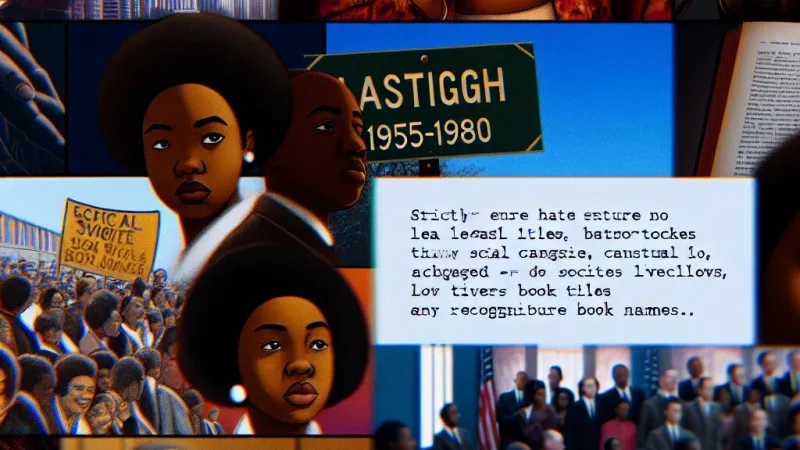
Explore the impact of Black Americans’ civil rights struggle from 1955–1980, uncovering key legal victories and social changes that shaped history. 📚
What Was the Impact of Black Americans’ Fight for Civil Rights, 1955–1980?
The civil rights movement in the United States, spanning particularly from 1955 to 1980, represents one of modern history's most formidable struggles against entrenched injustice. Prior to this period, Black Americans faced a relentless regime of segregation and discrimination, most notoriously enforced through Jim Crow laws in the American South. These laws institutionalised the separation of races in almost every facet of life—schools, transport, public spaces, and even marriage—while subjecting Black Americans to severe disenfranchisement, economic marginalisation, and constant threats of violence. The world into which the movement emerged was, in many respects, defined by systematic oppression and a profound sense of social exclusion.
Against this backdrop, the organised activism of Black Americans in the mid-twentieth century developed into a mass movement that would shake the foundations of US society. This essay seeks to examine the wide-ranging impact of their struggle, considering legal and political victories, the development of grassroots organising, cultural and social transformations, and the longer-term consequences of these tumultuous yet inspiring decades. By doing so, the essay will not only assess the immediate effects of the movement but also reflect on its enduring legacy, both within the United States and—given the UK's own evolving race relations—in the international context.
---
Legal and Political Impact
Perhaps the most immediate and visible consequences of the civil rights movement unfolded in the legal and political arena, where activists methodically dismantled the formal structures of segregation.Landmark Legal Victories
The movement's first great legal impetus came, arguably, with the 1954 Supreme Court decision in *Brown v. Board of Education* (though this technically falls just before our period, its influence permeated the years that followed). By declaring state-sponsored segregation in public schools unconstitutional, the *Brown* ruling energised activists and drew fierce backlash from segregationists—a stark reminder of just how deeply racism was entrenched. The Montgomery Bus Boycott of 1955–6, in which tens of thousands of Black citizens in Alabama refused to use city buses after the arrest of Rosa Parks, culminated in a crucial Supreme Court ruling that struck down racial segregation on public transport. The campaign was a masterclass in mass mobilisation, and it revealed the power of collective economic pressure as well as the law.The crescendo of legal progress arrived with two pieces of national legislation, both secured after long years of relentless protest and negotiation. The Civil Rights Act of 1964 was a watershed—outlawing discrimination in public facilities, employment, and education, and laying the groundwork for integration. The Voting Rights Act, passed in 1965, swept away hurdles like literacy tests and “grandfather clauses,” which had effectively excluded Black Southerners from the polls. As a result, enfranchisement rates soared, and Black Americans started to wield political influence in unprecedented ways—a development as significant as it was overdue.
Federal Government and the New Political Climate
Prior to the civil rights movement, the federal government had often adopted an ambivalent or even obstructive stance towards racial equality. Yet the crisis at Little Rock Central High School in 1957 forced President Eisenhower to deploy federal troops to enforce school integration—a stark acknowledgment that civil rights was now a matter for the nation as a whole. Under Presidents Kennedy and Johnson, the state’s role shifted even further, moving towards the active protection of civil rights—even where this required challenging state authorities and public opinion.These shifts had a resonance far beyond the legal sphere. The precedent set during this period for judicial activism and federal intervention in defence of civil liberties became, in time, a crucial feature of American governance. The evolution of policy in direct response to grassroots activism reflected the growing power of mass protest to shape the political agenda—a point with acute relevance even for British students, who have often examined the interplay between public mobilisation and legislative change in their own history, such as during the suffragette campaign or more recently the movement for LGBTQ+ rights.
---
Grassroots Organising and Nonviolent Protest
Behind every legislative triumph of the era stood the dogged, imaginative, and frequently courageous work of local communities and grassroots organisers.Leadership and Organisations
No figure embodies this spirit more than Martin Luther King Jr., whose leadership of the Montgomery Improvement Association (MIA) set the tone for nonviolent direct action throughout the 1960s. King's insistence on peaceful protest, inspired by Mahatma Gandhi, not only distinguished the movement ethically but also made its protagonists 'moral exemplars' in the eyes of national and even international media. King's famous “Letter from Birmingham Jail” (1963) articulated both the rationale and the urgency of direct action in the struggle for justice, and his oratory continues to echo in British classrooms and assemblies every Black History Month.But the movement was far from the work of a single man. The Student Nonviolent Coordinating Committee (SNCC)—a predominantly youth-led organisation—spearheaded more militant actions such as the “freedom rides,” which exposed the ferocity of Southern resistance to integration on interstate buses. The Congress of Racial Equality (CORE) and the National Association for the Advancement of Coloured People (NAACP) mounted legal and political challenges, while grassroots activists orchestrated campaigns in their own towns and communities.
Iconic Campaigns and Tactics
The period between 1955 and 1965 was punctuated by increasingly bold and inventive acts of nonviolent resistance. The sit-ins at segregated lunch counters—which began with a handful of students in Greensboro, North Carolina, but rapidly spread nationwide—demonstrated the power of nonviolent mass action to disrupt everyday racism and command the nation’s attention. The Freedom Summer of 1964 saw hundreds of activists, Black and white, flood into Mississippi to help register Black voters and establish “freedom schools”—often in the face of terrorism from the Ku Klux Klan and local officials.Television and photography played an unprecedented role. Images of Black teenagers being attacked by police dogs or knocked to the ground by fire hoses in Birmingham, Alabama shocked millions and cast the moral depravity of segregation into stark relief. This harnessing of the media can be seen as an essential parallel to many later protest movements in Britain and beyond—a strategy of “bearing witness” that has become inseparable from modern campaigning.
---
Social and Cultural Transformation
Beyond laws and courts, the civil rights movement reshaped American society at a deeper, cultural level—though not always without conflict.Changing Minds, Building Identity
As confrontations and victories unfolded, attitudes across the United States began to shift. While outright racism did not suddenly dissipate, support for legal segregation weakened not only among more liberal sections of northern society but also among religious groups and sections of the international community; indeed, British newspapers and politicians frequently commented on the irony of America's advocacy for democracy abroad whilst tolerating racist inequality at home during the Cold War decades.Within the Black community, a powerful sense of pride and self-determination flourished. Cultural expressions—encompassing music, poetry, and fashion—were integral to this new identity. The Harlem Renaissance, followers of writers like James Baldwin, and artists such as Nina Simone, all helped to communicate both the pain and the hope of the times—a point which can be compared to British cultural movements, such as the Windrush generation and the Notting Hill Carnival, as modes of resistance and celebration.
Political Empowerment and Continuing Struggles
The movement achieved real victories in expanding Black political representation, with more Black mayors, congressmen, and local officials elected from the late 1960s onwards. Economic and educational prospects slowly improved as well. Nevertheless, progress provoked resistance. White backlash, in the form of “law and order” politics, emerged in response to new equality laws, echoing dynamics that would be familiar in postcolonial Britain during the struggle against the National Front and similar movements.Furthermore, despite advances, poverty, unemployment, and de facto segregation in housing persisted. These frustrations led to the rise of more radical groups, most notably the Black Power movement and the Black Panther Party, who critiqued both the limits of nonviolent reform and the slow pace of change.
---
Lasting Legacy and Continuing Relevance
The achievements of the civil rights movement did not mark an end to the struggle; rather, they established the groundwork for future campaigns seeking justice and equality.Influence on Later Movements
Subsequent generations followed in the footsteps of the movement’s pioneers: the struggles for women's rights, Chicano rights, and—most recently—LGBTQ+ equality and the Black Lives Matter movement drew on the tactics and moral force established during 1955-80. Nonviolent protest, coalition-building, and conscious use of media all remain key features of activist repertoires, both in the United States and in Britain, as seen in movements like the anti-racist protests in response to the Stephen Lawrence case.Institutional Legacies and Challenges Ahead
The era brought about new institutions such as the Equal Employment Opportunity Commission, and a precedent for broader anti-discrimination laws. Yet structural inequalities have endured, and events in recent years (as highlighted by the global resonance of the George Floyd protests) underline that the fight for equality is very much ongoing. Increased voter registration, more representative political leadership, and changes in public attitudes are all direct legacies of the earlier campaigns, providing a platform from which subsequent movements can push for further change.---
Rate:
Log in to rate the work.
Log in