How Stalin Used Deceptive Strategies to Seize Soviet Power
Homework type: History essay
Added: 10.06.2026 at 13:15
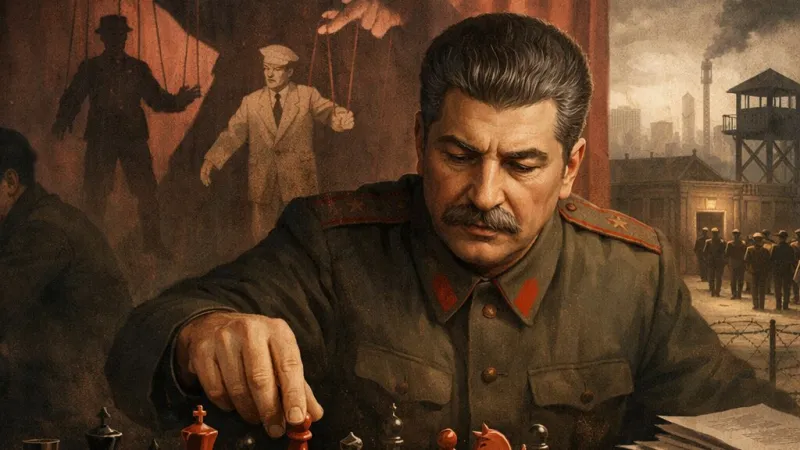
Summary:
Explore how Stalin used deceptive strategies to seize Soviet power, revealing key tactics that shaped Soviet history and the dangers of political ambition.
Stalin’s Devious Tactics
In the turbulent years following the Russian Revolution, Joseph Stalin emerged as the supreme leader of the Soviet Union—a figure whose legacy is inextricably linked with cunning, calculation, and cruelty. Unlike the charismatic orators and theoreticians who surrounded Lenin, Stalin’s ascent to power was not borne of ideological brilliance or revolutionary romanticism. Rather, it arose from a relentless application of political guile, manipulation, and an instinct for exploiting both the virtues and vulnerabilities of his rivals. The period after Lenin’s death was marked by intense scrutiny, uncertainty, and fierce contention among the Bolshevik Party, but it was Stalin’s devious tactics—deftly interwoven into the fabric of party politics—which enabled him to amass authority and ultimately entrench a regime characterised by repression and absolute personal power. This essay will examine the range of underhanded strategies Stalin employed as he navigated the labyrinth of Soviet politics: from misinformation and personal manipulation, to his mastery of party bureaucracy and the systematic marginalisation of foes. In assessing these methods, we gain deeper insight not only into the individual himself, but also into the broader dynamics of revolutionary movements and the perils of unchecked ambition.
Contextual Background
To fully appreciate the nature and effectiveness of Stalin’s behaviour, it is vital to grasp the precarious political environment in which he operated. Following the Bolshevik seizure of power in 1917, Vladimir Lenin quickly established himself as the ideological and organisational heart of the Communist Party. Lenin’s authority—while not absolute—was unchallenged in its legitimacy. Yet, toward the end of his life, as illness took its toll, questions emerged regarding succession. The resulting uncertainty stimulated fierce rivalry among a cadre of ambitious party leaders.At the forefront of this contest were Leon Trotsky, renowned for his intellectual prowess and role as architect of the Red Army; Grigory Zinoviev and Lev Kamenev, who wielded considerable influence within the party apparatus; and Stalin, then General Secretary—an ostensibly bureaucratic role deemed unremarkable by many contemporaries, yet one which granted him key access to files, appointments, and internal communications. The jostling among these figures was not simply personal, but reflected genuine differences in attitude toward the role of the party, economic strategy, and even international revolution.
Amidst this, the “Lenin Testament”—a private memorandum dictated by Lenin in late 1922—loomed as a potentially decisive document. In it, Lenin assessed his closest associates, offering criticism of all, but reserving pointed warnings about Stalin’s temperament and concentration of power. Were it to become public, the Testament had the power not only to derail Stalin’s ambitions, but to reshape the very structure of Soviet leadership. Thus, the interplay between Lenin’s ailing influence and the ambitions of his heirs set the stage for Stalin’s subsequent machinations.
Stalin’s Use of Misinformation and Psychological Manipulation
Perhaps nowhere is Stalin’s cunning more clearly demonstrated than in the events surrounding Lenin’s death and funeral. Here, he exploited both practical details and the complex web of personal relationships among the party elite. Most notoriously, Stalin deliberately misled Trotsky regarding the date of Lenin’s funeral. By communicating inaccurate information about the schedule—ostensibly as a result of confusion or oversight—Trotsky ended up hundreds of miles away, unable to attend the ceremony.This calculated misdirection had profound symbolic consequences. In a climate where loyalty to Lenin’s memory was considered the gold standard of revolutionary virtue, Trotsky’s absence was seen by many members of the party and wider public as disrespect or even a deliberate snub. Stalin, by contrast, was able to present himself as both devoted and indispensable, engineering a public image rooted in fidelity to Lenin, while quietly undercutting his principal rival’s reputation. As George Orwell famously satirised in “Animal Farm”—a text taught widely within UK classrooms—the manipulation of memory and public narrative can be used to devastating effect by those in pursuit of power.
Moreover, Stalin demonstrated remarkable psychological insight in cultivating loyalty among party officials and exploiting latent insecurities. Through the careful distribution of patronage, promises, and veiled threats, he fostered a growing circle of supporters—many motivated less by ideological conviction than by gratitude, dependence, or fear. Simultaneously, the burgeoning Soviet propaganda machine, under Stalin’s orchestration, began to cast rivals as schemers or enemies of progress, sowing seeds of doubt among potential allies and neutral observers alike. In this way, perception became as potent a tool as policy.
Political Machinations Surrounding Lenin’s Testament
The question of Lenin’s Testament was one of the most significant tests of Stalin’s political guile. Were the document’s contents widely known—particularly its description of Stalin as “too rude” and unfit for the role of General Secretary—party opinion might rapidly turn. Stalin, therefore, took steps to suppress, dilute, and ultimately neutralise this threat.Fundamental to this success was his ability to forge tactical alliances, most notably with Zinoviev and Kamenev. Both men, despite being criticised by Lenin themselves, calculated that the publication of the Testament would damage the party’s unity and perhaps imperil the revolution’s gains. By framing the Testament as a potentially divisive force, Stalin co-opted the language of revolutionary solidarity to stifle open debate, persuading the Central Committee to confine the testament to a small circle of trusted party members.
Meanwhile, Stalin leveraged his growing bureaucratic control to stall formal decisions, delay publication, and obscure the Testament’s contents. Such use of procedural obfuscation—rarely dramatic, but highly effective—meant that opposition voices were often caught in a web of meetings, subcommittees, and votes, all carefully orchestrated to serve Stalin’s purposes. This sophisticated manipulation not only preserved his position but expanded his influence, as rivals found themselves repeatedly outmanoeuvred—caught within a system Stalin had quietly customised to his own advantage.
Exploitation of Party Structures and Bureaucracy
Beyond such individual episodes, Stalin’s true genius lay in his mastery of party bureaucracy. As General Secretary, he enjoyed unique access to appointments, files, and internal communications—resources he used with extraordinary efficacy. By systematically appointing loyalists to key positions within the Central Committee and across regional structures, he gradually transformed the party from a forum of debate into an instrument of personal rule.Stalin employed classic “divide and rule” strategies, manipulating rifts among the leading triumvirate of Zinoviev, Kamenev, and Trotsky. By playing on ideological and personal differences—encouraging disputes, leaking information, and offering shifting alliances—he prevented the formation of a united opposition. In this the shadow of Shakespeare’s Richard III is cast: just as the English king deployed charm and duplicity to set noble against noble, Stalin ensured his rivals were too busy fighting one another to notice the walls closing in.
At the same time, the increasing use of party discipline and fear signalled darker times to come. Early purges, the denouncement of “factions,” and the routine expulsion of dissenters all became hallmarks of Stalin’s leadership, laying the groundwork for later, more brutal repressions.
Case Studies of Stalin’s Deviousness Beyond Funeral and Testament
Stalin’s deviousness was not restricted to grand gestures, but comprised a steady accumulation of minor infringements and tactical moves. Through carefully curated propaganda campaigns, he projected himself as Lenin’s natural heir, surrounding his image with the trappings of legitimacy: orchestrated speeches, carefully posed photographs, and references to his supposed closeness with Lenin.Behind these public manoeuvres, clandestine methods flourished. The emerging secret police—then the OGPU—served as an organ not just of state but of personal power, monitoring party meetings, intercepting correspondence, and using intimidation or blackmail to undermine rivals. Key incidents, such as the manipulation of votes at party congresses or the abrupt silencing of critics through procedural technicalities, became ever more common. Critics of Stalin—be they old revolutionaries or young upstarts—found themselves isolated, unable to muster support, or suddenly accused of “counter-revolutionary” leanings.
Long-Term Consequences of Stalin’s Betrayals and Political Schemes
The long-term ramifications of Stalin’s tactics were profound, both for the Soviet state and for the broader ideational legacy of communism. The immediate outcome was the replacement of the collective and frequently contentious leadership model envisaged by Lenin with a culture of obedience, fear, and eventual “cult of personality.” The party, once a site of ideological contestation, became an extension of Stalin’s will; apparatuses of state power were bent inexorably toward surveillance, punishment, and the maintenance of a single figure’s authority.Ideals of democratic centralism and shared governance eroded; instead, the party degenerated into a vehicle for autocracy. As the poet Anna Akhmatova wrote—her lines now familiar to many A-Level Literature students—there was “no word for mercy” in this new language of power. Factionalism, once a means of debate, came to be treated as treachery, and paranoia became endemic.
For historians and political scientists, Stalin’s ascent provides a case study in the ethical hazards of revolutionary politics. It serves as an enduring reminder of how noble ideals can be subverted by unscrupulous actors, and how the control of information, the manipulation of rules, and the calculated division of rivals can lead inexorably toward tyranny.
Rate:
Log in to rate the work.
Log in