OCR F215: Genomes and Gene Technologies — Methods and Ethics
This work has been verified by our teacher: 16.01.2026 at 13:06
Homework type: Essay
Added: 16.01.2026 at 12:53
Summary:
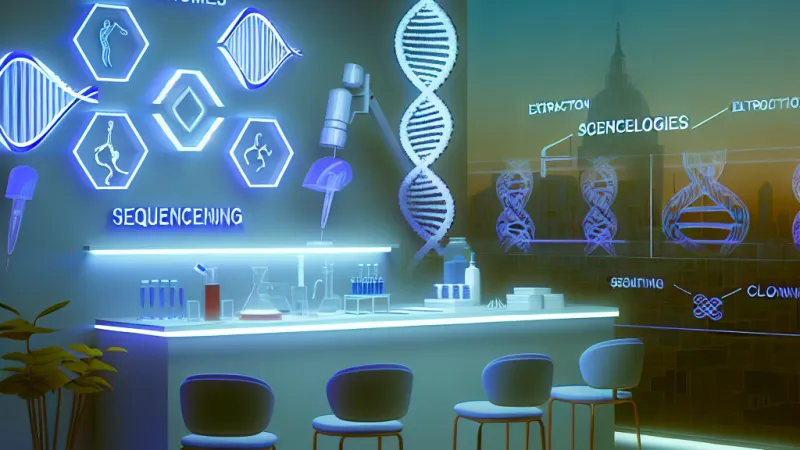
Concise review of genomes and gene technologies: extraction, PCR, sequencing, cloning; applications in medicine/agriculture; limits, ethics and UK regulation.
Genomes and Gene Technologies: Foundations, Methods and Future Prospects (OCR F215)
A genome can be simply described as the complete set of genetic instructions found within an organism — encompassing all its DNA, including genes and non-coding sequences. Gene technologies, meanwhile, comprise a suite of tools and techniques that allow scientists to read, analyse, and even manipulate DNA. In the context of the OCR F215 specification, a firm grasp of these concepts is vital, not only to answer exam questions but also to appreciate the broader impact of biotechnology on science and society. This essay will clarify the principal methods used in genome analysis—such as DNA extraction, sequencing, cloning, and PCR—linking them to real-world applications, critically exploring their strengths and limitations, and considering the ethical and regulatory frameworks that govern their use in the United Kingdom and beyond. The essay aims to offer a comprehensive, exam-focused discussion that remains rooted in the UK curriculum, referencing local examples and highlighting strategies for critical evaluation.
The Extraction, Preparation and Analysis of DNA
Before any genomic study can begin, DNA must be extracted and purified from biological material. The aim is to obtain high-quality nucleic acid suitable for downstream techniques. Key considerations include the choice of starting material: while genomic DNA provides a full genetic snapshot, isolating mRNA (and converting it via reverse transcription to cDNA) is essential for studying expressed genes, sidestepping the complexities introduced by eukaryotic introns.The extraction process generally involves mechanical or enzymatic lysis of cells, permitting the release of DNA. This is followed by purification steps—commonly using phenol-chloroform extraction or silica spin columns—to separate DNA from proteins, lipids, and other cellular components. In UK school and university labs, students often monitor the purity of DNA samples using UV spectrophotometry, paying heed to the A260/A280 ratio as an indicator of protein contamination.
Practical points essential to exam success include preventing nuclease activity (by maintaining cold conditions and using RNase-free reagents when working with RNA) and avoiding cross-contamination through rigorous technique. Extraction blanks serve as negative controls to detect such issues, and careful storage at –20°C minimises degradation.
Manipulating DNA: Restriction Enzymes and Ligation
Central to gene technology is the ability to cut and join DNA precisely. Restriction endonucleases—naturally occurring enzymes in bacteria—are harnessed in the laboratory to cleave DNA at specific recognition sequences, which are often palindromic. Type II restriction enzymes, such as EcoRI and HindIII, are favoured for their predictable cleavage patterns and generate either "sticky" (overhanging) or blunt ends. Sticky ends facilitate the insertion of DNA fragments into vectors by base pairing, increasing the efficiency and specificity of ligation. In an essay, you could draw a simple diagram to demonstrate how sticky ends anneal before ligase activity.DNA ligase is another crucial enzyme, tasked with sealing nicks in the sugar-phosphate backbone, thereby creating stable recombinant molecules. The reaction conditions (such as temperature and buffers) must be optimised – blunt-end ligation is less efficient and may require higher enzyme concentrations or longer incubation. Practical exam tips include checking for compatible buffer systems when using multiple enzymes and, where appropriate, heat-inactivating restriction enzymes before proceeding to the ligation stage.
Amplification: Harnessing the Polymerase Chain Reaction (PCR)
The polymerase chain reaction (PCR), famously developed by Kary Mullis, is a cornerstone of modern gene technology and well exemplified in UK science curricula and assessed practicals. PCR allows the rapid and selective amplification of a specific DNA fragment using a pair of synthetic primers, thermostable DNA polymerase (commonly Taq), nucleotides, and buffer.The process cycles through denaturation (~95°C), annealing (dependent on primer melting temperature, usually 50–65°C), and extension (~72°C). Effective primer design is key: primers should be 18–25 bases long with balanced GC content and minimal self-complementarity to avoid primer-dimer formation. Variants such as RT–PCR (for amplifying cDNA from mRNA templates) and quantitative PCR (qPCR, which tracks DNA synthesis in real-time using fluorescent probes) have found widespread use in UK hospitals and research, especially in diagnostic virology, including tracking outbreaks such as COVID-19.
A practical suggestion: always include both positive and negative controls, and consider using "hot-start" polymerases to minimise non-specific amplification.
Separation and Visualisation: Gel Electrophoresis and Blotting
Once DNA fragments have been generated or amplified, separating and visualising them is crucial. Agarose gel electrophoresis remains a staple in both education and research settings, allowing fragments to be resolved by size. DNA migrates towards the positive electrode due to its negatively charged backbone, with smaller fragments moving further. Ladders or molecular weight markers enable students to estimate fragment sizes – an essential skill for practical exams.Staining the gel (historically using ethidium bromide, though safer dyes such as SYBR Safe are increasingly preferred) enables visualisation under UV or blue light. For detecting specific DNA sequences among many fragments, Southern blotting is used, involving transfer to a nylon membrane and hybridisation with a labelled probe. This technique has played a role in the UK’s forensic science laboratories, for instance in gene fingerprinting cases.
A smart exam tip: always label gel diagrams and reference the use of controls (sample, positive, negative) to evidence robust methodology.
Recombinant Technology: Cloning, Vectors, and Biological Libraries
Gene cloning requires vectors—carriers such as plasmids with selectable markers (often antibiotic resistance genes) and multiple cloning sites. Larger DNA fragments may be accommodated by BACs (Bacterial Artificial Chromosomes) or even viral vectors, the latter being integral in gene therapy research at institutions such as Great Ormond Street Hospital.To generate recombinant DNA, insert DNA (prepared via restriction digestion or PCR) is ligated into a vector, which is then introduced into a host (usually E. coli) via transformation. Selection strategies—e.g., blue/white screening using the lacZ system—allow for the identification of successfully engineered colonies.
Libraries, whether genomic or cDNA, are constructed to capture the full range of genetic material. These are essential for large-scale projects such as the UK10K project, which mapped variation across the British population, aiding studies into the genetics of complex diseases.
Screening methods (colony PCR, hybridisation) ensure that only clones with the target sequence are propagated—another point worth elaborating in examination answers.
Gene Transfer and Expression
Introducing recombinant DNA into cells is achieved via methods like heat shock (for bacteria) or electroporation. In eukaryotic systems, viral vectors, lipofection, or even microinjection are options, depending on the organism and purpose. A crucial challenge in higher organisms (animals, plants) is ensuring that foreign genes are expressed correctly—requiring suitable promoters and, in some cases, protein processing machinery only present in eukaryotic cells.Confirmation of successful transformation includes techniques like colony PCR, restriction mapping, and sequencing. Regulatory considerations, particularly with genetically modified crops or medical therapies, are significant in the UK, governed by bodies such as the Human Fertilisation and Embryology Authority (HFEA).
Genome Sequencing and Assembly
The so-called "gold standard" of DNA sequencing has long been Sanger sequencing, often used for confirming constructs and small-scale projects. However, modern genomics—such as the 100,000 Genomes Project funded by the NHS—relies on high-throughput platforms like Illumina (short-read) and Oxford Nanopore (long-read, and UK-invented) technologies.Shotgun sequencing involves breaking genomic DNA into fragments, sequencing them, and computationally reassembling them into contigs and scaffolds. BACs can be used to anchor scaffolds, particularly in large or complex genomes such as that of wheat. Challenges include correctly assembling repetitive regions and dealing with sequencing errors—a reason hybrid approaches, combining different technologies, are now common. Evaluation of assembly quality revolves around statistics such as N50, which indicates contig lengths covering half the genome.
Comparative Genomics and Gene Mapping
Modern gene technologies underpin comparative genomics—identifying which genes are conserved or unique among species, thereby illuminating evolutionary relationships and aiding the discovery of medically important genes. Alignment to existing reference genomes and identification of SNPs (single nucleotide polymorphisms) are the backbone of GWAS (Genome Wide Association Studies), as deployed in projects like UK Biobank to uncover links between genetic variants and phenotypes in large British populations.Gene mapping enables tracking of traits—ranging from hereditary diseases to agricultural characteristics—by identifying how alleles travel through pedigree lines. Phylogenetic trees assist in understanding relationships, for example tracking outbreaks of MRSA in NHS hospitals through whole-genome sequencing.
Applications in Medicine, Agriculture, and Research
The practical importance of these technologies cannot be overstated. In medicine, gene therapy holds promise for monogenic disorders; for instance, clinical trials at University College London have used viral vectors to treat inherited retinal conditions. PCR diagnostics are routine, highlighted by their use in hospital laboratories for pathogen detection (e.g., tuberculosis or COVID-19).In agriculture, genetic engineering underlies the development of blight-resistant potatoes—a major boon for UK farmers—and vitamin-enhanced crops. The UK is also home to leading synthetic biology research: at Imperial College London, scientists have engineered yeast to produce artemisinin, an anti-malarial compound.
Research applications are exemplified by CRISPR genome editing, now widespread due to its speed and precision. CRISPR’s development owes much to international collaboration, but British universities have been at the forefront of pioneering both the technique and the debate on its uses and abuses.
Limitations and Sources of Error
No technology is without its flaws. PCR is susceptible to contamination, leading to false positives, or to non-specific amplification—especially if primer design is poor. Sequencing technologies each have error profiles: short reads are poor in repetitive regions, while long-read platforms may struggle with accuracy. Cloning efficiency is not uniform—some DNA sequences ligate or propagate poorly in bacterial hosts.Biological challenges include the complexity of gene expression (regulation, presence of introns/exons, etc.), and off-target effects in gene editing remain a real concern. Mitigation involves careful controls, replication, validation by independent approaches (such as Sanger checking key regions), and thoughtful statistical analysis.
Ethical, Legal, and Social Implications (ELSI)
The power of genome and gene technologies raises formidable ethical challenges. Issues of privacy and consent for genomic data are coterminous with growing databases such as the NHS’s Genomic Medicine Service. Fears of genetic discrimination—a recurring theme in debates around insurance and employment—prompt careful regulation, reflected in legislative frameworks and the work of ethics committees (such as those guiding clinical trials under UK Good Clinical Practice standards).In agriculture, the deliberate release of genetically modified organisms (GMOs) is tightly policed, with public consultations and regulatory approval mandatory for GM crops and foods in the UK. Intellectual property and access concerns further complicate the landscape, raising questions as to who benefits from biotechnological breakthroughs.
The prevailing consensus in the UK is that robust oversight and public engagement—through dialogue and transparent reporting—are the best safeguards, balancing undoubted benefits with potential societal risks.
Rate:
Log in to rate the work.
Log in