Macbeth: The Tragic Descent of Shakespeare's Ambitious Hero
This work has been verified by our teacher: 3.02.2026 at 9:34
Homework type: Essay
Added: 2.02.2026 at 12:04
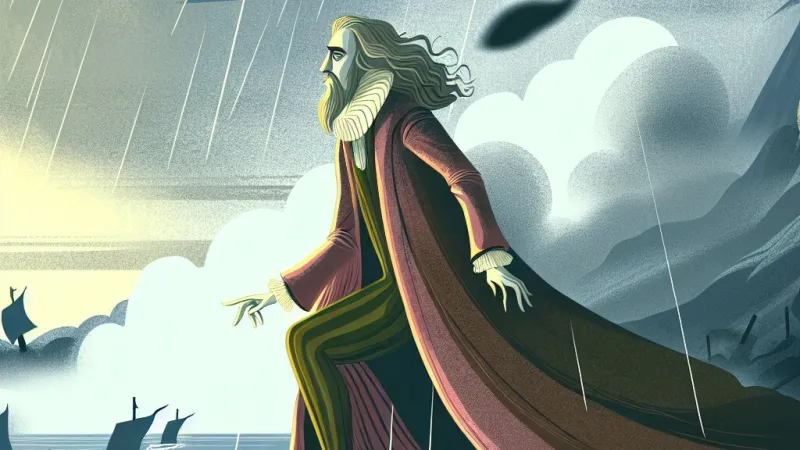
Summary:
Explore Macbeth’s tragic descent as Shakespeare’s ambitious hero transforms from loyal nobleman to doomed tyrant, revealing themes of power, fate, and conscience.
Macbeth: A Study in Tragic Transformation
Few characters in English literature have gripped the collective imagination quite like Macbeth. The eponymous figure at the heart of William Shakespeare’s bloody Scottish tragedy is not only a fierce warrior and nobleman, but also a character whose journey into dark ambition and moral collapse epitomises the tragic hero’s downfall. First staged in the early seventeenth century, *Macbeth* explores themes of power, fate, conscience, and the supernatural, resonating with both Jacobean anxieties and the audiences of today. At the outset, Macbeth appears to be a loyal and gallant subject, highly esteemed both on the battlefield and in court. Yet, over the course of the play, he succumbs to the twin temptations of prophecy and his own vaulting ambition, with devastating consequences for himself and Scotland.
This essay will trace Macbeth’s transformation from celebrated nobleman to tyrannical usurper, examining the qualities that mark his early character, the psychological and external forces that drive his unravelling, and the interplay between fate and personal responsibility that shapes his destiny. In doing so, we shall see how Macbeth, as a tragic hero, embodies both the highest virtues and the most profound weaknesses of the human soul.
---
Macbeth’s Initial Characterisation: The Loyal and Courageous Nobleman
In the opening acts, Macbeth is presented by Shakespeare as a paragon of valour and loyalty. News of his exploits arrives before the man himself, with a bloody Captain breathlessly recounting Macbeth’s decisive role in quelling the rebellion: “For brave Macbeth – well he deserves that name”. This early account, laden with martial imagery—“smoked with bloody execution”—elevates Macbeth to heroic status. King Duncan, grateful and awed, bestows new honours upon him, proclaiming him the Thane of Cawdor. This is no arbitrary promotion, but a reward for proven leadership and unswerving fealty to king and country. Macbeth is, at this stage, the ideal subject, a figure whom others, such as Banquo, trust without reservation.Yet, even in this period of glory, Shakespeare gives us glimpses of Macbeth’s inner questioning. Soliloquies and asides surface ethical uncertainties—when Macbeth learns of the witches’ prophecy, his imagination is “rapt”, and thoughts of regicide flicker across his mind. However, he recoils from them, torn between desire and duty. His hesitation at contemplating Duncan’s murder—“If chance will have me king, why, chance may crown me”—shows that his humanity and conscience are not yet overrun by ambition.
The early Macbeth, then, is a figure defined by courage, loyalty, and the esteem of those around him. His initial reluctance to seize power unlawfully is crucial to understanding the magnitude of his later transformation. Presenting such nobility at the outset sets in sharp relief the tragedy that follows.
---
The Role of Ambition and Moral Conflict in Macbeth’s Transformation
The turning point in Macbeth’s journey begins with his encounter with the supernatural: the three witches on the “blasted heath”. Their prophecy—hailing him as future king—penetrates a psyche already susceptible to ambition. The witches themselves, couched in mystical and ambiguous language, become agents of fate and temptation. For Banquo, their message is met with wary scepticism, while Macbeth is visibly unsettled yet intrigued. Shakespeare uses this contrast to highlight Macbeth’s particular vulnerability. The words of the witches do not *make* him evil, but bring to the fore wants he had scarcely dared articulate.Lady Macbeth’s influence cannot be understated. Upon learning of the prophecy, she immediately conjures a vision of murder and ascendancy, urging Macbeth to “look like the innocent flower, but be the serpent under’t.” Her manipulation is multi-layered: she questions his manhood, challenges his resolve, and concocts plans to mask their intentions. The dynamics of their relationship are complex; Macbeth oscillates between resistance and submission, ultimately swayed not by love but by a shared, feverish ambition.
Throughout these scenes, Shakespeare uses soliloquies to map Macbeth’s tortured conscience. The famous “Is this a dagger which I see before me” soliloquy, for instance, renders his psychological agony and terror of what he is about to do. Hallucinations and the sense of “bloody business” mark the irreversible erosion of moral boundaries and rational judgement.
Ambition, then, acts as both a spur and a poison—driving Macbeth to seize the crown at the cost of his soul. The moral conflict that once preserved his honour is gradually smothered beneath the weight of his aspiration and external persuasion.
---
Macbeth’s Character Post-Regicide: From Reluctant Killer to Tyrannical Despot
With the assassination of Duncan, the point of no return is reached. Macbeth is immediately engulfed by paranoia, guilt, and mounting fear: “Macbeth doth murder sleep”—he is haunted awake, unable to find solace or peace. His wife, once so fervent, must now soothe his shattered nerves, but the psychological damage is already considerable. Thus begins Macbeth’s metamorphosis into a creature of suspicion and brutality.Insecure in his ill-gotten throne, Macbeth’s ruthlessness escalates. He orders the murder of Banquo—his former friend and a man whose children are prophesied to inherit the crown—as well as the massacre of Macduff’s family. These acts, far more calculated than Duncan’s murder, reflect a chilling detachment and single-minded obsession with power. Language grows harsher—there is little of the earlier hesitancy; instead we find chilling certainty and cold pragmatism underpinning his choices.
Macbeth’s increasing reliance on prophecy and supernatural assurances engenders a fatal over-confidence. The witches’ second round of predictions—that none “of woman born shall harm Macbeth” and that he will not be vanquished until “Birnam Wood comes to Dunsinane”—brew misplaced incredulity. He dismisses opposition and scorns the moral order he once served. The proud, honourable warrior is now a tyrant, isolated and reviled.
---
The Symbolic Connection between Macbeth and the Witches: Foreshadowing and Thematic Depth
As the play progresses, the lines between Macbeth and the witches blur both linguistically and symbolically. Macbeth’s speech begins to echo their rhythm and ambiguity—he, too, speaks in rhyming couplets reminiscent of their incantations. When he proclaims, “So foul and fair a day I have not seen”, it deliberately mirrors the witches’ earlier maxim, “Fair is foul, and foul is fair.” This repetition signifies his growing alignment with disorder and chaos.The witches personify the external evil that tempts mankind, but their influence over Macbeth is not deterministic. Rather, they awaken and reflect the darkness within him. The extent to which Macbeth is driven by supernatural manipulation versus his own agency is endlessly debated; Shakespeare provides no easy answers. Macbeth’s progressive engagement with the witches—first as a rapt recipient of prophecy, later as a desperate seeker of their guidance—symbolises his journey from uncertain heroism to active villainy.
The interplay of fate and free will is a key tenet of Jacobean drama and something that would have resonated with Shakespeare’s original audiences. Superstition, questions about legitimate kingship, and the ever-present struggle between good and evil are all mapped onto the relationship between Macbeth and the witches, heightening the tragic dimensions of his downfall.
---
Macbeth as a Tragic Hero: Strengths, Flaws, and Downfall
Tragedy, as defined by Aristotle and familiar to Shakespeare’s audiences, centres upon the rise and fall of an extraordinary individual brought low by a fatal flaw. Macbeth’s noble beginnings as a brave warrior, cherished by Duncan and cheered by his compatriots, establish his initial claim to tragic greatness. He possesses admirable qualities—resoluteness, courage, and loyalty—mirrored in the respect afforded him by others.Yet it is ambition, unbridled and corrosive, that proves his undoing. Unlike Banquo, who resists temptation and remains steadfast, Macbeth’s aspiration outstrips all other considerations. “I have no spur / To prick the sides of my intent, but only / Vaulting ambition,” he confesses, echoing one of the play’s principal themes. Once ambition takes root, it dismantles his moral compass and renders every violent act justifiable in his eyes.
A defining element of Macbeth’s tragedy is his growing self-awareness. His soliloquies become laced with despair and horror at his own state: “O, full of scorpions is my mind, dear wife!”—a line that encapsulates both mental torment and recognition of his own corruption. Ultimately, Macbeth’s isolation is complete; even Lady Macbeth, consumed by her own guilt, can no longer support him. His death, at the hands of Macduff, signals not only his personal defeat but also the restoration of natural and political order.
---
Conclusion
The journey of Macbeth from venerated hero to detested tyrant remains one of the most compelling character arcs in all of English literature. By charting the rise and fall of this tragic figure, Shakespeare delves into the darkest recesses of human desire and frailty. From the outset, Macbeth’s internal conflict and susceptibility to supernatural suggestion sow the seeds of his destruction. The interplay of psychological torment, ruthless ambition, and the baleful influence of the witches coalesce to transform him utterly.Macbeth’s tragedy, while rooted in the particulars of Jacobean culture and belief, speaks to universal questions: the allure of temptation, the weight of conscience, and the destructive possibilities of unchecked power. In the figure of Macbeth, Shakespeare offers not merely a cautionary tale but a profound meditation on the complexity of human nature—where bravery and baseness, virtue and vice, may reside side by side in the same soul. It is this enduring relevance, and the depth with which his character is explored, that ensures Macbeth remains a fixture in the British classroom and the literary canon alike.
Rate:
Log in to rate the work.
Log in