Understanding Homeostasis: How the Body Maintains Internal Balance
This work has been verified by our teacher: 16.04.2026 at 11:45
Homework type: Essay
Added: 13.04.2026 at 12:43
Summary:
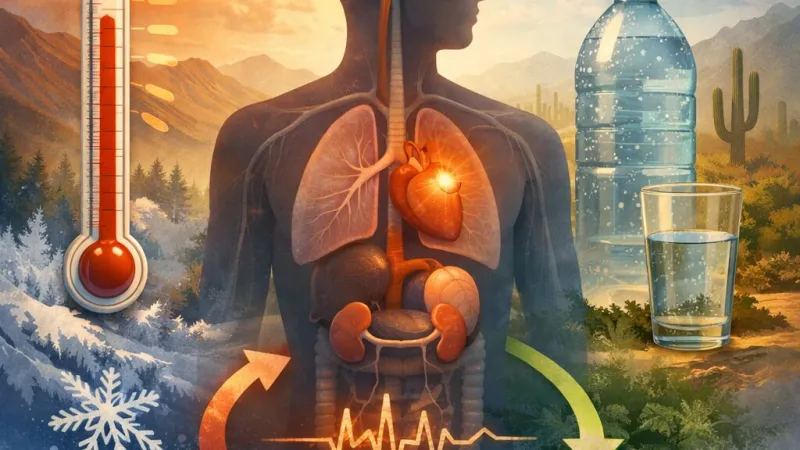
Explore how homeostasis keeps the body’s internal balance stable through temperature, hydration, and feedback systems for a clear understanding of this vital process.
Homeostasis: The Body’s Subtle Symphony of Stability
---The human body, though sheltered by layers of skin and muscle, is constantly assaulted by an unpredictable world. Whether we endure a cold winter’s walk on the moors or indulge in a hearty roast dinner, our internal environment remains remarkably stable. This careful balancing act is known as *homeostasis* — a term stemming from Greek, meaning “steady state”. In essence, homeostasis describes the body’s ability to maintain a stable internal environment, regardless of fluctuations outside. This essay aims to delve into the hows and whys of homeostasis, exploring the intricate biological mechanisms that safeguard our internal equilibrium. It will examine the underlying control systems, the pivotal place of feedback mechanisms, the essential role of enzymes, and real-world instances where homeostasis is either preserved or compromised. By the end, one should appreciate homeostasis as not merely a concept in science, but a living reality pulsing within us all.
---
The Need for Internal Stability
Living organisms are fragile without constant adjustment. Humans, in particular, are highly sensitive to even slight deviations in their internal states. Take, for instance, temperature regulation: our core body temperature hovers around 37°C, and even a drop or rise of a couple of degrees can spell trouble. It is no coincidence that Shakespeare’s depiction of fever in *Henry IV* is synonymous with mortal peril — “the hot and forcing death”.Besides temperature, water and electrocyte balance proves equally vital. A marathon runner traversing the streets of London during the summer may lose vast amounts of water and salt through sweat. Unless this loss is balanced, dehydration sets in, leading to dizziness or severe muscle cramps, vividly described by the likes of Alan Sillitoe in *The Loneliness of the Long-Distance Runner*. Similarly, the concentration of glucose in our blood, essential for energy supply to brain and muscle, must be kept within somewhat narrow limits. If not, as seen in cases of diabetes, severe health complications can follow.
Oxygen supply to tissues, and the prompt removal of wastes like carbon dioxide and urea, are equally crucial. The body’s regulatory systems must therefore be relentless, subtle, and efficient. Any substantial failure — as in cases of kidney dysfunction, or heatstroke — brings harmful consequences, sometimes to the point of tragedy.
---
Biological Control Systems: The Mechanics of Balance
At the heart of homeostasis lie carefully coordinated control systems. These are not abstract notions, but highly organised arrangements of components, much like an orchestra where the slightest mistake by one musician can throw off the entire piece.The *receptors* are the vigilant sensors that detect any disturbance. For example, thermoreceptors in the skin and deep within the hypothalamus continuously monitor temperature. Osmoreceptors, on the other hand, pick up changes in blood water concentration, prompting thirst or hormone release.
Central to the orchestration is the *processing centre*, often lying within the brain — principally the hypothalamus for many functions. Think of the hypothalamus as the conductor, integrating information and deciding what response is necessary. In other cases, the pancreas or kidneys serve as hubs for specific variables such as blood glucose or salt balance.
The *effectors* bring these signals to life. Muscles may shiver to produce heat on a cold Yorkshire morning, or sweat glands can spring into action when one is sweltering inside a cramped underground carriage. The kidneys delicately adjust how much water is conserved or lost in urine, according to exacting real-time calculations.
Often, the analogy of the modern incubator in UK neonatal wards provides apt comparison. Premature infants, unable to regulate their own temperature, are placed inside incubators, much like an artificial body where sensors, controllers and heaters maintain precise warmth — a testament to both biological wisdom and technological ingenuity.
---
Feedback Mechanisms: Reins of Regulation
The linchpin of all homeostatic control is the *feedback mechanism*, with negative feedback reigning supreme. Negative feedback operates much like a thermostat in a typical British home. If the temperature dips below the set level, the heating clicks on; when it rises too far, the heater pauses. Similarly, should one’s blood gets too warm, vessels in the skin dilate (vasodilation) and sweat is produced; if too cold, blood vessels constrict (vasoconstriction) and shivering begins. The two processes — warming and cooling — work antagonistically, providing fine-tuned control.In a more biological example, the regulation of blood glucose after a rich pudding at dinner is handled by the liver, pancreas and muscle tissues working together. Insulin secretion after a meal lowers blood glucose, while glucagon release at night raises it. Both hormones are engaged in a dynamic tug-of-war, with negative feedback curtailing extremes.
In contrast, positive feedback is less common but dramatic when it happens — for instance, during childbirth contractions, where hormone release intensifies contractions until birth, or the rapid formation of a blood clot following injury.
Without these feedback controls, stability would soon degrade. This is clear in the case of diabetes, where the feedback control of glucose fails, and blood sugar swings wildly, often with severe consequences.
---
Enzymes: Quiet Champions of Consistency
Every chemical process in our bodies, from digesting a slice of Victoria sponge to contracting a muscle during a football match, depends utterly on *enzymes*. These are protein molecules, exquisitely shaped to bind specific substances (the “lock-and-key” concept often illustrated in secondary school biology across the UK), and they accelerate reactions that would otherwise crawl along too slowly for life as we know it.Yet enzymes are finicky. Each has an ideal temperature and pH. Exceed these, and their active sites deform, the way a key no longer fits its lock — the enzyme is said to be *denatured*. This is why homeostatic regulation of temperature and blood pH is so vital: it is ultimately about preserving enzyme function. For example, the enzymes driving cellular respiration work optimally at 37°C. Should a person’s temperature rise sharply in a heatwave, these enzymes falter, metabolism slows, and the entire system suffers.
If the body strays from its narrow norms — as in untreated hypothermia or acidosis — the effects are soon life-threatening. Stability at the molecular level thus underpins the body’s larger balancing act.
---
Homeostasis in Practice: Medical and Social Relevance
Modern medicine has developed ways to support or substitute the body’s homeostatic machinery when needed. In NHS hospitals, neonates born prematurely are cared for in incubators, which double as mechanical support for underdeveloped regulatory systems. Dialysis, available in clinics nationwide, acts as an artificial kidney, preserving water and salt balance when the natural organs have failed.But homeostatic well-being can hinge on lifestyle too. Hydration is particularly crucial; British athletics coaches increasingly stress the importance of regular water breaks, especially during rare heatwaves. Dietary management is equally vital. Individuals with diabetes, of which there are now over four million in the UK, must carefully monitor carbohydrate intake and, often, inject insulin — acting as their own internal pancreas.
Real-world stories bring these concepts to life. The famous case of Ernest Shackleton’s Antarctic expeditions is often cited in British classrooms: exposure to severe cold tested bodily homeostasis to its limits, with frostbite and hypothermia all too common. On the flip side, the London marathon epitomises the dangers of dehydration and heat stress, with participants at risk of collapse if their internal balance is not maintained through careful physiological management.
---
Rate:
Log in to rate the work.
Log in