The Role of Enzymes in Digestion: A GCSE Biology Overview
This work has been verified by our teacher: 22.04.2026 at 15:42
Homework type: Essay
Added: 21.04.2026 at 16:51
Summary:
Discover how enzymes drive digestion in GCSE Biology, exploring their structure, function, and optimal conditions to enhance your understanding effectively.
Enzymes and Digestion: Biological Catalysts and Their Vital Role
Enzymes are indispensable biological substances that orchestrate the complex chemical choreography sustaining life. Nowhere is their role more pronounced than within the digestive systems of living organisms, where they facilitate the essential process of breaking down food into usable nutrients. These extraordinary molecules operate not only in the cells of plants, animals, and other organisms but have also found their place in industry, shaping processes that impact our daily lives. This essay will examine the remarkable nature and function of enzymes, with a particular focus on their importance in digestion, the necessity of optimal conditions for their activity, and their broader applications within and beyond the human body.
---
1. Understanding Enzymes: Nature and Function
1.1 What Are Enzymes?
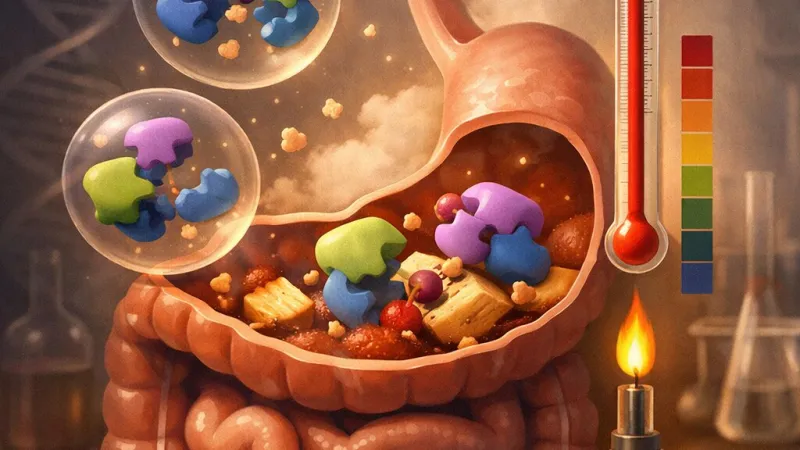
Enzymes are protein molecules that act as biological catalysts—substances that markedly accelerate chemical reactions but emerge unchanged at the end of those reactions. Central to their function is their distinctive three-dimensional structure, which forms an ‘active site’. This site is specially shaped for a specific substrate—the molecule upon which the enzyme acts. Imagine the enzyme as a lock and the substrate as its key: only a correctly shaped key will fit and turn the lock. This analogy, known as the 'lock-and-key' model, helps explain why enzymes are so specific in the reactions they catalyse. However, scientists have since proposed the 'induced fit' model, which paints a more flexible picture: as the substrate approaches, the enzyme subtly alters its shape to embrace it more snugly.1.2 Structure: The Foundation of Enzyme Activity
The delicate folding of an enzyme determines its active site’s structure, making the enzyme highly sensitive to its environment. Two chief factors affect enzyme activity: temperature and pH. All enzymes have an optimum temperature—a point where their activity peaks. For most human enzymes, this is around 37°C, which conveniently matches our normal body temperature. If the environment strays far from this optimum, the protein structure may unravel, a process termed denaturation. This disrupts the enzyme’s active site, rendering it useless. In some cases, minor changes can be reversed, but often denaturation is permanent. Hence, the body must strictly control conditions to ensure these crucial catalysts keep functioning efficiently.---
2. The Role of Enzymes in Cellular Processes
2.1 Enzymes and Metabolism
Metabolism refers to the myriad chemical reactions that sustain life, and enzymes are at the heart of these processes. A prominent example from the world of plants is photosynthesis, where enzymes help construct sugars from carbon dioxide and water, provided there’s sunlight. In animals, enzymes are critical for aerobic respiration, a process taking place within the mitochondria—often dubbed the 'powerhouse' of the cell. The chemical equation summarising aerobic respiration is:Glucose + Oxygen → Carbon Dioxide + Water + Energy C₆H₁₂O₆ + 6O₂ → 6CO₂ + 6H₂O + energy
Every stage in this sequence is governed by a particular enzyme, ensuring the energy required for cellular activities is released efficiently and in a controlled manner. Without the specificity and speed provided by enzymes, life’s essential processes would grind to a halt.
---
3. Enzymes and Digestion: The Journey from Food to Nutrients
3.1 Why is Digestion Necessary?
The food we eat contains large, complex molecules such as carbohydrates, proteins, and fats. Our bodies cannot absorb these forms directly, so a mechanism is needed to break them down into smaller, soluble units—a process called digestion. Here, enzymes again take centre stage. Some enzymes work within cells (intracellular enzymes), but the main players in digestion are extracellular enzymes: they are secreted into the digestive tract and act outside cells, preparing nutrients for absorption into the bloodstream.3.2 Major Digestive Enzymes and Their Functions
Several types of enzyme are crucial for digesting different kinds of food molecules.- Amylase (a type of carbohydrase) breaks starch—a polysaccharide—into simple sugars like maltose and eventually glucose. - Protease tackles proteins, splitting them into their constituent amino acids. - Lipase acts on fats and oils (lipids), converting them into fatty acids and glycerol.
Each kind of enzyme matches with a particular substrate: amylase fits starch, protease fits protein, and so on. Their combined efforts turn a plateful of complex food into accessible bits ready for uptake by the body.
---
4. Where Are Digestive Enzymes Produced and How Do Conditions Affect Them?
4.1 Sites of Enzyme Production Along the Digestive Tract
The precision of digestion relies on enzymes being produced and released at appropriate points along the gut.- The salivary glands in the mouth secrete amylase, starting the breakdown of starch as soon as we chew. - In the stomach, proteases such as pepsin are released. The stomach’s lining produces hydrochloric acid, creating a highly acidic setting vital for protease activity but hostile to most other enzymes and pathogens. - The pancreas is a key supplier of amylase, protease, and lipase, releasing them into the small intestine. - The small intestine (specifically the duodenum) is where the final stages of digestion occur, aided by enzymes and alkaline conditions.
Through this coordinated system, carbohydrates, proteins, and fats are efficiently dismantled into absorbable pieces.
4.2 The Importance of pH in Enzyme Function
Each enzyme has evolved to perform best under specific conditions of acidity or alkalinity—measured as pH. For instance, proteases in the stomach function optimally at low pH (around pH 2), helped by hydrochloric acid. In contrast, the small intestine requires a slightly alkaline environment (around pH 8), which would inactivate many stomach enzymes. Enter bile: produced by the liver and stored in the gall bladder, bile is released into the small intestine where it neutralises stomach acid and emulsifies fats, assisting lipase function. By maintaining each region’s ideal pH, the body ensures efficient digestion and nutrient absorption.---
5. Enzymes Beyond the Body: Industrial and Daily Uses
5.1 Enzymes Serving Industry and Society
Our exploitation of enzymes stretches far beyond biology lessons. The food industry, for example, uses proteases to predigest proteins in baby food, making nutrients easier for infants to absorb. Lipases and proteases are included in ‘biological’ detergents, breaking down stubborn protein and fat stains at lower temperatures—a boon for energy conscious laundering and the environment. Carbohydrases help manufacture syrup from starch, sweetening many popular drinks and confectioneries. A special enzyme called isomerase can transform glucose syrup into fructose syrup, sought after for its intense sweetness and often found in ‘diet’ or ‘slimming’ products.5.2 Advantages of Industrial Enzyme Use
Enzymes allow industrial processes to work at normal temperatures and pressures, which saves energy and reduces costs. Using biological catalysts instead of harsh chemicals is less damaging to nature, as it produces fewer toxic by-products and helps keep our waterways clean. From lowering industry’s carbon footprint to improving product quality, enzymes underscore the practical value of what we learn in biology lessons.---
Conclusion
A journey through the topic of enzymes and digestion reveals a world where microscopic molecules exert a colossal influence, both inside living organisms and across industry. Enzymes’ almost magical ability to accelerate crucial reactions—dependent on their structure and sensitive to their surroundings—lies at the heart of healthy digestion and cellular function. Understanding how they break food into nutrients helps us appreciate not only how our bodies work, but also how science is harnessed for wider benefit. Whether enabling our cells to extract energy from a humble sandwich or helping companies design greener processes, enzymes deserve their reputation as nature’s unsung heroes. Mastering the biology of these catalysts, and the importance of maintaining their ideal conditions, enriches our knowledge not just for exams, but for navigating a world profoundly shaped by their invisible hand.---
Appendix (Suggestions)
Diagram: - An illustration showing an enzyme interacting with its substrate (active site lock-and-key) - A labelled diagram of the human digestive system highlighting salivary glands, stomach, pancreas, liver, and small intestine.Glossary of Key Terms:
- Denaturation: A structural change in a protein (often irreversible) leading to loss of function - Substrate: The specific reactant that an enzyme acts upon - Active Site: The region of an enzyme where the substrate binds and reaction occurs - pH: A measure of acidity or alkalinity, affecting enzyme activity - Catalyst: A substance that speeds up a reaction without being changed itself
---
This essay illustrates the pivotal role of enzymes, not only in school science but in everyday life and industry, and highlights the deep connections between our understanding of biology and the practical world around us.
Rate:
Log in to rate the work.
Log in