How Islam Shapes Family Life and Community Bonds
This work has been verified by our teacher: 30.04.2026 at 13:38
Homework type: Essay
Added: 27.04.2026 at 11:46
Summary:
Explore how Islam shapes family life and community bonds in the UK, highlighting marriage, relationships, and shared values that foster unity and wellbeing.
Islam: Religion in the Family & Community
Islam is often described not only as a faith, but as a comprehensive way of life, whose teachings extend far beyond ritual belief and into every aspect of personal and collective existence. Nowhere is this holistic influence more pronounced than in the centrality of family and community. For Muslims, the family forms the cornerstone of a stable society, and community life is both a source of identity and collective responsibility. This essay explores the multifaceted role Islam plays in shaping marriage, family relationships, home religious practices, and the wider communal bonds—drawing on religious texts, lived experience in Britain, and the cultural diversity found within the UK’s Muslim population. Through this, we will see how Islamic principles underpin not only spiritual life but also practical, ethical, and emotional wellbeing, fostering cohesion within both family and neighbourhood.
---
The Role of Marriage in Islam
A. Concept and Significance
Marriage in Islam is known as *nikah*, which is far more than a mere legal contract. In the Qur’an, marriage is described as a sign of God’s wisdom and mercy: “And among His signs is this, that He created for you mates from among yourselves, that you may dwell in tranquillity with them, and He has put love and mercy between your hearts” (Qur’an 30:21). This verse captures the essence of marriage as companionship rooted in spiritual purpose—making it a relationship defined by mutual support, kindness, and moral growth, rather than mere custom or economic arrangement.B. Essential Elements of a Muslim Marriage Ceremony
A proper Islamic marriage demands certain conditions. The presence of the bride’s wali (guardian), typically her father or closest male relative, signals that her welfare is carefully considered. Equally necessary are two adult Muslim witnesses, whose role ensures the marriage is open and consensual, not secretive or coerced. The imam, a religious scholar or local faith leader, frequently guides the ceremony, reciting verses from the Qur’an and reminding the couple of their religious duties.C. Setting and Atmosphere
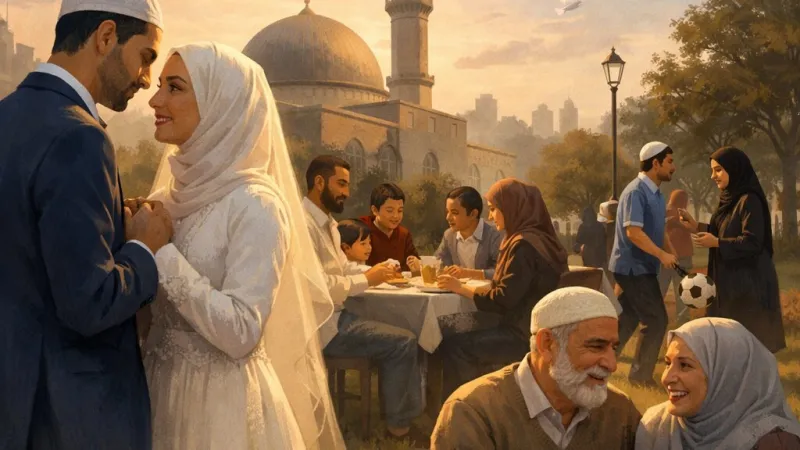
There is no fixed location for an Islamic wedding; many in the UK choose a mosque, while others opt for community halls or family homes. What is consistent is the spirit of modesty and simplicity, echoing the Prophet Muhammad’s own example. Grand displays are discouraged; instead, the focus remains on spiritual significance and bringing families together in joy and mutual respect. However, cultural differences abound: for instance, many British Pakistani or Bangladeshi families incorporate colourful pre-wedding rituals such as the *mehndi* (henna night), whereas families from Arab backgrounds might feature traditional poetry or music. While these cultural elements add richness, they rarely overshadow the core religious requirements.D. Key Rituals and Their Meanings
The root of the ceremony is the *Ijab* (offer) and *Qubul* (acceptance), a verbal exchange that cements mutual consent. The marriage contract—known as the *Nikah Nama*—outlines rights and responsibilities, including agreements on the *mahr*, or dowry, which is a gift from groom to bride. The *mahr* is not a purchase price but a symbol of the groom’s commitment and a financial security for the bride. Qur’anic recitation, prayers for blessing, and expressions of communal joy characterise the occasion, highlighting both the couple’s new bond and its place within the wider Muslim community.---
Roles and Responsibilities Within the Muslim Family
A. Parental and Spousal Duties
Islamic teachings strongly emphasise kindness, patience and cooperation within marriage. The Prophet Muhammad is reported to have said, “The best of you is the one who is best to his wife.” Islamic law traditionally lays out specific duties, such as the husband’s responsibility to provide for the family and the wife’s role in care and stewardship of the household. Nevertheless, in modern Britain, many Muslim families interpret these roles flexibly, recognising the necessity for shared earning, household chores, and equal partnership—mirroring broader social change.Children are seen as a trust (amanah), not possessions, and both parents are urged to nurture faith and character. Education, both religious and secular, is treated as an obligation; British Muslims frequently encourage their children to excel at school, attend supplementary Qur’an classes (madrasah), and participate in community service.
B. The Role of Children
Within the family, children are cherished and protected. Islamic tradition encourages teaching children to pray by the age of seven, with parents acting as moral guides. Stories from the Qur’an are recounted around the dinner table or before bed, helping to develop both literacy and ethical awareness. In multicultural British cities, it is now common for young Muslims to balance Islamic duties with scouting groups, football teams, and diverse school friendships—a blending encouraged by many parents.C. Extended Family and Community Connections
Respect for elders is a cherished virtue. The Qur’an instructs, “Show kindness to parents… and say not unto them ‘fie’ nor chide them, but speak unto them a gracious word” (Qur’an 17:23). Grandparents often have an active role in discipline, storytelling, and practical care, especially in multigenerational homes found in British Pakistani and Somali communities. Family gatherings at Eid and other festive events further reinforce intergenerational ties and social support; even city-dwelling families strive to maintain links with relatives across the UK or abroad.---
Religious Practices and Education Within the Home
A. Daily Worship and Family Devotions
The rhythm of daily prayer—*salah*, performed five times a day—structures much of Muslim family life. In many UK Muslim households, children may join their parents for morning or evening prayers, learning both actions and underlying values of discipline and mindfulness. The Qur’an is recited regularly, not only as an act of worship, but as a means to transmit language and culture: notably, community madrasahs provide British-born children with Arabic and religious teaching after school.Celebrating Eid al-Fitr and Eid al-Adha centres the family in larger religious narratives. Eid prayers may be held in London’s parks or local mosques, followed by festive meals at home that unite extended kin and neighbours. Charitable giving at Eid—through the fitra and qurbani—are examples of how home, faith and community intersect.
B. Moral and Ethical Education
The family is considered the first school of morals. Parents model honesty, patience, and forgiveness, often referencing the Prophet’s life as the ideal. For example, stories of the Prophet’s patience with adversaries or generosity to neighbours are shared to help children grasp abstract values. As British society grows increasingly multicultural and digitally connected, Muslim parents also discuss issues like online safety, peer pressure, and maintaining Islamic principles when faced with conflicting cultural norms.C. The Home as the ‘First Mosque’
Although mosques play a vital communal role, many scholars argue the home is where Islamic values are most deeply embedded. Meals begin with the *Bismillah* (in the name of God), and family decision-making often includes consulting Islamic principles. Whether discussing GCSE options or planning holidays, religion is lived out as much in day-to-day choices as in formal worship.---
The Muslim Community (Ummah) and Its Functions
A. Collective Worship and Social Responsibility
Community prayer, especially Jumu’ah on Fridays, is a spiritual and social anchor. Mosques in Manchester, Birmingham, and Leicester are as much community centres as houses of worship, offering youth clubs, language classes, homework help, and occasional free meals. Islamic societies in schools and universities organise charity campaigns, sports events, and cultural showcases—linking individual identity to broader welfare.B. Social Justice and Mutual Aid
Islam enjoins social solidarity, epitomised in obligatory almsgiving (zakat) and voluntary charity (sadaqah). Mosque-based food banks and winter shelters are increasingly part of the British landscape. During the Covid-19 pandemic, Muslim communities across the UK organised shopping deliveries, online study circles, and check-ins for elders—demonstrating the Qur’anic mandate to “enjoin what is good and forbid what is wrong”.C. Integration and Diversity Within the Ummah
Britain’s Muslim community is ethnically and linguistically varied, from South Asian heritage in Bradford to Turkish, Moroccan, Somali, and convert populations in London. Despite these differences, shared religious practices—prayers, fasting, and charity—create a strong sense of unity. Most British mosques and families strive to balance local customs (such as Asian wedding feasts) with Islamic principles of modesty and justice. This flexibility enables both adaptation to British life and retention of unique religious identity.---
Rate:
Log in to rate the work.
Log in