Exploring Key Islamic Beliefs: Angels, Creation, and Allah’s Mercy
This work has been verified by our teacher: 4.05.2026 at 18:23
Homework type: Essay
Added: 1.05.2026 at 6:12
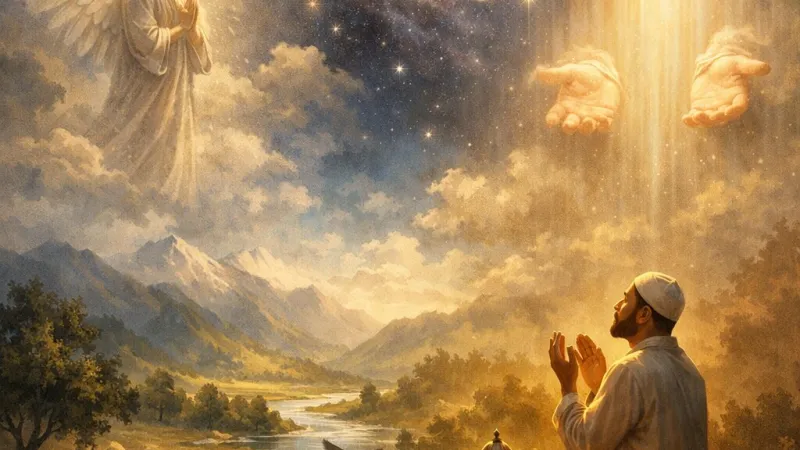
Summary:
Explore key Islamic beliefs about angels, creation, and Allah’s mercy to understand their roles, significance, and impact in Muslim faith and life.
Understanding Key Beliefs in Islam: Angels, Creation, and the Mercy of Allah
Islam stands as one of the world’s most prominent faiths, with a profound presence shaping societies, cultures, and individuals for centuries. Originating in the 7th century in the Arabian Peninsula, Islam’s central principles revolve around the existence of one supreme deity, Allah, His invisible agents known as angels, the narrative of creation, and the divine qualities He possesses, most notably mercy and compassion. These beliefs are not abstract ideas but are deeply woven into the rhythms of Muslim life, influencing faith, ethics, and the communal spirit. In this essay, I will examine three essential articles of Islamic belief — the nature and function of angels, the doctrine of creation, and the significance of Allah’s mercy — exploring their scriptural bases, practical significance, and enduring influence on Muslims today.
---
1. The Role and Nature of Angels in Islam
A. Definition and Essence
Within Islamic teaching, angels are mentioned as pure spiritual beings, created from light. This sets them apart from humans, who are fashioned from clay, and from jinn, who are beings of smokeless fire. Unlike humans, angels do not possess free will; their very existence is committed to unwavering obedience to Allah. The Qur’an references their hidden nature, noting that they exist beyond the realm of human perception. Despite this, Muslim literature, such as the early biography of the Prophet Muhammad by Ibn Ishaq, describes moments when angels have appeared in human form, particularly when delivering urgent revelations or messages.This unique status of angels reflects their role as intermediaries between the divine and the earthly. The Qur’an, in Surah Al-Fatir (35:1), speaks of Allah as the creator of the heavens and the earth and the one who made the angels messengers with wings in twos and threes. Their main purpose, therefore, is service to Allah; they have no desire or inclinations of their own.
B. Duties and Responsibilities
Every angel in Islamic belief has a specific remit. The most renowned is Jibril (known in English as Gabriel), entrusted with conveying the Qur’an to the Prophet Muhammad — a pivotal act in Islamic history. Other key angels include Mika’il (Michael), linked with provision and natural forces, and Israfil, who will sound the trumpet on the Day of Judgement. There is also Azrael, the Angel of Death, responsible for taking souls at the end of life.Islamic teaching also proposes the existence of two angels assigned to every human, known as the ‘Kiraman Katibin’, who record individual actions, both good and bad, as referenced in Surah Qaf (50:17-18). This belief emphasises moral responsibility and accountability, with these records to be revealed on the Day of Reckoning.
Angels are also said to shield believers, particularly during prayer or trials. For instance, it is narrated in Sahih Bukhari, a celebrated collection of Hadith, that angels witness and join gatherings where Allah is remembered, amplifying their blessing.
C. Evidence and Faith in the Unseen
The presence of angels is established through multiple verses in the Qur’an, yet their existence cannot be confirmed by human senses or scientific inquiry. This ties into a broader Islamic principle: belief in the ‘Ghayb’ — the unseen. Faith in angels, as outlined in Surah Al-Baqarah (2:3), denotes trust in realities beyond empirical evidence. Anecdotal tales persist within Muslim tradition, with people describing feelings of protection or guidance believed to be angelic intervention. However, Islamic orthodoxy emphasises that ultimate trust lies in the scriptural word, and such experiences must not override the clear teachings of the Qur’an and authentic Hadith.D. Daily Significance for Muslims
Belief in angels shapes Muslim conduct in daily life. Knowing that every deed is recorded encourages integrity, repentance, and striving for goodness. Furthermore, the conviction that angels invoke prayers for believers experiencing hardship or performing acts of worship offers spiritual comfort and a sense of solidarity with the divine. In practice, such ideas cultivate an awareness of accountability and a connection to a reality greater than oneself, nurturing both humility and hope.---
2. The Islamic View on Creation
A. Allah as the Unique Creator
Central to Islamic theology is ‘Tawhid’ — the oneness of Allah, encompassing His singular creative power. Allah is not just the originator but the sustainer and controller of all that exists. The Qur’an repeatedly states His creative acts, for example: “Allah is the Creator of all things” (Surah Az-Zumar 39:62). The account in Surah Al-A’raf (7:54) describes creation in six phases or ‘days’, though it is commonly interpreted by scholars as six stages rather than literal 24-hour days, recognising the difference between divine and human measurements of time.Creation in Islam is purposeful, ordered, and founded upon wisdom, transcending human comprehension. Allah does not create randomly — every living being, aspect of nature, and cosmic phenomenon is seen to reflect His glory and deliberate intent.
B. Life as Divine Gift and Responsibility
Muslims view existence itself as a precious endowment from Allah, warranting gratitude and reverence. The Qur’anic vision extends beyond humans, encompassing animals and nature as part of a holistic creation, ultimately under divine stewardship. A pertinent example is Surah Al-An'am (6:38), which acknowledges the communities among animals, underscoring the unity and interconnectedness of all living things.Such beliefs naturally inform Muslim attitudes towards the environment and life. Ethical injunctions encourage stewardship (known as ‘khilafah’), mindful consumption, and an aversion to waste. This is particularly evident in the growing number of British Muslim-led initiatives aimed at environmental conservation, such as the Islamic Foundation for Ecology and Environmental Sciences, headquartered in Birmingham. This modern application illustrates how scriptural teachings continue to inspire contemporary social action.
C. Science and Scriptural Worldviews
Modern scientific theories, including the Big Bang and the concept of an expanding universe, pose interesting questions for religious narratives of creation. While the Qur’an does not elaborate detailed scientific mechanics, some scholars posit that certain verses align with contemporary discoveries. For instance, Surah Al-Anbiya (21:30) notes, “Do not the disbelievers see that the heavens and the earth were a joined entity, then We split them apart?” Many find a parallel here with cosmological theories of the universe’s origin.Others stress the value of Muslim engagement with science as a means to marvel at Allah’s creative processes, rather than as contradictory. Figures such as Professor Abdus Salam, a Muslim Nobel Prize-winning physicist educated at the University of Cambridge, exemplify a tradition of integrating faith and reason within the British Islamic context.
D. Faith, Meaning, and Devotion
Affirming Allah’s role as sole creator underpins devotion and prompts a sense of meaning and destiny. Recognising life’s fleeting nature, a core tenet in Islam, inspires worship and ethical living, urging believers to express thankfulness through acts of worship and service. Such perspectives offer solace during adversity, as troubles are seen in the context of a larger, divinely ordained plan, fostering hope, perseverance, and purposeful living.---
3. Allah’s Mercy and Compassion
A. Theological Foundations
‘Rahma’, meaning mercy, is repeatedly referenced throughout the Qur’an and Islamic tradition as a defining attribute of Allah. The opening line of every surah (chapter) but one begins with "In the name of Allah, the Most Gracious, the Most Merciful" (Bismillah ir-Rahman ir-Rahim), firmly embedding mercy at the heart of Islamic consciousness. Mercy (‘rahma’) encompasses kindness, forgiveness, and generosity that transcend strict justice — sinners find hope, as forgiveness is always accessible with sincere repentance.From a theological standpoint, Allah’s mercy is portrayed as boundless and unconditional, extending even to those who transgress. This is in stark contrast to a purely legalistic or punitive conception of divinity. As Surah Az-Zumar (39:53) proclaims, “Despair not of the mercy of Allah; indeed, Allah forgives all sins.”
B. The Ninety-Nine Names of Allah
The tradition of the ‘Asma ul-Husna’, the ninety-nine beautiful names of Allah, offers a window into the complex facets of the divine. Names such as ‘Ar-Rahman’ (The Entirely Merciful), ‘Al-Ghaffar’ (The Forgiving), and ‘Al-Razzaq’ (The Provider) not only establish Allah as just and wise but as intimately involved in the welfare of creation. In many British mosques, prayer beads (Tasbih) are used to meditate on these names, invoking reflection and gratitude.These names are not merely recitations; they form a spiritual compass, shaping the believer’s understanding of Allah and informing how Muslims aspire to interact with the world.
C. Mercy and Compassion in Practice
The consciousness of divine mercy translates into tangible behaviour. Muslims are enjoined to forgive, show kindness, and alleviate suffering. Charitable giving, especially during Ramadan, is motivated by a consciousness of Allah’s compassion towards His creatures. These themes echo in British community work, from mosque-run food banks to refugee support initiatives, with mercy as the animating ethos.Reliance on Allah’s mercy tempers despair; for instance, after committing mistakes, Muslims are encouraged to repent confidently, trusting in forgiveness. Such outlooks foster resilience and psychological wellbeing, a fact acknowledged in pastoral care across many UK Islamic schools and chaplaincies.
D. Shaping Attitude and Community
Belief in Allah’s compassion creates optimism, patience, and a spirit of justice. Muslims are reminded to uphold mercy even when wronged, reflecting the Prophet Muhammad’s own forgiveness of persecutors during his conquest of Makkah — a narrative often cited in ethics lessons across British Islamic Studies syllabi. Acts of sincerity in worship, charitable deeds, and efforts towards reconciliation all stem from the aspiration to mirror Allah’s merciful character.---
Rate:
Log in to rate the work.
Log in