How Plants and Animals Respond to Environmental Stimuli: A Secondary School Essay
This work has been verified by our teacher: 3.05.2026 at 12:45
Homework type: Essay
Added: 1.05.2026 at 11:09
Summary:
Explore how plants and animals respond to environmental stimuli, learning key biological processes that explain survival and behaviour in this secondary school essay.
Module 5: Section 5 – Plant and Animal Responses
All living organisms, be they stately oaks or darting songbirds, exist within a dynamic environment where change is constant. To flourish—indeed, to endure at all—plants and animals must respond to ever-shifting conditions: sunlight breaking through leaden skies, the sudden shadow of a hungry fox, or the dearth of water after days of relentless sunshine. These responses are essential for survival, growth, and ultimately, reproduction. In this essay, I will explore the biological mechanisms underpinning how plants and animals sense and react to external and internal stimuli. We shall consider the vocabulary of response—from the nature of ‘stimuli’ and ‘hormones’ to the fascinating behaviour of tropisms and the role of nastic movements—and lay bare the similarities and differences between how the living world’s green and mobile kingdoms meet the challenges of their environment.
Understanding Stimuli and Responses in Plants and Animals
The Nature of Stimuli
A ‘stimulus’ is any detectable change, event, or signal in the environment that can evoke a response from an organism. Stimuli can be external—such as light, gravity, and temperature—or internal, like hormonal fluctuations or changes in glucose levels. For plants, key external stimuli include light direction, gravity, and physical touch; they are rooted to the spot and must grow or signal their way around challenges. Animals, blessed with mobility, respond to a broader array of stimuli, encompassing sound waves, visual signals, scent trails, temperature changes, predators, or cues from conspecifics.Types of Responses
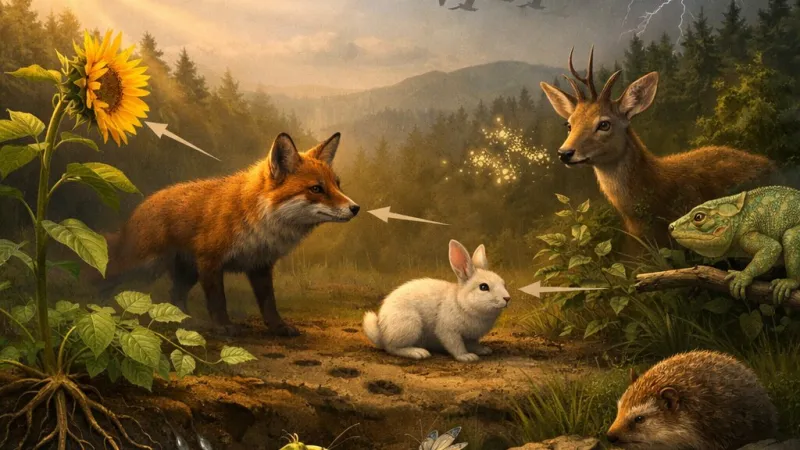
Responses manifest in varied forms. Animals often display rapid behavioural responses, such as a blackbird’s alarm call or a hedgehog’s instinctive curl when threatened. These can occur in seconds—information flashes through a nervous system, bringing about swift changes in heart rate, muscle movement, or behaviour. By contrast, plants respond more slowly, often through growth patterns or the production of chemicals. The bending of a sunflower towards the morning light, or nettle leaves secreting irritants when browsed upon, are examples of physiological and chemical responses shaped by evolutionary pressures. Both kingdoms’ responses aim to maximise chances of survival—dodging hungry mouths, seeking sustenance, or ensuring the next generation takes root.Importance of Responses
For animals, rapid responses can mean the difference between life and death—think of the hare’s bolt at the approach of a stoat, or a hedgehog entering hibernation to survive the British winter. Plants, too, must optimise responses to maximise light capture, root anchorage, and deter herbivores. For both, responses not only drive survival, but also growth and reproductive success. Courtship displays in birds, or the intricate structure of foxglove flowers designed to attract specific pollinators, all exemplify evolution’s hand in fine-tuning response mechanisms for greater fidelity of gene propagation.Plant Responses to Environmental Stimuli
Challenges and Adaptations
Plants cannot flee from danger; they endure storms, grazing animals, and variable climates by adapting how and where they grow. Their ‘behaviour’ is principally rooted in growth direction (tropisms), movement at the cellular level, and the subtle orchestration of chemicals. The English countryside itself is a testament to this adaptability—a woodland carpet of bluebells leaning towards rare shafts of light, or brambles scrambling over hedgerows in search of new territory.Tropisms and Nastic Movements
Some plant responses are directional (‘tropisms’), orienting growth towards or away from specific stimuli:- Phototropism is the growth of shoots towards light, powered by the uneven distribution of hormones like auxin. Charles Darwin, in his study of canary grass, first demonstrated this phenomenon in the British tradition of careful observation and experimentation. - Geotropism (Gravitropism) ensures roots grow into the soil (positive geotropism) while shoots ascend (negative geotropism), securing stability and access to resources. - Thigmotropism, evident in species like common honeysuckle, enables shoots to wrap around supports, scaling new heights in pursuit of sunlight. - Chemotropism directs pollen tubes towards ovules, guided by chemical cues, vital for successful fertilisation in flowering plants.
Unlike tropisms, nastic responses are non-directional and reversible. The sensitive plant (Mimosa pudica), grown in some British glasshouses as a curiosity, abruptly folds its leaflets when touched—a response thought to deter grazing by startling herbivores or making the plant a less attractive meal.
Chemical Defences and Signals
Plants also wage chemical warfare. Stinging nettles deliver sharp reminders to keep clear with their cocktail of histamines and formic acid, while oaks and horse chestnuts produce tannins, acting as feeding deterrents. British woodlands abound with such subtle strategies—foxgloves synthesise cardiac glycosides poisonous to many mammals, yet vital as medical compounds for heart conditions. Plants may communicate, for example, releasing volatile organic compounds when grazed, warning neighbours to boost their defences. In some cases, such emissions attract the herbivore’s own predators—a remarkable form of indirect defence.The Role of Plant Hormones in Regulating Responses
to Plant Hormones
Plant hormones, or plant growth regulators, act as molecular messengers. Unlike animal hormones, often produced in discrete glands, plant hormones are synthesised throughout the plant. They are present in minuscule amounts, but their impact is profound, governing almost every aspect of plant development and response.Main Plant Hormones and Their Functions
Auxins such as indole-3-acetic acid (IAA) are most famous for their role in regulating cell elongation: a higher concentration on the shaded side of a shoot prompts those cells to grow longer, causing the stem to bend towards light. Auxins also enforce ‘apical dominance’, suppressing growth of side shoots and ensuring efficient up-and-out growth.Gibberellins encourage stem elongation and break seed dormancy, notable in early crop breeding when tall, ‘leggy’ wheat varieties were replaced with shorter, sturdier ones following discoveries in gibberellin pathways.
Abscisic acid (ABA) acts as a brake, counteracting growth and keeping seeds dormant during winter. It plays a critical part in drought resistance—triggering stomata to close and conserve water, a function increasingly relevant in the context of climate change and drier summers seen in the south of England.
Cytokinins encourage cell division and delay leaf senescence—a reason why flowers like chrysanthemums last longer when given the correct balance of these hormones.
Ethene (Ethylene), a simple gaseous hormone, is intimately involved in fruit ripening. Traditional British commerce once transported green bananas to ripen in special ‘ethylene rooms’ at their destination, reducing spoilage en route.
Hormonal Mechanisms in Tropisms
The secret to tropic responses lies in hormone redistribution. In phototropism, for instance, auxin accumulates more on the shadowed side of the plant, extending those cells and causing the shoot to curve towards the light source. Geotropism, too, exploits this: roots direct their growth downwards as auxin inhibits—or in shoots, stimulates—cell elongation depending on the tissue and context.Apical Dominance
Removing the shoot tip—a common technique in British gardening—releases side shoots from hormonal suppression, encouraging bushier growth in plants such as roses and peas. This is a clever strategy to maximise light absorption and yields, illustrating how understanding plant hormone systems is not just academic, but also of practical importance.Animal Responses to Stimuli
Sensory Systems and Behavioural Adaptation
Animals possess highly developed sensory systems, enabling acute responses to the environment. The robins that migrate from Scandinavia to British gardens each winter, for example, cue into day length and temperature changes. The red deer rut on Scottish moors is orchestrated by hormonal changes triggered by environmental cues, culminating in spectacular displays and vocalisations.When faced with immediate dangers, animals mobilise the ‘fight or flight’ response. This is typified by the nervous system sending rapid messages, leading to surges of adrenaline: heart rate soars, pupils dilate, and energy reserves are mobilised—all within seconds. Long-term responses, such as moulting in birds or changing coat colour in stoats, are mediated by hormones like thyroxine and melatonin.
Rate:
Log in to rate the work.
Log in