An Insight into the History of Race Relations in Britain
This work has been verified by our teacher: 10.04.2026 at 10:14
Homework type: History essay
Added: 7.04.2026 at 15:51
Summary:
Explore the history of race relations in Britain, uncovering key events and their impact on society, justice, and multiculturalism in the UK.
History Race Relations: A British Perspective
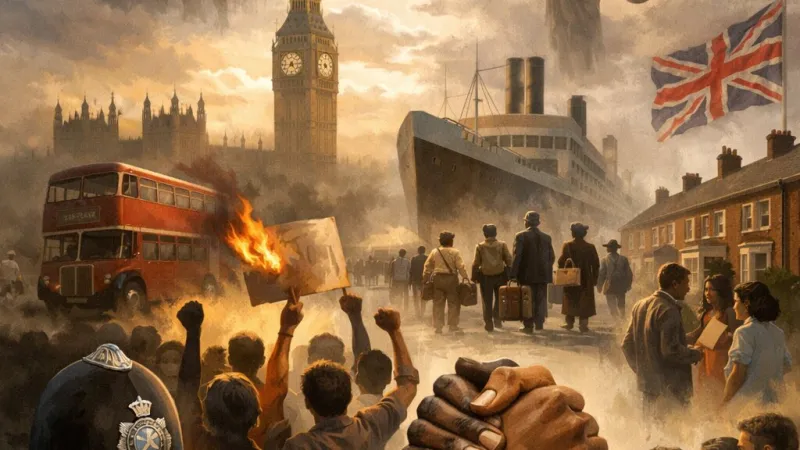
The study of race relations holds a critical place within British historical curriculum, revealing much about the evolution of society, justice, and identity. While discussions across the globe—particularly in the United States—often dominate the popular imagination, it is within our own context that we must ask: how have race relations unfolded within Britain? Rooted in legacies of Empire, migration, and struggle, race relations in the United Kingdom have been shaped by laws, everyday prejudice, moments of unity, and efforts of resistance. Understanding this journey, from mid-nineteenth-century colonial views to the challenges and achievements of the post-war and contemporary periods, is essential for interpreting present debates on multiculturalism, equality, and social cohesion. In this essay, I will explore the historical trajectory of race relations in Britain, draw on pivotal moments and figures, and assess the ongoing implications for our society.
---
I. Colonial Legacy and Early Patterns
Though the term “race relations” only gained currency in the twentieth century, its roots in Britain can be traced back centuries. The British Empire was, in many respects, a racial project: from the transatlantic slave trade through to colonial administration in Africa, Asia, and the Caribbean, the construction of racial hierarchies served both to justify and structure imperial rule.A. The Era of the Slave Trade and Abolition
The infamous triangular trade, which reached its peak in the eighteenth century, brought vast wealth to British cities such as Liverpool and Bristol. However, it also established deeply ingrained racial attitudes by treating African peoples as property. The campaign for abolition, led by figures like William Wilberforce, Olaudah Equiano, and Mary Prince—a freed Black woman whose autobiographical account remains a staple in GCSE literature—highlighted both the tensions and the possibilities for change within society.
Despite abolition in 1807 (trade) and emancipation itself in 1833, racial hierarchies persisted. Freed slaves and people of colour remained marginalised, often existing as an invisible minority in ports and urban centres. Literary references, such as the character of Heathcliff in Emily Brontë’s *Wuthering Heights* (whose ambiguous heritage has been read as a subtle nod to racial ‘otherness’), reflect how race became a coded social marker.
B. Imperial Attitudes and Scientific Racism
The nineteenth century saw the flowering of 'scientific racism', with pseudo-academic theories like those of Francis Galton buttressing ideas of white superiority. Children in Victorian classrooms were taught about “civilising missions”, and Rudyard Kipling’s “The White Man’s Burden” celebrated colonial rule as a moral duty. Yet the reality was one of exploitation, violence, and structural inequality—a legacy that would later define relations between British society and postcolonial migrants.
---
II. Migration and Establishing Communities
A. Early Twentieth Century: Seafarers, Soldiers, and SettlersThe arrival of seamen and soldiers from the Caribbean, Africa, and South Asia during both World Wars marked a turning point. Notwithstanding their contributions—such as the Jamaican RAF pilots in the Battle of Britain or Indian troops on the Western Front—returning veterans often faced racism or exclusion.
B. Windrush and the Rise of Multicultural Britain
The arrival of the Empire Windrush in 1948 is now an iconic moment, marking the start of large-scale, voluntary migration from the Caribbean. Migrants were initially welcomed, as Britain faced a post-war labour shortage. Authors like Sam Selvon, through novels such as *The Lonely Londoners*, depicted both the excitement and loneliness of early Caribbean Londoners, vividly capturing the tension between hope and prejudice.
Communities from India, Pakistan, Bangladesh, and Africa soon followed, encouraged by Britain’s need for nurses, railway workers, and other essential staff. Contrary to popular myth, many migrants had been British citizens, drawn by both opportunity and the idea of a “mother country”. Their experiences, however, were often marked by surprise and disappointment at the barriers they faced—from the notorious “no blacks, no dogs, no Irish” signs to attacks by far-right groups like the National Front in later decades.
---
III. Discrimination, Legislation, and Resistance
A. Everyday Racism and Notting HillTensions came to a head in the 1958 Notting Hill riots, a pivotal event in British race relations. Spurred by racial prejudice, white gangs targeted immigrant communities for several nights in a violent eruption shocking to the British conscience. While some officials were tempted to blame the victims, grassroots organisations like the Coloured Peoples’ Progressive Association pushed back, demanding justice. The response included the creation of the Notting Hill Carnival, today a celebration of multicultural London but originally a form of resistance and solidarity.
B. The Rise of Anti-Discrimination Laws
It was not until the mid-1960s that government acted decisively. The Race Relations Act of 1965 (the first such legislation in Britain) made "public" racial discrimination illegal. However, its powers were limited. Only with the Race Relations Act 1968 was the law extended to include housing and employment, addressing the realities highlighted by important figures like Claudia Jones and Paul Stephenson. The Bristol Bus Boycott, led by Stephenson in 1963 after a Black man was refused employment, was crucial in pressuring authorities. It echoed the tactics of the American Civil Rights Movement—but within an unmistakably British frame.
---
IV. Education, Popular Culture, and Identity
A. The Challenge of IntegrationEducation has long been a battleground for race relations. In the mid-twentieth century, 'bussing' policies—where children from ethnic minority backgrounds were sent to schools outside their communities to avoid perceived segregation—were often poorly resourced and stigmatising. Teachers and writers, such as Benjamin Zephaniah, have argued that the curriculum's focus on white, British narratives contributed to a sense of alienation among Black and Asian pupils.
B. Literature and Arts as Routes to Voice
The arts became a site of assertion and identity. Prominent poets like Zephaniah and novelists like Andrea Levy (*Small Island*) and Zadie Smith (*White Teeth*) have brought the complexities of Britain's race relations to mainstream attention. Theatre, too, with plays such as Roy Williams’ *Sing Yer Heart Out for the Lads*, has explored the intersection of racism, football, and youth culture.
Bands from the “2 Tone” movement—such as The Specials and UB40—used music to bring together Black and white youth, explicitly aiming to challenge racism and promote unity. The 1981 Brixton riots and subsequent Scarman Report, which identified racism within the police, spurred further discussion and reform.
---
V. Contemporary Challenges and Future Directions
Despite legal progress and growing acceptance of multiculturalism, challenges remain. The 1993 murder of Stephen Lawrence, a Black teenager killed in a racist attack, exposed entrenched racism within the police and justice system. The Macpherson Report (1999) coined the term “institutional racism” and forced a reckoning across British institutions.Contemporary debates over identity, immigration, and national belonging have been shaped by these histories. The Windrush scandal of 2018, where legal migrants were wrongly threatened with deportation, underlined the precariousness of belonging and the enduring impact of bureaucratic discrimination.
At the same time, growing movements—such as Black Lives Matter UK—demonstrate the ongoing dynamism and resilience of anti-racist activism.
---
Conclusion
Race relations in the United Kingdom have traversed a complex path: from colonial exploitation and the legacy of the slave trade, through waves of migration and community-building, to the struggles for legal equality and contemporary debates over identity and justice. Studying this history reveals not a simple narrative of progress, but a tapestry woven from resistance, adaptation, conflict, and solidarity.While legislation and cultural change have fuelled advances, the persistence of discrimination—sometimes overt, sometimes systemic—remains a challenge for each new generation. As historian David Olusoga notes, “Britain is a nation of immigrants and empires, and that complex inheritance must be acknowledged if we are to build a more just and inclusive future.” In this context, the study of race relations is not only a historical necessity but a vital preparation for responsible citizenship in the twenty-first century.
Rate:
Log in to rate the work.
Log in