How Alveoli and Villi Adapt to Enhance Gas and Nutrient Exchange
This work has been verified by our teacher: 7.05.2026 at 15:46
Homework type: Essay
Added: 4.05.2026 at 6:14
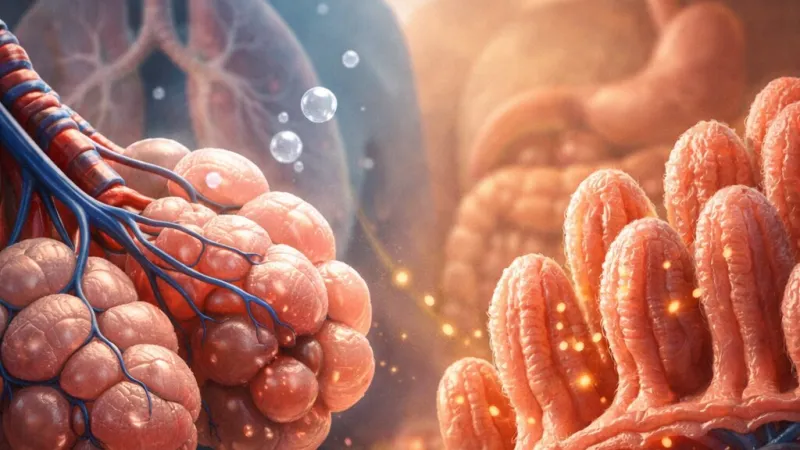
Summary:
Explore how alveoli and villi adapt structurally to enhance gas and nutrient exchange, helping you understand key processes in human biology.
Alveoli and Villi: Structural Adaptations and Functional Significance in Gas and Nutrient Exchange
The human body’s survival hinges upon the efficiency of unseen microscopic processes, many of which are reliant on uniquely specialised structures that govern the exchange of essential substances. Nowhere is this more evident than in the respiratory and digestive systems, where extraordinary adaptations ensure the effective transfer of gases and nutrients. The tiny alveoli nestled within the lungs and the delicate villi carpeted across the small intestine stand out as examples of the body’s marvellous engineering. Each is fine-tuned for a distinct but interconnected role: alveoli oversee the absorption of oxygen and excretion of carbon dioxide, while villi secure the transfer of digested food into the bloodstream. This essay embarks on a detailed examination of their anatomy and physiology, highlighting the similarities and differences that reflect their roles in maximising diffusion and efficient exchange. In contextualising their significance, the discussion will also incorporate literary and cultural references familiar within the United Kingdom’s scientific education, ensuring clarity and relevance.
---
I. Overview of Exchange Processes in the Human Body
Living cells depend on a continuous supply of oxygen and nutrients—without which, their basic metabolic functions would collapse, leading rapidly to organ failure and death. In humans, the high metabolic rate driven by an active lifestyle, as depicted so vibrantly in George Orwell’s *Down and Out in Paris and London*, demands rapid and effective delivery systems. Two key processes serve this need: gas exchange and nutrient absorption.Gas exchange refers to the movement of oxygen from the inhaled air into the blood, and the simultaneous release of carbon dioxide from the blood into exhaled air. This process occurs in the lungs, specifically in the _alveoli_, tiny air sacs surrounded by capillaries. In contrast, nutrient absorption is the uptake of digested food molecules, such as glucose, amino acids, fatty acids, and vitamins, from the lumen of the small intestine into the circulatory and lymphatic systems. The structures chiefly responsible for this are the finger-like projections called _villi_, plentiful along the inner surfaces of the small intestine.
While they deal in very different substances, both systems share the critical aim of ensuring the body's cells are properly supplied for respiration and overall function.
---
II. Alveoli: Structure and Function in the Respiratory System
Nestled deep within the branching maze of the lungs’ bronchioles, alveoli present one of nature’s most effective sites for gas exchange. These minute spherical structures—each no wider than a fraction of a millimetre—combine to create an immense collective surface. Textbooks like CGP’s GCSE AQA Biology for Combined Science remind students that the total number of alveoli is about 300 million, combining to offer a surface area roughly equivalent to a tennis court (around 70 square metres). This enormous area is key to meeting the energy demands of active human life.Structural Adaptations
Alveoli are distinguished by several adaptations specifically engineered for their role:- Judicious Thinness: The alveolar wall consists of a single layer of squamous epithelial cells—Type I pneumocytes—which substantially shortens the diffusion distance for gases, akin to the window in a submarine allowing exchange between two very different environments.
- Surfactant Production: Type II pneumocytes are scattered amongst the wall, secreting surfactant, a substance crucial for lowering the surface tension of water within the alveoli and thereby preventing their collapse after each breath—an idea comparable to the way liquid soap eases the cleaning of stubborn grease.
- Rich Capillary Supply: Alveolar walls are closely entwined with a mesh of capillaries, ensuring every alveolus is in intimate contact with the bloodstream. This proximity guarantees swift uptake of oxygen and removal of carbon dioxide—a necessity, given the limited oxygen that air contains at any one time.
- Elastic Fibres: The connective tissue framework is rich in elastic fibres, allowing the alveoli to stretch as air rushes in, and then recoil, expelling carbon dioxide during exhalation.
- Moist Linings: The interior surface of each alveolus is coated with a thin layer of moisture, facilitating the dissolution and subsequent diffusion of gases.
Mechanism of Gas Exchange
At the heart of gas exchange lies a simple but powerful principle: diffusion, propelled by the difference in partial pressures of gases between alveolar air and blood. Oxygen, rich in freshly inhaled air, diffuses across the thin alveolar and capillary membranes into deoxygenated blood, whilst carbon dioxide travels the opposite way. This is maintained by the constant movement of blood and the rhythmic ventilation of the lungs—a process championed by physiologist William Harvey’s early work on circulation.Protective Mechanisms
Alveoli are not merely passive conduits. They are patrolled by alveolar macrophages—defence cells tasked with engulfing and eliminating inhaled particles and pathogens. This role is critical in urban environments like central London, where airborne particulates abound. Surfactant, too, proves vital; without it, as seen in premature infants with respiratory distress syndrome, breathing becomes laboured or impossible.---
III. Villi: Structure and Role in the Digestive System
If the alveoli are built for gaseous exchange, villi are masterpieces designed for nutrient absorption. The interior lining of the small intestine, especially within the jejunum and ileum, bristles with millions of these projections. Their presence increases the intestinal surface area by approximately forty times over a flat lining—an estimate cited in classic biology references like *Biology* by D.G. Mackean.Anatomy and Adaptations
Each villus presents as a tiny, velvety finger rising from the intestinal wall, measuring about 0.5-1.6 mm long. Its outer layer consists of enterocytes (epithelial cells), themselves topped with microvilli—collectively referred to as the ‘brush border’. This arrangement creates an immense absorptive area, akin to the intricate folds of cloth on a Victorian ball gown, each layer multiplying capacity.Within the core of the villus lies a network of blood capillaries, responsible for the swift uptake of glucose and amino acids, plus a lacteal, a central lymphatic vessel specialised for the absorption of fatty acids and fat-soluble vitamins. The thinness of the epithelial layer ensures nutrients pass quickly into either the blood or lymph, much like narrow bridges streamlining pedestrian traffic.
Other cells within the villi secrete digestive enzymes and mucus—crucial for finishing off digestion and providing lubrication, a fact demonstrated in laboratory dissections undertaken in UK schools during A-level biology practicals.
Maintenance and Renewal
Villi are remarkable not only for their absorptive capacity but for their resilience. The digestive tract’s lining encounters constant wear and tear, prompting a high rate of cell turnover. Stem cells residing in the crypts of Lieberkühn constantly generate new enterocytes, ensuring the epithelial layer remains fresh and functional. This ability to renew is, as Alan Bennett noted in his play *The History Boys*, a silent kind of miracle—one that passes unnoticed except when it fails.---
IV. Comparative Analysis: Alveoli vs Villi
While their respective functions differ, alveoli and villi display striking similarities in basic design. Both greatly expand the available surface area for exchange, employ thin epithelial barriers, and are intimately associated with capillary networks that whisk away absorbed substances. Specialised cells—whether surfactant-producing pneumocytes or mucus-secreting goblet cells—support their function and offer protection.Yet, their divergences are just as instructive. Alveoli are expertly arranged for the movement of gases, dependent on the pressures generated by breathing movements and supported by surfactant to avoid collapse. Villi, meanwhile, act not only through diffusion but via active transport mechanisms that allow absorption even against concentration gradients—especially important in the absorption of glucose after a meal. The presence of lacteals within villi reflects their additional role in absorbing dietary fats—something wholly absent in lung structures. Moreover, while the alveoli expand and recoil in rhythm with breathing, villi rely on gentle contractions of the intestinal wall (peristalsis) to stir the contents and maximise contact with nutrients.
These distinctions echo the organs’ wider physiological purpose: the lungs must quickly and constantly oxygenate the entire blood supply, while the small intestine steadily extracts nutrients over several hours from each meal.
---
V. Significance of Alveoli and Villi in Health and Disease
The fragility of these structures means that any damage is keenly felt in the body’s overall well-being. In the lungs, conditions such as emphysema—common among long-term smokers in the UK—progressively destroy alveolar walls, sharply reducing surface area and causing breathlessness and fatigue. Pneumonia, whether from viral, bacterial, or less common fungal causes, fills alveoli with fluid or debris, further impeding gas exchange and often proving fatal in vulnerable groups.Villi are equally sensitive. Diseases such as coeliac disease—well-known in British medical practice—trigger immune attacks on the gut lining, leading to villous atrophy. This results in poor absorption of nutrients, leading to weight loss, tiredness, and, in children, impaired growth. Infections like giardiasis, more common among travellers returning from abroad, can produce similar effects, temporarily flattening villi and resulting in diarrhoea and malnutrition.
Modern life exposes both alveoli and villi to fresh challenges. Air pollution, cigarette smoke, and industrial particulates compromise lung health; diets high in processed foods or chronic infections threaten the gut. The National Health Service (NHS) continues to emphasise prevention—through smoking cessation services, vaccinations, and dietary advice—as the best route to safeguarding these vital exchange surfaces.
---
Rate:
Log in to rate the work.
Log in