Cell Division and Growth Explained — GCSE Biology B2.5 Guide
This work has been verified by our teacher: 17.01.2026 at 6:26
Homework type: Essay
Added: 17.01.2026 at 5:47
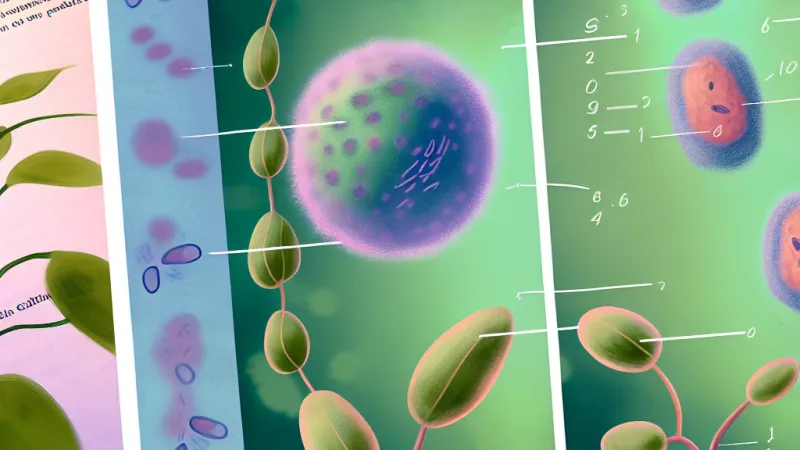
Summary:
Master Cell Division and Growth in GCSE Biology B2.5: learn mitosis stages, the cell cycle, differentiation, plant vs animal growth and exam revision tips.
Biology B2 5.1: Cell Division and Growth
Cell division and growth are fundamental biological processes underlying the development, maintenance, and healing of living organisms. At their core, cell division is the means by which cells reproduce themselves, while growth refers to the increase in cell number or size, allowing tissues and organs to form and mature. Closely connected is differentiation, the process by which unspecialised cells become tailored for particular functions. This essay will explain the mechanisms that underpin cell division, explore how growth and cell specialisation emerge, and contrast the patterns observed in animal and plant life. By drawing on examples familiar from the UK curriculum and relevant practicals, and highlighting the importance of these processes, this discussion will also consider the broader implications for health, society, and science.
The Genetic Basis for Identical Daughter Cells
Understanding cell division requires a grasp of genetic material. The instructions for life are encoded in DNA—a double-helical molecule found within the nucleus of nearly all cells. DNA is organised into genes, each acting as a recipe for particular traits, such as eye colour or enzyme production. In humans, DNA is further bundled into chromosomes: most body (somatic) cells contain 46 chromosomes, organised as 23 pairs. These are known as diploid cells. In contrast, gametes (egg and sperm cells) are haploid, as they carry just one chromosome from each pair, ready to unite during fertilisation.A crucial aspect of cell division is that the genetic material must be faithfully copied. Before a cell divides, its chromosomes are replicated so that each new daughter cell inherits a full and identical set of genetic instructions. In this context, alleles represent different versions of a gene, for example influencing whether one has attached or free earlobes. Precise copying is essential—errors can cause malfunction or disease, which is why replication is tightly controlled and checked.
The Cell Cycle: Steps Leading to Division
Cell division is not a haphazard event. Cells undergo a defined sequence known as the cell cycle, comprising interphase and the mitotic phase. Interphase encompasses three substages:- G1 phase (gap 1): The cell grows, accumulates nutrients and synthesises proteins. - S phase (synthesis): The cell copies (replicates) its DNA. - G2 phase (gap 2): Further growth occurs, and the cell checks that DNA replication is complete and correct.
The cycle then advances to the mitotic phase (M phase), during which the cell undergoes nuclear division (mitosis) followed by the division of the cytoplasm (cytokinesis).
Progress through the cell cycle is carefully monitored at checkpoints. For example, after DNA is duplicated, the cell confirms there are no errors before proceeding. Both external signals (such as hormones or growth factors) and internal signals (like signs of DNA damage) influence whether the cell divides, pauses for repair, or self-destructs to prevent possible harm to the organism.
A practical tip for students: commit to memory the sequence G1 → S → G2 → M and associate each with its main events.
Mitosis: The Mechanism and Its Purpose
Mitosis is the process that enables a single cell to split into two genetically identical cells. It's essential for an organism's growth, the replacement of damaged or old cells, and in some cases, asexual reproduction.Mitosis occurs in several clear stages:
- Prophase: Chromosomes condense and become visible under a light microscope. The nuclear envelope starts to break down and spindle fibres begin to form. - Metaphase: Chromosomes align along the centre (equator) of the cell. Spindle fibres attach to the centromeres. - Anaphase: The spindle fibres pull the sister chromatids apart, dragging each set to opposite poles of the cell. - Telophase: Chromatids (now considered chromosomes) reach the poles, and new nuclear envelopes form around each set. - Cytokinesis: The cell splits into two, with animal cells forming a cleavage furrow that pinches inwards, and plant cells developing a cell plate due to their stiff cell wall.
In practical terms, students may practise identifying these stages via stained root tips of onion, a staple of UK GCSE investigations. Diagram labelling is a tested skill and helps reinforce understanding: a common exam technique is drawing boxes outlining each stage and clearly annotating changes occurring to chromosomes and spindles.
Importantly, mitosis produces cells that are genetically identical, barring rare copying errors (mutations), thereby ensuring the organism’s structure and function are reliably maintained.
Functional Importance of Mitosis
Mitosis underlies various essential functions in living organisms:- Growth: In multicellular organisms, like humans, the body begins as a single fertilised cell. Through successive rounds of mitosis, the organism grows; tissues and organs increase in cell number. For example, during childhood, bones lengthen and new skin cells are constantly produced. - Repair and Replacement: Many tissues require frequent renewal. The cells lining the gut and those forming the skin are regularly sloughed off and replaced thanks to mitotic divisions. Blood stem cells in bone marrow, for instance, continually manufacture new red and white blood cells. - Asexual Reproduction: Some organisms (such as certain plants, and simple animals like hydra) rely on mitosis to propagate offspring that are genetically identical to the parent. Examples include runners in strawberry plants or bulbs in daffodils.
Differentiation and Stem Cells
Not all cells are equal once formed. Stem cells are unique in their ability to both self-renew (produce more stem cells) and to differentiate (specialise) into various cell types. Stem cell potency varies:- Totipotent stem cells, found in early embryos, can become any cell type, including placental tissues. - Pluripotent stem cells, such as those from later embryos, can form almost any body cell. - Multipotent stem cells, like adult blood stem cells, are more restricted, typically producing just a few related cell types.
As cells differentiate, they switch on certain genes and switch off others, tailoring their structure and function. Crucially, all specialised cells retain the full genetic code, but only express the bits necessary for their particular job. For example, muscle cells synthesise actin and myosin, while beta cells in the pancreas produce insulin.
Unlike stem cells, most finished (differentiated) cells in animal tissues can no longer divide, except to create identical replacements if damaged. This limitation is one reason why tissues such as nervous tissue heal poorly. Stem cells, by contrast, are central to modern medical therapies; for example, bone marrow transplants use healthy stem cells to generate blood cells in patients with leukaemia.
Comparing Animals and Plants: Growth and Specialisation
Though mitosis is common to both animal and plant kingdoms, patterns of growth and specialisation differ. In animals, cell division and specialisation occur primarily during embryonic development. Once tissues are formed, only certain areas—like the skin and gut—continue dividing at significant rates, while other cells (e.g. neurons) rarely, if ever, replace themselves.Plants, in contrast, can generate new cells and tissues throughout their lives thanks to regions called meristems. Apical meristems, located at the tips of roots and shoots, are zones of constant division, allowing plants to grow taller or spread roots indefinitely. Many plant cells, given the right stimuli, can even de-differentiate and return to a stem-cell-like state—this is why taking cuttings from a willow or geranium can produce a new, genetically identical plant.
Structurally, cytokinesis in plants is distinct: a new cell plate forms to separate daughter cells, reflecting the presence of a robust cell wall, unlike animal cells which pinch inwards.
Investigating Division: Classroom Practicals
In the UK, classic practicals for observing cell division include preparing and staining the root tips from onions to witness mitosis under a microscope. Students can identify cells in prophase, metaphase, anaphase, and telophase, and tally them up to calculate a mitotic index—the proportion of dividing cells, often used to compare healthy vs. cancerous tissue.Another common investigation involves viewing human cheek cells to observe nuclei but, since these are not generally dividing, only interphase is usually seen.
Teachers also stress the importance of using controls (unstained and stained slides) and careful lab practices, such as accurate slide labelling and focusing on cells with the most distinguished chromosomes.
Common Misconceptions
Students often confuse mitosis (nuclear division) with cytokinesis (the splitting of the cell itself), or assume chromosomes are only present when visible—they are present throughout but condense only during mitosis. Another misunderstanding is equating “identical” daughters with “error-free”: most replications are accurate, but rare mutations can lead to diversity—sometimes beneficial, sometimes harmful. Clarifying the layers of genetic structure—genes reside on chromosomes, which are made of DNA—also aids comprehension.Significance and Ethical Reflections
Understanding cell division is vital in medicine (for cancer treatment, regenerative therapies), farming (cloning crops for desirable traits), and conservation. The use of stem cells, especially from human embryos, stirs ethical debate; in the UK, regulation exists to balance scientific progress with societal values, and this remains a topic for sensitive, informed debate.Conclusion
In summary, the elegant processes of cell division and growth, guided by the faithful copying and expression of DNA, shape every aspect of living organisms—from a fertilised egg to a mature adult, from a wounded leaf to a healing skin. Mitosis ensures continuity and repair; differentiation produces the extraordinary variety of cell types making up tissues and organs. While animals and plants share many underlying mechanisms, their ways of growing and regenerating differ, reflecting their unique life strategies. Mastery of this topic not only prepares one for exams, but also underpins our understanding of disease, biotechnological innovation, and advances in medical treatment.Revision and Exam Tips
- Regularly practise labelling diagrams of mitosis, and write short captions for each stage. - Secure the definitions of essential terms: chromosome, gene, diploid, haploid, mitosis, stem cell, meristem, cytokinesis. - Rehearse classic exam questions by giving definitions, outlining sequences, and including real-world examples. - Structure written answers logically: define, explain, exemplify. - Allocate planning time in the exam for outlining your essay before writing.Example Exam Questions
1. Describe the stages of mitosis and explain how mitosis contributes to growth and repair. - Define mitosis, sequence stages, and link to examples (e.g. skin healing). 2. Compare how cell specialisation and growth differ between animals and plants. - Outline early specialisation in animals versus lifelong growth from meristems in plants; provide plant cutting and blood cell examples. 3. Explain what is meant by a stem cell and describe one use of stem cells in medicine. - Define stem cell, note potency, discuss example such as bone marrow transplant.By revising both concept and technique, students can approach the topic of cell division and growth with confidence—fully equipped for both classroom success and deeper appreciation of the living world.
Rate:
Log in to rate the work.
Log in