Comprehensive Guide to Cell Biology for GCSE Students
This work has been verified by our teacher: 4.03.2026 at 18:34
Homework type: Essay
Added: 2.03.2026 at 10:15
Summary:
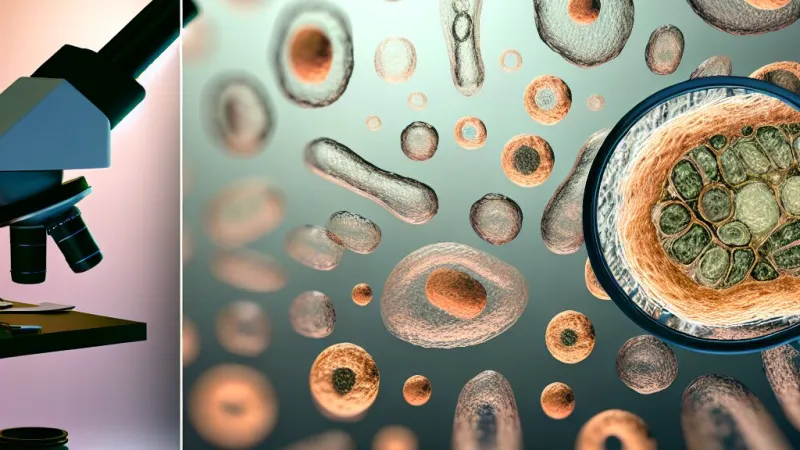
Explore cell biology essentials for GCSE students, including cell types, organelles, and microscopy, to build a strong foundation in biology and science.
An In-Depth Exploration of B1 Cell Biology
Cell biology is often described as the cornerstone of modern biology, and for good reason. Every organism, from the tiniest bacterium inhabiting a drop of pond water to the majestic oak trees adorning our countryside, is constructed from basic units called cells. In the context of the United Kingdom’s GCSE curriculum, cell biology forms the essential first building block for comprehending more complex biological processes, spanning genetics, physiology, and ecology. This essay aims to unravel the fascinating world within cells, distinguishing between eukaryotic and prokaryotic forms, exploring the suite of specialised organelles that endow plant and animal cells with their unique characteristics, and discussing how advances in microscopy have allowed us to uncover these marvels. Ultimately, a clear understanding of cell biology illuminates much of both scientific thought and practice, with profound implications for medicine, biotechnology, and even our daily understanding of health and disease.
---
I. The Foundations of Cell Biology: Theory and Cell Types
The conceptualisation that all living things are made up of fundamental units—the cell—is relatively recent in the history of science. In the 17th century, Robert Hooke, using a home-made compound microscope, examined thin slices of cork and made the ground-breaking observation of “little boxes” which he named “cells,” drawing an analogy with the small rooms inhabited by monks. Around the same period, Antonie van Leeuwenhoek, through meticulous craftsmanship, created single-lens microscopes capable of far greater magnification. Using these, he discovered “animalcules,” what we now recognise as single-celled organisms, in pond water and dental scrapings.The modern cell theory, honed over centuries of investigation, states that all living things are composed of one or more cells, the cell is the basic unit of life, and that new cells arise only from existing cells through cell division. This framework underpins our understanding of biology, making it pivotal groundwork for all further study in the subject.
Cells are customarily classified into two main types: eukaryotic and prokaryotic. Eukaryotic cells, characteristic of animals, plants, fungi, and protists, house their genetic material within a clearly defined nucleus and contain numerous membrane-bound structures called organelles. In marked contrast, prokaryotic cells—typified by bacteria—lack a true nucleus and most internal membrane structures. Instead, their genetic material floats in a region called the nucleoid.
Understanding this distinction is vital not only for academic study but also for practical applications. For instance, antibiotics are designed to target components unique to bacterial (prokaryotic) cells, sparing human (eukaryotic) ones. Likewise, the ecological roles and adaptations of cells, whether in decomposing organic matter or sustaining ecosystems through photosynthesis, are best understood through this foundational lens.
---
II. Eukaryotic Cells: Structure and Specialisation
Eukaryotic cells are architectural wonders, their complexity surpassing that of their prokaryotic cousins. The distinguishing hallmark of eukaryotes is the nucleus, a double-membrane structure which safeguards the cell’s genetic blueprints. Within this nucleus, DNA is organised into linear chromosomes, which are wrapped around proteins called histones, allowing organisms to compact and regulate vast amounts of genetic information. The process of gene expression, whereby information from DNA is transcribed and translated into proteins, is tightly controlled within this compartment.Surrounding the cell is the cell membrane, often likened to a bouncer at a nightclub, selectively admitting or barring substances. Structurally, this membrane is composed of a phospholipid bilayer studded with proteins, some acting as channels or pumps, others as receptors. The semi-permeable nature of this barrier is crucial for maintaining the distinct internal environment of the cell, enabling processes such as osmosis and active transport.
Within the cytoplasm, a viscous fluid called cytosol supports various organelles and serves as the site for metabolic reactions, like glycolysis. The mitochondria, often dubbed the “power stations” of the cell, are especially significant. They generate adenosine triphosphate (ATP), the universal energy currency, via aerobic respiration, a process reliant upon oxygen.
Protein synthesis is orchestrated by ribosomes, either free in the cytoplasm or attached to the rough endoplasmic reticulum. The latter arrangement is common in cells specialised for secreting proteins, like those in the pancreas.
Plant cells, while sharing many features with animal cells, have additional, distinctive structures. The presence of a rigid cell wall, made from cellulose, provides structural support and protection, allowing plants to grow tall and maintain their shape. Chloroplasts, the seats of photosynthesis, contain the pigment chlorophyll which captures light energy to synthesise glucose from carbon dioxide and water—a process at the heart of life’s energy cycles. A large, permanent vacuole occupies much of the plant cell’s interior, storing water, nutrients, and waste products; it also maintains turgor pressure, contributing to plant rigidity.
Animal cells, by contrast, lack cell walls, chloroplasts, and large vacuoles. Instead, some contain lysosomes—organelles packed with enzymes for digesting worn-out cellular components—and centrioles, vital in orchestrating cell division. These differences reflect the varied lifestyles and evolutionary histories of plants and animals.
---
III. Prokaryotic Cells: Mastering Simplicity
Prokaryotic cells, exemplified by bacteria, combine simplicity with remarkable adaptability. Lacking a true nucleus, their DNA forms a singular, circular chromosome—often referred to as a “nucleoid”—freely suspended within the cytoplasm. Prokaryotes do not possess internal membrane-bound organelles, yet this does not mean they are unsophisticated; rather, their streamlined structure enables rapid reproduction and versatility.The cell wall of bacteria, typically comprised of peptidoglycan, acts as a sturdy exoskeleton, conferring shape and protection. This wall is fundamentally different from the cellulose counterpart in plants, and its unique chemistry provides a key target for antibiotics like penicillin. Beneath the wall lies the cell membrane, which not only regulates the movement of substances in and out, but frequently hosts enzymes crucial for energy production, compensating for the absence of mitochondria.
Their genetic material, as noted, is usually a single, circular DNA molecule, but bacteria often carry additional small DNA rings called plasmids. These plasmids can contain genes conferring antibiotic resistance or allowing metabolism of unusual substances, traits which can spread rapidly through bacterial populations via processes like conjugation. Many bacteria are fitted with flagella, whip-like appendages that allow them to swim towards nutrients or away from harmful substances.
Bacteria exhibit impressive morphological diversity—cocci (spherical), bacilli (rod-shaped), and spirilla (spiral-shaped)—mirroring their ecological adaptability. From thriving in hot springs to residing on human skin, prokaryotes are indispensable to nutrient cycling, disease, and industrial processes alike.
---
IV. Peering Inside: The Power of Microscopy
The study of cells would not exist without the development of the microscope. Early compound light microscopes allowed Hooke and Leeuwenhoek their first glimpses of the cellular world, but today’s instruments have evolved immensely.Light microscopes, a staple in British school science departments, use beams of visible light focused through glass lenses to magnify specimens. They can reveal structures as small as 200 nanometres in diameter — sufficient to delineate cell walls, nuclei, and chloroplasts. Their chief advantages are ease of use, affordability, and the ability to observe living cells, such as the ever-popular practice of examining onion skin or pond water in a GCSE practical.
However, tiny organelles like ribosomes and internal membrane details evade light microscopes’ resolving power. For this, electron microscopes are employed. Transmission electron microscopes send beams of electrons through thin specimens, revealing ultrastructure at the level of membranes, mitochondria cristae, and even viruses. Scanning electron microscopes build intricate three-dimensional images of specimen surfaces, albeit only for dead material due to preparation requirements.
Sample preparation remains a crucial aspect, from making thin sections to using stains like iodine (to highlight starch in plant cells) or methylene blue (to better observe animal nuclei). Mastery of microscope skills—focusing, adjusting light, calculating magnification, and distinguishing between magnification and resolution—is central to the GCSE Biology practical element.
State-of-the-art techniques, such as fluorescence microscopy, exploit fluorescent molecules to illuminate specific cell structures, aiding cancer research and molecular biology. Confocal microscopy, meanwhile, offers sharp three-dimensional reconstructions and is a mainstay in biomedical research laboratories across the UK.
---
V. The Broader Significance of Cell Biology
Why does cell biology remain a compulsory topic on the GCSE syllabus, and what makes it so valuable? For a start, it lies at the heart of medicine. Understanding the cellular nature of diseases—from bacterial infections to cancer—enables the design of targeted remedies, vaccines, and therapies. The rapid advances in stem cell research and regenerative medicine, for instance, rely on manipulating the very fabric of cell biology to regenerate tissues lost to injury or disease.In biotechnology, mastery over the cell has profound implications—GM crops, insulin-producing bacteria, and environmental applications like bioremediation all depend on our ability to understand and engineer biological systems at the cellular level. The humble yeast, a eukaryote, has been harnessed for thousands of years in baking and brewing, industries interwoven with British cultural history.
Beyond science and industry, cell biology underpins wider biological literacy. It lays the groundwork for appreciating genetic inheritance, evolution, and the interaction of organisms with their environment—concepts that foster informed citizenship and may inspire future researchers, clinicians, and policy-makers.
---
Rate:
Log in to rate the work.
Log in