Understanding Cloning: Techniques, Uses, and Ethical Debates in Science
This work has been verified by our teacher: 30.04.2026 at 11:19
Homework type: Essay
Added: 29.04.2026 at 13:57
Summary:
Explore cloning techniques, uses, and ethical debates in science to understand how cloning impacts agriculture, medicine, and society in the UK.
Cloning: Science, Methods, Applications, and Ethical Considerations
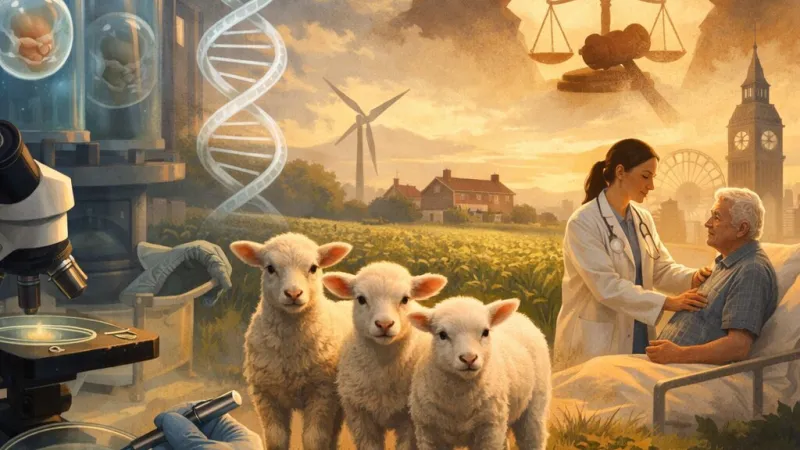
Cloning, in its simplest terms, involves producing organisms or cells that are genetically identical to a single ancestor. While the notion of cloning often conjures thoughts of science fiction or futuristic dystopias, the process is rooted in real biological phenomena and modern laboratory techniques. Nature herself demonstrates cloning through processes like asexual reproduction in certain plants and some simple animals. However, in recent decades, humans have refined artificial methods to clone not only plants but also animals, raising fundamental questions about how this science should be used. The significance of cloning is considerable, with wide-ranging impacts in agriculture, medicine, and scientific research. Yet, alongside these advances come ethical dilemmas, making cloning a topic of lively public debate and scrutiny. This essay will examine the principal methods used in cloning, explore their uses and benefits, and critically evaluate the ethical, environmental, and societal issues they raise, paying particular attention to British perspectives and experiences.
---
Cloning in Plants: Techniques and Benefits
Cloning in plants is hardly a new idea. Many gardeners and farmers in the United Kingdom have long relied on simple techniques to reproduce plants with desirable qualities. In nature, asexual reproduction achieves much the same result—plants such as strawberries send out runners, while potatoes propagate through tubers, and daffodils multiply from bulbs. Each of these offspring is genetically the same as the parent, ensuring that successful traits persist across generations.The most accessible artificial method of cloning plants is through cuttings. For example, a gardener may snip a healthy shoot from a blackcurrant bush, plant it in good compost, and watch it root and grow. This ensures that the offspring have exactly the same fruiting traits, disease resistance, or flower colour as the parent. Such practices are especially valued in UK horticulture for conserving rare varieties of roses or apple trees. However, while cuttings are straightforward and affordable, they share the risks of the parent’s vulnerabilities. If a parent plant is prone to a particular disease, all its clones will be equally susceptible, and extended monocultures can collapse if an infection takes hold. Moreover, for wide-scale agricultural deployment, the method is sometimes unwieldy and carries a risk of diminished genetic diversity.
More advanced plant cloning takes place in laboratories using tissue culture. Here, a tiny sample of a plant—perhaps merely a group of cells—is placed on a nutrient-rich medium and supplied with plant hormones that trigger development into a full plant. This approach allows quick multiplication of elite crops, production throughout the year, and the regeneration of healthy specimens even from endangered or otherwise compromised material. In Britain, this technique is widely employed for commercial potatoes and orchids, amongst others. However, tissue culture also comes with challenges. The laboratory set-up demands skilled technicians, and the initial investment can be significant—a barrier for smaller British growers. Additionally, replicating innumerable identical plants reduces the gene pool, which, as noted by the Royal Society, can leave crops dangerously exposed to novel pests or pathogens.
In sum, while plant cloning offers clear benefits to crop yield and the preservation of preferred qualities, it also poses challenges for biodiversity and the robustness of British agriculture.
---
Animal Cloning: Methods and Applications
Animal cloning, though more complex, has attracted substantial interest and not a little controversy. In the UK, the process began to come to public notice in the late 20th century, culminating in one of the most iconic scientific advancements—the birth of Dolly the sheep.The earliest technique for animal cloning was known as embryo splitting. Essentially, an embryo formed from fertilisation is divided before its cells start to specialise. The resulting halves are each able to develop into separate animals when implanted into surrogate mothers. This method has found favour in livestock breeding—particularly cattle or sheep—where it enables the quick multiplication of particularly fine breeding stock. For example, a prize-winning Holstein dairy cow can produce multiple genetically identical calves, rapidly increasing the proportion of high-yield animals in a herd. Yet, it also narrows the herd’s genetic diversity, making the entire population more likely to suffer from outbreaks of disease or inherited weaknesses.
The most notable development in animal cloning is somatic cell nuclear transfer (SCNT), as demonstrated in the cloning of Dolly at the Roslin Institute near Edinburgh in 1996. Here, the nucleus from an adult body cell is inserted into an egg cell whose own nucleus has been removed. Stimulated by electric shock or chemicals, the egg cell begins to divide, ultimately developing into an embryo which is then implanted into a surrogate ewe. Dolly was the first mammal to be cloned from an adult somatic cell, challenging previously held beliefs about cellular specialisation and ageing.
Since then, SCNT has been extended in hopes of deriving therapeutic benefits. By creating cloned embryos that are genetic matches for a patient, researchers can extract stem cells to grow tissues or even organs for transplantation. Because the new cells are genetically identical, the risk of immune rejection is drastically reduced—offering hope to those with conditions like Parkinson’s or severe burns. However, this practice stirs heated debate, as it requires the destruction of embryos, and many in the UK hold strong moral opinions on the beginning of life. There is also widespread unease about the implications for human cloning—a prospect banned in Britain by the Human Reproductive Cloning Act 2001.
Alternatives such as cell fusion and induced pluripotency are also being explored, which might sidestep the destruction of embryos. Nevertheless, animal cloning remains a subject of both excitement and caution in British scientific circles, raising questions which extend beyond the laboratory into ethics and society.
---
Genetic Engineering Versus Cloning: Clarifying Differences and Overlaps
It is important to distinguish cloning from genetic engineering, though the two are closely related and often confused. Genetic engineering refers to the direct modification of an organism’s genetic material, commonly by introducing, deleting, or altering specific genes to bring about desirable traits. Classic methods utilise enzymes such as restriction endonucleases and ligases to cut and splice DNA, allowing scientists to craft new gene combinations.For example, in the UK, genetically modified (GM) crops—such as insect-resistant maize—are produced by adding genes from foreign species, a process that contrasts with cloning, which simply copies the entire genetic content of an organism. Gene editing also plays a significant role in pharmaceuticals; for instance, bacteria have been engineered to produce human insulin for diabetic patients, replacing porcine-sourced insulin previously used in NHS clinics.
Cloning and genetic engineering can complement each other, with scientists using cloning to mass-produce genetically modified organisms that display a specific beneficial trait. Such practices have revolutionised medicine, agriculture, and even energy production. However, both approaches entail risks, with opponents in Britain highlighting concerns about the environmental impact, the creation of “superweeds,” and possible effects on natural ecosystems.
In sum, while cloning and genetic engineering serve different purposes, combining the two has enormous potential, provided the challenges are addressed with due care.
---
Ethical, Environmental, and Societal Implications of Cloning
The emergence of cloning has ignited complex debates far beyond the realm of science. Ethical considerations loom large, particularly in relation to animal welfare and the morality of using embryos for research. Cloned animals, both in laboratories and on farms, often suffer higher rates of deformities, illnesses, and shortened lifespans. British animal charities such as the RSPCA have argued these practices can result in unnecessary suffering, challenging the ethical justification for cloning for profit or experimentation.Another major concern is the erosion of genetic diversity. Cloning, by its nature, produces uniform populations. As seen in historical events like the Irish Potato Famine, monocultures can be catastrophically vulnerable to unforeseen pests or diseases. Environmental groups in the UK have thus campaigned for limits on the scale and nature of cloning in agriculture to safeguard ecosystems and long-term food security.
Societal impacts are extensive, especially for rural communities and traditional breeders who may feel threatened by laboratory-based agriculture. Public trust in cloning technology is delicately balanced, with many Britons expressing skepticism even about GM foods, let alone cloned animals. Parliament and regulatory bodies—such as the Human Fertilisation and Embryology Authority—continue to develop codes of conduct, striving to balance the potential benefits of cloning with public values and safety.
Ultimately, it is clear that scientific progress must keep pace with thoughtful regulation, transparent communication, and ongoing ethical reflection.
---
Future Prospects and Challenges in Cloning Technology
Research in cloning is advancing rapidly, with scientists striving to increase efficiency and overcome current limitations. Improved cloning methods may one day allow the resurrection of endangered species—an area where British zoological institutions are already active, seeking to save threatened native animals like the red squirrel. Integrated with stem cell technology, cloning could make personalised regenerative medicine a practical reality for the NHS.Yet challenges persist. Many cloned animals still suffer from developmental abnormalities and shortened lives. Ensuring genetic stability over time remains a difficult task, and long-term ecological effects are largely unknown. On the international stage, there is a growing need for collaboration, shared ethical standards, and open debate. Public education is also vital, enabling society to reflect on both myth and reality, and to steer cloning in directions that benefit all.
---
Conclusion
Cloning, whether practised in an allotment or a state-of-the-art laboratory, poses profound opportunities and questions for science and society. In the UK, cloning of plants has transformed the cultivation of cherished crops and flowers, while advances in animal cloning and cell science promise significant health and agricultural benefits. However, these gains must be weighed carefully against threats to animal welfare, biodiversity, and deeply held ethical values.As Britain continues to lead in biotechnology, it is vital that public debate is encouraged and that strong regulation is maintained to safeguard both people and the environment. Only by combining clear-eyed scientific enquiry with considered moral scrutiny can we ensure that the science of cloning fulfils its promise for the common good. Schools, universities, and communities all have a role to play in fostering this dialogue, ensuring that the citizens of tomorrow are well-informed and engaged as the future of cloning unfolds.
Rate:
Log in to rate the work.
Log in