Understanding the Critical Role of the Imam in the Mosque
This work has been verified by our teacher: 3.05.2026 at 10:35
Homework type: Essay
Added: 30.04.2026 at 6:08
Summary:
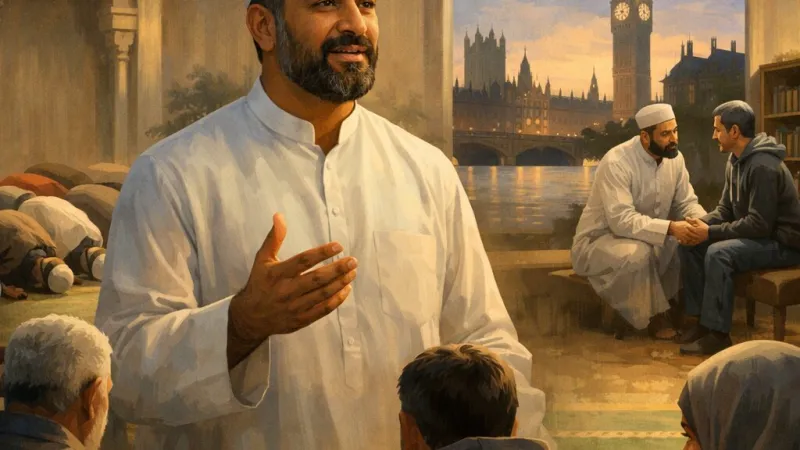
Explore the critical role of the imam in the mosque and learn how they lead, guide, and support the Muslim community across the UK. 📚
The Role and Importance of the Imam in the Mosque
Across towns and cities in the United Kingdom, the mosque stands not only as a sanctuary of Islamic worship but as a vibrant centre for community interaction, support, and learning. Central to the mosque’s function is the role of the imam—a term derived from Arabic meaning ‘one who stands in front’—who leads congregational prayer, offers guidance, and unites those who attend. Far from being a mere functionary, the imam plays a complex set of roles: guiding worship, teaching, mediating disputes, offering counsel, and representing the Muslim community in a diverse society. This essay aims to analyse these various dimensions, tracing the historical foundation of the imam’s role, examining contemporary expectations in British society, and evaluating challenges and transformations in recent years. Through reference to British Muslim experiences, Islamic teachings, and current debates, this essay will illuminate the multidimensionality and continuing relevance of the imam in the mosque.
---
I. Historical and Religious Context of the Imam
The origins of the imam lie in the earliest days of Islam. During the time of Prophet Muhammad (peace be upon him), he himself was the first imam, leading his followers in prayer and guiding their spiritual and social development. As the Prophet’s companions settled and founded new communities beyond Mecca and Medina, they selected among themselves individuals to lead congregational prayers and provide guidance—thus laying the precedent for the local appointment of imams. Over centuries, as Islam crossed boundaries and mingled with diverse languages, cultures, and legal schools, the duties and expectations of imams evolved, adapting to local customs while maintaining core religious responsibilities.The religious significance of the imam varies between the main branches of Islam. In Sunni tradition, most common among British Muslims, the imam is not seen as divinely appointed but as a learned individual, capable of leading prayer and offering religious instruction. Contrastingly, within Shia Islam, particularly among Twelver Shias, the term ‘Imam’ refers to a divinely guided spiritual leader descended from the Prophet’s family—although in the mosque context, the local prayer leader remains central in both traditions.
Whether in a small terraced house converted into a mosque in Bradford or a purpose-built centre in Birmingham, the imam is entrusted with ensuring that rituals conform to the requirements of Islamic law (sharia), especially the correct performance of salah (prayer), which is one of the five pillars of Islam. In this sense, the role is both practical and symbolic: by following the imam, worshippers demonstrate unity before God and one another.
---
II. The Imam as a Prayer Leader in the Mosque
Foremost among the imam’s responsibilities is leading the five daily prayers (salawat), most notably the congregational Friday prayer (Jummah), which draws larger numbers and features a sermon (khutbah). The position of the imam at the front of the rows harnesses the collective focus of worshippers, forging a palpable sense of unity. This is particularly significant in Britain, where Muslims come from varied backgrounds—indian, Pakistani, Somali, Arab, and an increasing number of converts—and find commonality through shared prayer.To fulfil this role, an imam must possess a strong command of Qur’anic recitation, observing the rules of tajweed to avoid mispronunciation that could invalidate prayer. Knowledge of fiqh ensures the imam guides the congregation according to the correct ritual sequence across the schools of Islamic thought. Beyond technical skills, an imam’s presence, humility, and ability to inspire trust are crucial, as illustrated by the respect in which local imams such as Sheikh Ibrahim Mogra of Leicester are held for their accessibility and sincerity.
Practically, the imam is responsible for ensuring the correct timing of prayers—especially in the UK, where prayer times shift dramatically with the seasons. The orderly movement of the congregation, synchronised by the imam’s voice and gestures, reinforces the principle of ummah: the single global community of believers. During Jummah, the sermon provides an opportunity for the imam to address contemporary issues, rooting current challenges within an Islamic moral framework.
---
III. The Imam as an Educator and Mentor
Within the mosque, the imam often assumes the position of a teacher or mu’allim. From traditional madrasah classes—where children recite surahs and practise Arabic script using wooden Qur’an stands—to adult study circles interpreting the deeper meanings of the Qur’an (tafsir), the imam’s teaching role is fundamental. This is especially significant for British Muslim youth, who may be navigating questions of identity and belonging in a society where Islamic practice is sometimes misunderstood.Many masjids in British cities offer structured Qur’an memorisation (hifz) classes, where the imam supervises learning, corrects recitation, and encourages perseverance. During Ramadan, the imam’s role is heightened, with nightly Tarawih prayers and special talks; these are opportunities for collective spiritual growth and offer young people positive role models.
Beyond religious education, the imam is often called upon to counsel individuals and families, offering guidance on ethical or spiritual dilemmas. Whether advising a university student struggling to reconcile faith and social pressures, or supporting a married couple through conflict, the imam’s authority is trusted and confidential. The Friday khutbah is also a focal point for discussing community concerns, such as combatting prejudice or promoting environmental stewardship—an area increasingly emphasised by imams in the UK following high-profile campaigns by groups like the Muslim Council of Britain.
A key feature of mosque life in the UK is inclusivity in education. Many imams, particularly in larger mosques, oversee women’s classes, conversion courses, and youth groups, ensuring that religious learning is accessible to all. The growth of initiatives like Muslim Women’s Education Council in Manchester, with support from local imams, is testament to the importance of outreach and equality.
---
IV. The Imam as a Community Leader
Mosques in Britain serve as more than places of worship; they are community hubs, and the imam is often at the heart of social activity and support. As mediator and counsellor, the imam may be called to resolve disputes within families or the wider community, relying on Islamic principles of justice and reconciliation. In times of personal loss, such as bereavement, the imam’s presence is a source of comfort—guiding funeral rites, offering prayers for the deceased and their relatives, and reminding mourners of hope and patience.It is not uncommon for imams in British mosques to preside over nikahs (marriage ceremonies), contributing to the joy and solemnity of the occasion and ensuring that marriages are conducted according to both civil and Islamic requirements—a particularly relevant issue following guidance from British Islamic councils.
Social cohesion is another vital area. In multicultural Britain, imams play an important role in forging bridges not only within the Muslim community—across ethnic, generational, and theological divides—but also between Muslims and wider society. Mosques regularly hold open days as part of the national Visit My Mosque initiative, with imams answering questions, dispelling misconceptions, and fostering good relations with neighbours of all faiths.
Mosque administration, too, falls within the imam’s remit. Many are involved in planning Ramadan programmes, distributing zakat (charity), running food banks, and supporting local schools through educational visits, as seen with East London Mosque’s active outreach. Their organisational acumen ensures that mosques continue to serve as safe, empowering spaces for all.
---
V. Selection and Qualifications of an Imam
The process of selecting an imam in the United Kingdom varies, often reflecting the local community’s make-up or the origins of the congregation. Some mosques, especially those affiliated with particular cultural groups, may invite a respected scholar or religious authority from overseas; others, particularly newer mosques supported by young, British-born Muslims, opt for a more democratic approach, involving congregational meetings or trustee elections.Regardless of the method, the selection typically aims to ensure the imam’s credibility, both in terms of religious learning and personal integrity. Many British imams have studied at Islamic seminaries (madrasahs) abroad—in countries such as Egypt, Pakistan, or Morocco—while a growing number hold degrees in Islamic Studies from British universities. This blend of traditional and contemporary scholarship is valued amid the complexities of living as a Muslim in 21st-century Britain.
Continuous development is also increasingly expected, with imams attending workshops on mental health awareness, safeguarding, and community engagement. However, challenges remain: linguistic diversity, differing cultural expectations, and the need for English fluency are common issues, especially in cities like Manchester and Birmingham where mosque-goers may have roots in multiple continents.
---
VI. Contemporary Challenges and Evolving Roles of Imams
Modern British society presents imams with unique challenges and opportunities. The mosque is no longer an island; imams are regularly called upon to address the complexities of secularism, multiculturalism, and the pervasive influence of social media. Young Muslims, in particular, face questions of identity, belonging, and faith, making the imam’s guidance on these topics ever more significant. In response, organisations like Inspire Imams and the Cambridge Muslim College have been established to support imams in engaging positively with issues such as radicalisation, Islamophobia, and youth isolation.The question of women as imams has become a subject of debate domestically, particularly following the emergence of female-led prayer spaces in London and Bristol. While traditional practice restricts the appointment of women as imams for mixed congregations, many British mosques now involve female scholars in advisory or educational roles, reflecting evolving attitudes and the desire for greater inclusivity.
Finally, the imam’s role as community and interfaith leader has come into sharper focus in the wake of national and international events affecting Muslims. Imams are frequently called to speak in local schools, attend Remembrance Day events, and participate in initiatives tackling hate crime and social division. Their voices, once confined largely within mosque walls, now echo in public debates across the country.
---
Rate:
Log in to rate the work.
Log in