The Lasting Importance of Pesach in Jewish History and Tradition
This work has been verified by our teacher: 20.04.2026 at 11:59
Homework type: History essay
Added: 17.04.2026 at 6:02
Summary:
Explore the lasting importance of Pesach in Jewish history and tradition, uncovering its roots, rituals, and evolving significance for students.
The Enduring Significance of Pesach in Jewish Tradition
Pesach, known in English as Passover, stands among Judaism’s most cherished and enduring festivals. Marking the Israelites’ liberation from Egyptian slavery, it has shaped Jewish life, identity, and collective memory for millennia. Observed each spring, in either March or April according to the Hebrew calendar, the festival lasts seven days in Israel and eight days in the Diaspora, echoing the variation in Jewish custom shaped by centuries of dispersion. This essay seeks to examine Pesach not only as a remembrance of a momentous historical event but as a rich tapestry of ritual, symbolism, and evolving communal meaning. Through the retelling of the Exodus story, the meticulous preparation of the home, the distinctive Seder meal, and the ongoing adaptation of tradition, Pesach embodies themes of liberation, divine intervention, and the sustaining power of shared tradition within a changing world.Historical Foundations of Pesach
The Exodus Narrative: Origins and Resonance
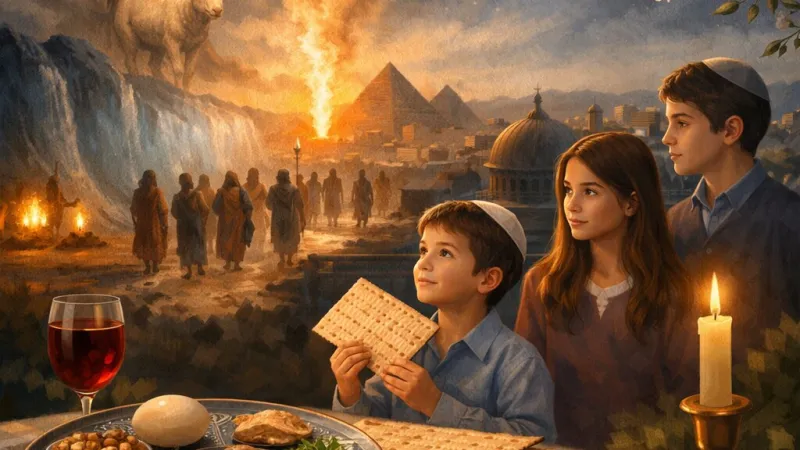
At the heart of Pesach lies the Exodus narrative, recounted in the book of Exodus, in which the Israelites are freed from centuries-long oppression under Pharaoh. Their journey from bondage towards the Promised Land forms not only a cornerstone of Jewish religious consciousness but also a defining motif in Western literary and ethical thinking. Within the Jewish context, this foundational myth does not merely document historical deliverance—it replays annually at the Seder table, inviting participants to see themselves as if they too had emerged from Egypt. The ‘tenth plague’, in which the firstborn Egyptians perish while Israelite homes, marked with the blood of the Paschal lamb, are spared, stands as a moment of decisive transformation. The drama of this narrative elevates the festival from a simple agricultural or historical commemoration to a moment pregnant with theological and existential significance.Evolution and Adaptation
Over time, the observance of Pesach has shifted alongside Jewish history. In ancient Israel, the Paschal lamb was sacrificed at the Temple in Jerusalem—a practice brought to an abrupt end by the Temple’s destruction in 70 CE. Thereafter, Jewish communities adapted, with rabbinic authorities reimagining the festival in ways not reliant on Temple worship. Symbolic foods replaced sacrifices; oral recitation took precedence over ritual slaughter. Interestingly, the variation in festival length—a seven-day observance in Israel and an eight-day one among Jews in the Diaspora—attests to the adaptive flexibility of tradition. Early rabbinic leaders extended the festival outside the Land of Israel to preserve ritual precision, a detail that remains relevant for British Jews and other diaspora communities to this day.Central Themes and Religious Meaning
Freedom and Redemption
The motif of freedom sits at the very heart of Pesach. During the Seder, the text of the Haggadah instructs every participant to view themselves as having personally left Egypt, blurring the line between individual and collective, past and present. The narrative, steeped in poetry and in liturgical retelling, offers a layered concept of freedom: from slavery to self-determination, from material woes to spiritual awakening. In contemporary times, many Jewish communities use Pesach to reflect upon ongoing struggles for freedom, both within and beyond the Jewish world—an echo evident in campaigns for Soviet Jewry or present-day debates around refugees and human rights, which are often highlighted in British Jewish community Seder supplements.Divine Providence and Covenant
Pesach is not simply a story of liberation; it is, at its essence, a narrative of covenant and faith. The events of the Exodus foreground God’s direct intervention in human affairs—a key tenet of Judaism. The binding covenant between the Israelites and God, renewed in every generation, forms the basis for Jewish ritual obligation and identity. Faith is not passive here; it is tested and affirmed through action, as seen in the detailed commandments relating to Pesach observance. The dual emphasis on divine mercy and justice is brought to life through both song and prayer, as families gather to recount not only what was endured but also what was promised and fulfilled.Communal Identity and Continuity
The Seder, perhaps more than any other Jewish ritual, encapsulates the powerful pull of tradition and the shaping of communal identity. Its structure and storytelling ethos reinforce bonds not only within the nuclear family, but also across generations and geographical divides. In many UK Jewish households, including those with a tenuous connection to tradition, the Seder endures as an annual anchor point—a testament to the enduring power of shared ritual and memory. With children at the table urged to ask questions, and elders tasked to reply, the festival becomes a living chain of transmission, linked by words, customs, and a commitment to remembrance.Preparations and Ritual Observances
Cleansing the Home and the Heart
Preparation for Pesach commences weeks in advance, with the clearing of *chametz* (leavened products) from the home. This is no superficial spring-cleaning: it is a ritual act suffused with meaning, symbolising the removal of spiritual arrogance and the embracing of humility. In British Jewish practice, the search for chametz on the night preceding Pesach—carried out with a candle, feather, and wooden spoon—is often a family activity, reinforcing both the festive mood and the educational intent of the holiday.Halachic stringencies, including the use of utensils reserved only for Pesach and the purchasing of special kosher-for-Pesach foods, serve as material reminders of the festival’s boundaries and sanctity. In the UK, where many kosher products are imported or sourced from specialist bakeries and delicatessens, the logistics of preparation bring Jewish community infrastructure into sharp relief.
The Fast of the Firstborn
One lesser-known but resonant custom is the Fast of the Firstborn, observed on the eve of Pesach. Rooted in gratitude for the deliverance of the Israelite firstborn in Egypt, the fast is generally set aside after participation in a festive study session. While not universally observed in the UK, it persists as an example of layered tradition, with each component recalling a different facet of the larger narrative.Dietary Law and Symbolism
Throughout Pesach, dietary laws acquire a special intensity. *Chametz* is forbidden, and matzah (unleavened bread) takes centre stage, recalling both the hasty flight from Egypt and the humility demanded of the redeemed. Customs such as selling chametz to non-Jews during the festival, or formally “nullifying” remaining chametz, demonstrate both the seriousness of observance and the innovative adaptability of halachic practice—a feature especially notable in diasporic communities, such as those found in London or Manchester.The Passover Seder: A Ritual of Memory and Meaning
The Structure of the Seder
The Seder, meaning “order”, is the ritual heart of Pesach and perhaps its most recognisable feature. Conducted on the first (and in the Diaspora, the second) night, its liturgy and symbolic foods guide participants through a tightly structured retelling of the Exodus story. Each element—from dipping parsley in salt water to the breaking and hiding of the *afikoman* (special piece of matzah for dessert)—serves as a tactile memory aid.Symbolic Foods and Their Messages
The Seder plate contains foods laden with meaning: *maror* (bitter herbs) evoke the bitterness of slavery; *charoset* (a sweet, sticky mixture of apple, nuts, and wine) calls to mind the mortar used by Israelite slaves; *karpas* (vegetable dipped in salt water) alludes to tears and new life; the *z’roa* (shank bone) and *beitzah* (egg) remember the sacrifices once made at the Temple, and the cycle of suffering and renewal.Learning and Engagement: The Haggadah
The Haggadah, the central Seder text, blends narrative, song, and commandment into an interactive teaching tool. The famous *Mah Nishtanah* (“Why is this night different from all other nights?”) prompts children to enquire and adults to teach, ensuring the transmission of both stories and values. Four cups of wine are drunk, each marking a divine promise of deliverance; reclined seating symbolises freedom—an echo of Roman banqueting customs, repurposed in a Jewish key. The Seder thus combines joy and seriousness, blending past sorrow with celebration and hope.Pesach in Modern Jewish Life
Adaptation and Challenge
In contemporary Britain, not every Jewish family can maintain the same level of observance, but Pesach remains a time of communal gathering, cultural pride, and ethical reflection. Reform, Masorti, Orthodox, and Liberal communities all observe Pesach according to their interpretations, and even secular Jews may host Seders focusing on themes of freedom and justice.Maintaining the strictures of Pesach presents real challenges—Kosher-for-Pesach products can be difficult or expensive to obtain, and balancing work, school and home preparation requires significant organisation. Nonetheless, these very challenges can themselves be seen as acts of dedication, reinforcing the importance of tradition within modern, pluralistic societies.
Wider Resonance and Interfaith Connections
As a festival, Pesach has radiated cultural influence far beyond the Jewish world. Its themes overlap with Christian celebrations of Easter, which is itself linked to the timing of Passover events in Christian gospels. In modern Britain, many faith schools, including Church of England institutions, teach the Exodus story, and some interfaith groups organise model Seders as educational and bridge-building exercises.Education, Identity and Social Justice
Educationally, Pesach forms a cornerstone of religious studies within Jewish schools and is also encountered in A Level and GCSE syllabi in British schools. Beyond doctrinal learning, the festival fosters social consciousness: many UK synagogues and community groups run charitable campaigns during Pesach, connecting the theme of liberation to contemporary issues such as modern slavery, racism, and poverty. Thus, Pesach retains both its ritual core and its challenge to reflect on the responsibilities of freedom.Conclusion
The enduring observance of Pesach across centuries and continents testifies to its unparalleled power as a vehicle for memory, identity, and hope. Through its manifold rituals—each rich with meaning and history—Jewish communities, including those in the United Kingdom, reaffirm their link to ancient struggles while reinterpreting them for modern life. More than a recollection of past deliverance, Pesach is an annual summons to gratitude, justice, and communal solidarity, inviting reflection on what it means to be free, to remember, and to share these gifts with others.Glossary
- Chametz: Leavened grain, forbidden during Pesach - Matzah: Unleavened bread, central to Pesach observance - Seder: Structured ritual meal retelling the Exodus story - Haggadah: Text guiding the Seder, blending narrative and ritual---
In revisiting Pesach each year, British Jewry and the wider world are reminded of the festival’s timeless message: that the journey from slavery to freedom, from suffering to hope, is not simply a matter of history, but an ever-present challenge and invitation for all.
Rate:
Log in to rate the work.
Log in